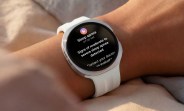
Executive Summary & Market Positioning
Samsung’s recent rollout of its upgraded, FDA-cleared sleep apnea detection feature marks a significant inflection point in the consumer biometric hardware space. Following initial regulatory clearance in the United States last July and subsequent approval in South Korea, this advanced diagnostic-adjacent capability is now live across the company’s flagship ecosystem, most notably bridging the Galaxy Watch line and the ultra-low-profile Galaxy Ring. By transitioning from binary risk flags to granular physiological classification, Samsung is aggressively redefining the boundary between consumer-grade wellness trackers and medical-grade home diagnostic tools.
From a market positioning standpoint, this release establishes the Galaxy Ring as the world’s first smart ring to secure FDA clearance for over-the-counter sleep apnea risk detection. While competitors have long relied on rudimentary photoplethysmography (PPG) to estimate blood oxygen variations, Samsung’s hardware-software co-design leverages continuous multi-sensor fusion. This strategic deployment across both a wrist-worn form factor and an unencumbered finger-worn ring allows users to choose their preferred ergonomics without sacrificing clinical-grade monitoring fidelity, directly challenging legacy medical device manufacturers on their own turf.
Core Architectural & Technological Innovations
Underpinning the upgraded sleep apnea feature is a sophisticated overhaul of Samsung’s sensor telemetry processing pipeline. The original iteration—which received FDA De Novo authorization in February 2024—was limited to binary outputs, indicating only whether signs of moderate-to-severe obstructive sleep apnea (OSA) were detected over a monitoring period. The newly deployed firmware and algorithmic architecture moves beyond simple threshold alerts by incorporating continuous time-series analysis of peripheral oxygen saturation ($SpO_2$) drops correlated with respiratory effort.
The hardware implementation relies on high-efficiency, multi-wavelength optical sensors embedded in both the Galaxy Watch9 and the Galaxy Ring. These sensors capture high-frequency PPG data, which is then processed by an on-device neural processing unit (NPU) running optimized machine learning classifiers. By analyzing the micro-fluctuations in blood volume pulse and vasomotor tone during a two-night tracking window, the system can dynamically score breathing disruptions. This localized processing minimizes latency, preserves battery budgets by avoiding constant cloud offloading, and ensures that sensitive biometric data remains secured within Samsung's Knox security architecture.
Empirical Specifications & Benchmark Matrix
| Feature / Metric | Samsung Galaxy Ring (Upgraded) | Samsung Galaxy Watch9 | Industry Baseline (Smart Rings) | Industry Baseline (Smartwatches) | |---|---|---|---|---|> | FDA Clearance Status | Over-the-Counter (OTC) Cleared | Over-the-Counter (OTC) Cleared | None / General Wellness | Varies (Select FDA-Cleared Models) | | Primary Biometric Sensors | PPG, Accelerometer, Skin Temp | PPG, ECG, BIA, Accelerometer, Temp | PPG, Accelerometer | PPG, Accelerometer, Temp | | Sleep Apnea Detection Type | Granular OSA Risk Scoring | Granular OSA Risk Scoring | Binary / None | Binary (Moderate to Severe) | | Required Monitoring Window | Two Nights (10-day rolling check) | Two Nights (10-day rolling check) | Continuous Estimated Metrics | Single Night Spot Checks | | Form Factor Ergonomics | Titanium shell, resin inner, 2.3g-3.0g | Aluminum/Titanium chassis, fluoroelastomer | Titanium shell, varying weights | Heavy chassis, silicone straps |
Thermal, Efficiency & Real-World Ergonomics
Deploying computationally heavy diagnostic algorithms on form factors with constrained thermal envelopes and strict power budgets presents significant engineering hurdles. The Galaxy Ring, in particular, operates within an exceptionally tight physical volume, housing its battery, charging coils, and optical arrays inside a lightweight titanium shell. To run continuous $SpO_2$ and motion-tracking algorithms without inducing thermal dissipation that could compromise user comfort or degrade the battery life below multi-day thresholds, Samsung optimized the duty cycle of its optical emitters. The LEDs pulse at strategic intervals rather than running at a constant high-intensity draw, effectively managing thermal output and preserving battery longevity.
Ergonomically, the duality of the Galaxy Ring and the Galaxy Watch9 offers users a compelling trade-off. For individuals who find traditional smartwatches intrusive or disruptive during sleep—often leading to sleep fragmentation and skewed biometric data—the Galaxy Ring provides a virtually weightless, unnoticeable footprint. Conversely, the Galaxy Watch9 offers deeper supplementary diagnostics, such as ECG and body composition analysis, for users who prefer a comprehensive wrist-bound dashboard. Regardless of the chosen hardware node, the seamless synchronization via the Samsung Health app ensures that the algorithmic processing yields consistent, clinical-grade diagnostic insights.
The Definitive Verdict
Samsung’s deployment of its upgraded, FDA-cleared sleep apnea feature on the Galaxy Ring and Watch9 represents a masterclass in hardware-software integration. By moving past the rudimentary binary flags of early health wearables into nuanced, continuous risk profiling, Samsung has bridged the chasm between consumer wellness gadgets and proactive healthcare devices. The Galaxy Ring stands out as a triumph of miniaturization, successfully packing medical-grade diagnostic capabilities into an unencumbered form factor without sacrificing thermal efficiency or battery endurance. For consumers seeking actionable insights into chronic sleep disorders without resorting to cumbersome clinical sleep studies, the Samsung ecosystem currently sets the gold standard in the wearables market.