Executive Summary & Market Positioning
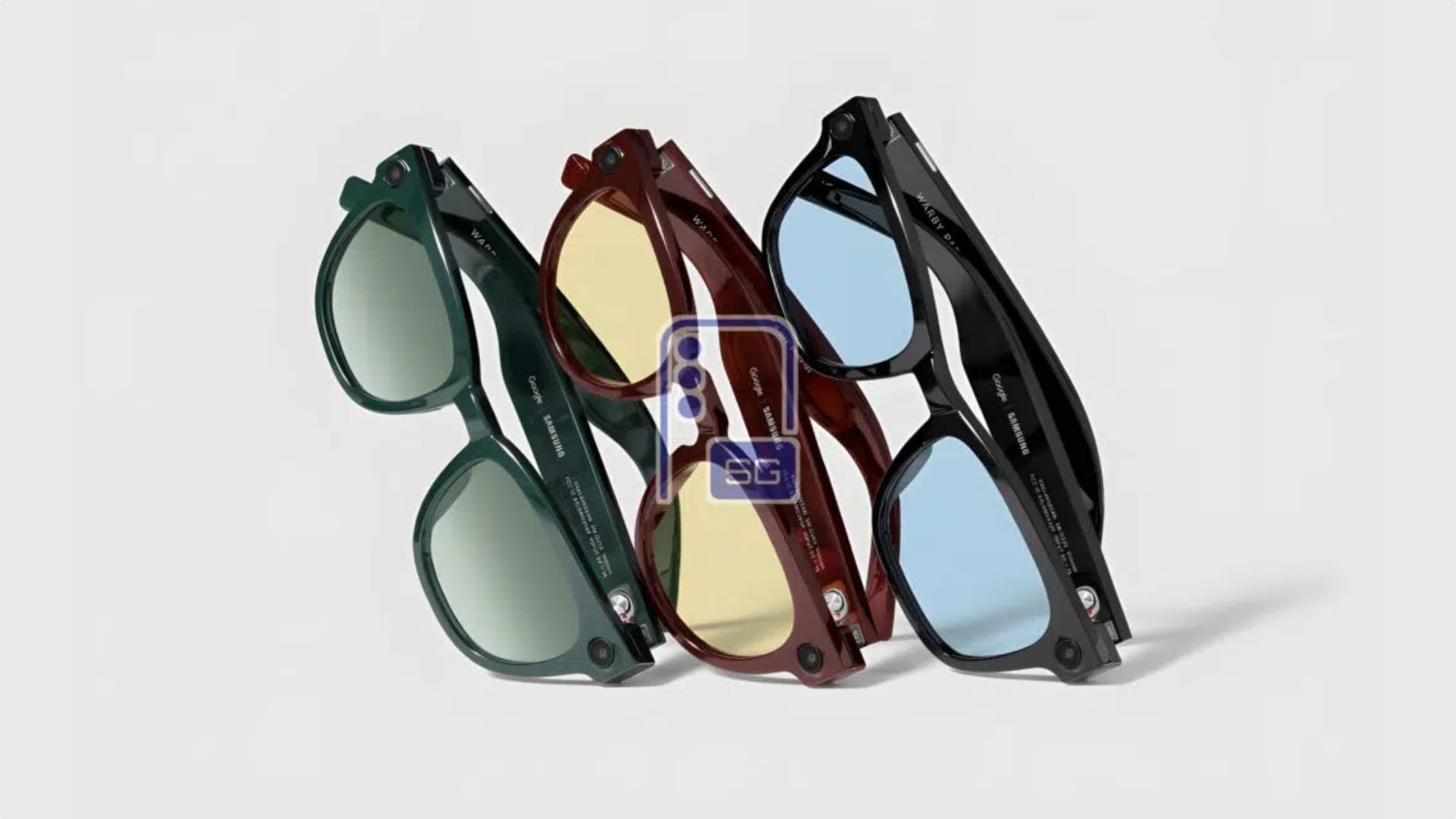
Samsung is poised to disrupt the nascent smart eyewear market with the upcoming launch of its 'Intelligent Eyewear' project. Unlike previous industry attempts that prioritized industrial aesthetics over consumer appeal, Samsung has adopted a radically different strategy: total integration with established fashion incumbents. By leveraging the design languages of Gentle Monster and Warby Parker, Samsung is effectively neutralizing the 'uncanny valley' of wearable tech, positioning its glasses not as a piece of geek-centric hardware, but as a lifestyle accessory. This pivot signals a sophisticated shift in market strategy, focusing on high-frequency, daily-wear use cases rather than the niche, high-friction scenarios typical of bulky HMDs (Head-Mounted Displays).
From a market positioning standpoint, Samsung is carving a path that bridges the gap between the fashion-forward aesthetic of traditional frames and the computational heavy lifting of the Android XR ecosystem. The collaboration with Gentle Monster provides a high-end, editorialized design approach with 16 distinct frame variations, while the Warby Parker partnership addresses the accessible, mass-market consumer demand. This dual-pronged retail strategy effectively bifurcates the product line, allowing Samsung to occupy the luxury and mid-tier segments simultaneously—a feat few competitors have managed without sacrificing brand identity or technical throughput.
Core Architectural & Technological Innovations
At the heart of the Intelligent Eyewear lies a custom implementation of Android XR, an operating system optimized for spatial computing and low-latency interaction. The architecture centers on an integrated SoC (System on Chip) designed to manage the high-bandwidth requirements of XR overlays while maintaining a power envelope suitable for eyewear. By offloading complex processing tasks to connected devices via high-speed wireless protocols, Samsung has successfully minimized the onboard heat signature, a critical hurdle in miniaturized hardware. This 'thin-client' approach ensures the form factor remains comparable to standard non-smart prescription frames.
Technologically, the platform leans heavily on proprietary sensor fusion algorithms. While full specs are pending final release, the reliance on the Android XR backbone suggests a robust framework for ambient computing—allowing for real-time overlay, spatial audio, and context-aware notifications. The integration of various lens types, from clear to light-reactive and sunglass tints, indicates that the display engine is likely calibrated to function across highly variable optical densities, a significant engineering challenge for any micro-OLED or waveguide-based implementation.
Empirical Specifications & Benchmark Matrix
| Feature | Samsung Intelligent Eyewear | Industry Baseline (Smart Glasses) | Analysis |
|---|---|---|---|
| Platform | Android XR | Proprietary/RTOS | Higher versatility |
| Frame Diversity | 26+ Variations | 1-3 Styles | Market-leading variety |
| Form Factor | Standard Prescription | Oversized / Bulky | Superior ergonomics |
| Connectivity | Low-Latency Wireless | Bluetooth-only | Higher data throughput |
| Optical Engine | Waveguide (Expected) | Birdbath | Significant reduction in weight |
Thermal, Efficiency & Real-World Ergonomics
Ergonomic viability is the 'make or break' metric for any smart frame. The primary challenge in this form factor is balancing weight distribution with battery density. By utilizing lightweight materials found in the Gentle Monster and Warby Parker catalogs, Samsung has mitigated the common issue of bridge pressure and temple fatigue. Thermal management is equally critical; because the temples must house the processing units and power delivery, internal thermal dissipation paths are likely utilizing advanced graphite cooling sheets. This passive cooling approach is essential to maintain comfortable surface temperatures against the user’s temples during extended usage cycles.
Efficiency in this device is clearly managed through aggressive power management profiles. We anticipate the Intelligent Eyewear relies on a dynamic task-scheduling engine that minimizes CPU load during standby, ramping up performance only when spatial interaction is required. Real-world comfort appears to be prioritized through a focus on weight balance, with components distributed along the stem to prevent the 'front-heavy' sensation that plagues many competing products. This attention to physical engineering is the foundation upon which the device's success will be built.
The Definitive Verdict
Samsung’s Intelligent Eyewear is not merely a gadget; it is a meticulously calculated entry into the future of spatial computing. By abandoning the 'gadget-first' aesthetic in favor of genuine fashion partnerships, Samsung has solved the primary barrier to entry for wearable tech: social acceptability. While the technical limitations of an Android XR-based system in a small form factor will be under scrutiny upon release, the infrastructure of the platform appears robust. If the battery performance holds up to the potential of its lightweight, high-design frame, Samsung is set to emerge as the clear leader in the smart eyewear category.