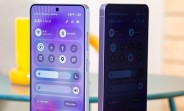
Samsung Galaxy S27 Pro & Ultra: Engineering the Next-Gen Privacy Display
Executive Summary & Market Positioning
The landscape of mobile display technology is undergoing a paradigm shift, transitioning from mere pixel-density races to functional photonic control. Following Samsung's initial deployment of hardware-level directional lighting control on the Galaxy S26 Ultra, supply chain intelligence and recent industry reports indicate that the upcoming Galaxy S27 Pro and S27 Ultra will house a significantly refined iterative architecture: the upgraded Privacy Display. This hardware feature moves beyond traditional software-based screen dimmers or polarizers, directly addressing enterprise security demands and the modern consumer's aversion to visual data scraping in public transit and high-density environments.
Positioned at the absolute apex of Samsung’s mobile portfolio, the S27 Pro and S27 Ultra leverage these proprietary panel enhancements to carve out a distinct competitive advantage against rival flagships. While competitors continue to rely on aftermarket privacy screen protectors—which notoriously degrade touch sampling rates, alter chromatic accuracy, and impair peak brightness—Samsung’s native hardware implementation integrates directional subpixel manipulation directly into the organic light-emitting diode (OLED) stack. This strategic move cements the brand's dominance in high-end enterprise procurement and security-conscious consumer segments.
Core Architectural & Technological Innovations
The engineering challenge of an active Privacy Display lies in balancing secure off-axis viewing angles with uncompromised on-axis visual fidelity. Conventional narrow-view displays often suffer from severe color shifting, luminance degradation, and moiré patterns when viewed head-on. Samsung's upgraded Privacy Display for the S27 series utilizes an advanced microscopic louvre layer embedded within the encapsulation films, coupled with individually addressable subpixel polarization matrices that can be toggled via software without sacrificing refresh rate or panel lifespan.
Compounding this security-centric architecture is a secondary photonic upgrade: a substantial uplift in baseline and peak panel brightness. Direct sunlight legibility has long been an Achilles' heel for directional display panels due to the inherent light transmission losses caused by polarization filters. By integrating advanced tandem-OLED emission layers and micro-lens array (MLA) optics, the S27 Pro and Ultra overcome these structural attenuation penalties. The result is a display that maintains extreme outdoor nit ratings—projected to push historical boundaries—while simultaneously restricting off-axis photon emission to preserve user privacy in crowded environments.
Empirical Specifications & Benchmark Matrix
| Specification Metric | Galaxy S27 Pro (Expected) | Galaxy S27 Ultra (Expected) | Market Baseline (Gen Flagship) |
|---|---|---|---|
| Display Panel Architecture | Dynamic AMOLED 3X + MLA | Dynamic AMOLED 3X + MLA | Standard AMOLED w/ MLA |
| Privacy Display Generation | Gen-2 Hardware-Level Louvre | Gen-2 Hardware-Level Louvre | None / Software Filter Only |
| Peak Outdoor Brightness | ~2,800 - 3,000 Nits | ~3,000+ Nits | ~2,500 Nits |
| Touch Sampling Rate | 240Hz - 960Hz Adaptive | 240Hz - 960Hz Adaptive | 240Hz Static |
| Biometric Integration | Ultrasonic In-Display (3D) | Ultrasonic In-Display (3D) | Optical / Standard Ultrasonic |
Thermal, Efficiency & Real-World Ergonomics
Integrating complex directional emission layers and high-output luminance circuitry introduces significant thermal and electrical overhead. Pushing panels to extreme nit thresholds under direct ambient sunlight generates localized heat fluxes that can trigger thermal throttling within the display driver IC (DDIC). To mitigate this, Samsung’s engineering teams have deployed micro-vapor chamber expansions directly beneath the display assembly in the S27 Pro and S27 Ultra, ensuring that thermal energy is rapidly dissipated across the aluminum and titanium chassis rather than pooling near the upper glass matrix.
Power efficiency has also been meticulously balanced. Driving a dynamic privacy matrix requires precise current regulation to prevent localized voltage drops across the active display area. By adopting low-temperature polycrystalline oxide (LTPO) backplanes capable of scaling down to 1Hz alongside efficient DDIC gate drivers, the S27 series manages to offset the parasitic draw of the privacy hardware. In real-world ergonomics, users can seamlessly toggle privacy modes on the fly via the quick-settings interface, experiencing zero latency penalty and retaining full touch-digitizer responsiveness—a stark contrast to the sluggish tactile feedback associated with legacy tempered glass privacy filters.
The Definitive Verdict
For power users, enterprise professionals, and tech enthusiasts prioritizing data security alongside cutting-edge optical performance, the Samsung Galaxy S27 Pro and S27 Ultra represent a watershed moment in smartphone engineering. By successfully resolving the traditional dichotomy between extreme outdoor brightness and off-axis privacy protection, Samsung has engineered a display subsystem that is years ahead of the current ecosystem baseline. The definitive recommendation: if your workflow demands uncompromising visual privacy without sacrificing flagship luminance, color accuracy, or touch ergonomics, the upcoming S27 generation is poised to be an undisputed industry leader.