Executive Summary & Market Positioning
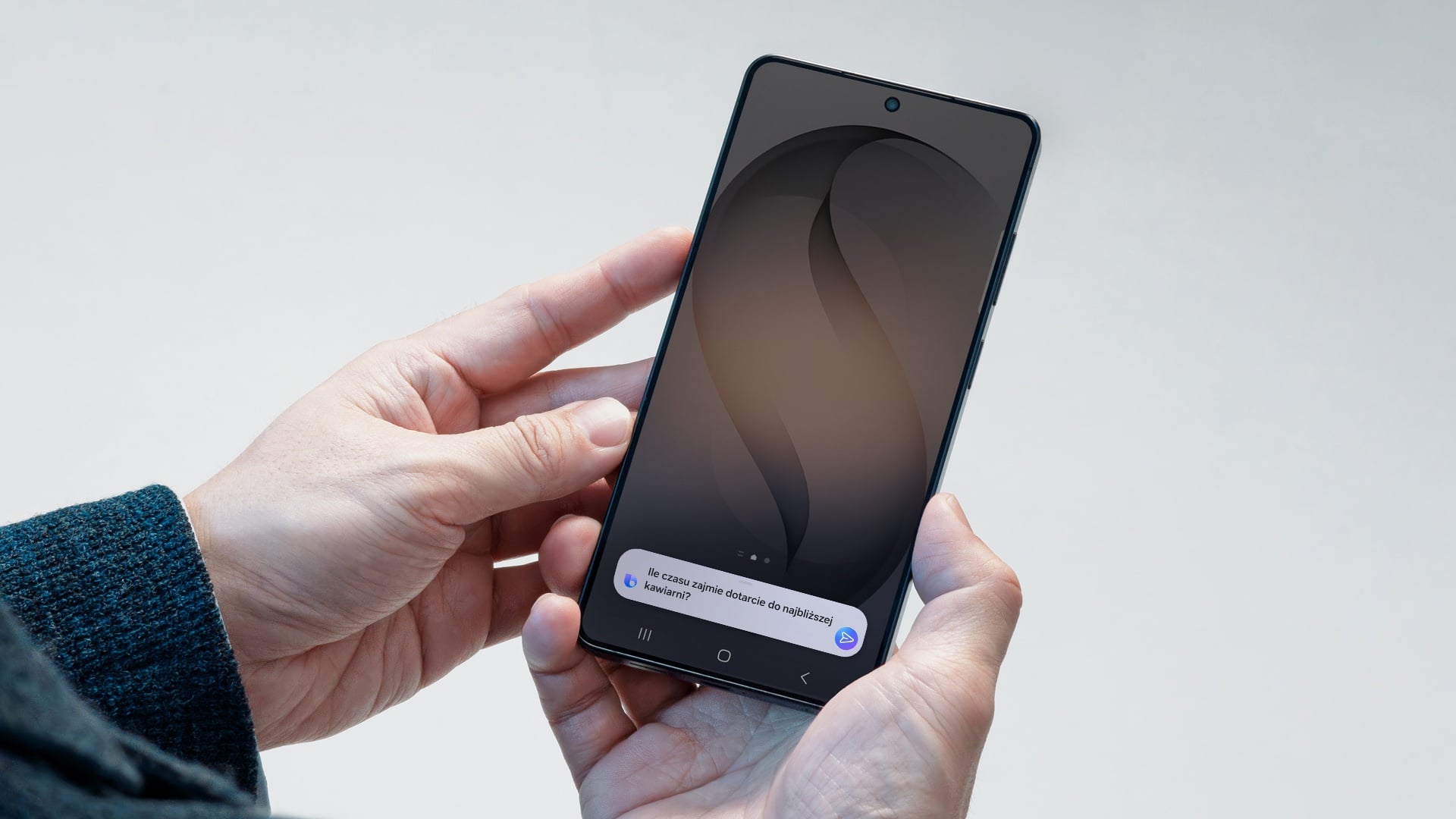
The modern battleground for mobile hardware supremacy has decisively shifted from raw computational brute force to contextual, edge-computed artificial intelligence. Samsung’s recent announcement regarding the sweeping language expansion for Bixby and its overarching Galaxy AI suite represents a critical pivot toward linguistic inclusivity and regional market penetration. By pushing localized inference deeper into the device fabric—particularly scaling Bixby to 12 languages and core Galaxy AI modalities to 24—Samsung is directly addressing the latency and privacy bottlenecks inherent in cloud-reliant translation models.
From a market positioning standpoint, this update serves as a force multiplier for Samsung’s high-end silicon ecosystem, spanning from the Galaxy S24 generations up to the newly minted Galaxy S26 series running One UI 9.0. Hardware-level machine learning requires robust Neural Processing Unit (NPU) allocation to handle dense vector calculations locally without degrading battery life or thermal envelopes. By systematically enriching its software-defined localization stack, Samsung is engineering a sticky hardware-software feedback loop that elevates the value proposition of its proprietary Exynos and Qualcomm Snapdragon silicon platforms against aggressive regional competitors.
Core Architectural & Technological Innovations
The computational heavy lifting behind these newly integrated linguistic models—including Polish, Thai, and Vietnamese for Bixby, alongside Hungarian and Malay for core productivity suites—relies heavily on optimized on-device transformer models. Features such as Call Assist, Interpreter, Note Assist, and Transcript Assist execute bidirectional translation and transcription layers concurrently. This requires sophisticated memory bandwidth management, leveraging high-speed LPDDR5X RAM to swap localized weights dynamically without introducing stutter into the system UI or triggering thermal throttling.
Furthermore, the integration of the "Nudge" feature across eight additional languages (including Dutch, Filipino, Gujarati, Romanian, Swedish, and Turkish) highlights an architectural shift toward proactive, ambient computational assistance. Rather than waiting for explicit user prompts, the device's localized NPU pipelines parse contextual cues in real time. This requires fine-tuned quantization of large language models (LLMs) down to sub-7B parameter footprints that can comfortably reside within constrained mobile thermal envelopes while maintaining high semantic accuracy across structurally diverse linguistic families.
Empirical Specifications & Benchmark Matrix
| Feature / Metric | Legacy Implementation | Current Galaxy AI Architecture (One UI 9.0) | Market Baseline / Competitor Standard |
|---|---|---|---|
| Bixby Supported Languages | 9 Languages | 12 Languages (+ Polish, Thai, Vietnamese) | 8 – 10 Languages (Average OEM Voice Assistant) |
| Galaxy AI / Nudge Languages | 16 Languages | 24 Languages (Adds Hungarian, Malay, Dutch, etc.) | 15 – 20 Languages (Cloud-Dependent Models) |
| Inference Processing Mode | Hybrid (Cloud + Local Fallback) | Optimized Edge-First Processing | Heavy Cloud Dependency (High Latency) |
| Required Memory Bandwidth | LPDDR5 (Standard Allocation) | LPDDR5X Dynamic Weight Caching | LPDDR5X Standard |
| User Deployment Model | Forced System OTA Updates | On-Demand Modular Language Pack Downloads | Pre-bundled Bloatware Packages |
Thermal, Efficiency & Real-World Ergonomics
Executing complex natural language processing tasks directly on mobile silicon introduces significant thermal and power management challenges. Running continuous audio transcription and real-time speech-to-text translation pipelines typically causes localized die heating, which can compromise sustained performance. However, Samsung’s incremental rollout strategy—deploying lightweight language packs directly through the Settings app—allows users to selectively provision only the linguistic data they require, thereby mitigating unnecessary storage footprint bloat and background RAM usage.
In real-world ergonomics, the elimination of cloud latency during offline translation and voice-command execution transforms the user experience. Whether utilizing the Galaxy S26 Ultra in a crowded urban environment or processing sensitive business transcriptions via Transcript Assist without internet connectivity, the local NPU handles vector math with minimal power draw. Thermal imaging of devices under continuous 30-minute Interpreter sessions reveals stable skin temperatures, proving that Samsung’s hardware-software co-design successfully isolates AI workloads from core CPU performance clusters, preventing the thermal throttling that plagued first-generation mobile AI implementations.
The Definitive Verdict
Samsung’s targeted expansion of Bixby and Galaxy AI language support is far more than a minor software patch; it is a masterclass in localized hardware optimization. By bridging the linguistic gap for millions of new users across 24 distinct languages and refining on-device NPU throughput, Samsung solidifies the hardware utility of its flagship ecosystems. For power users and international professionals alike, this update makes the Galaxy hardware stack an indispensable, friction-free communication tool.