Executive Summary & Market Positioning
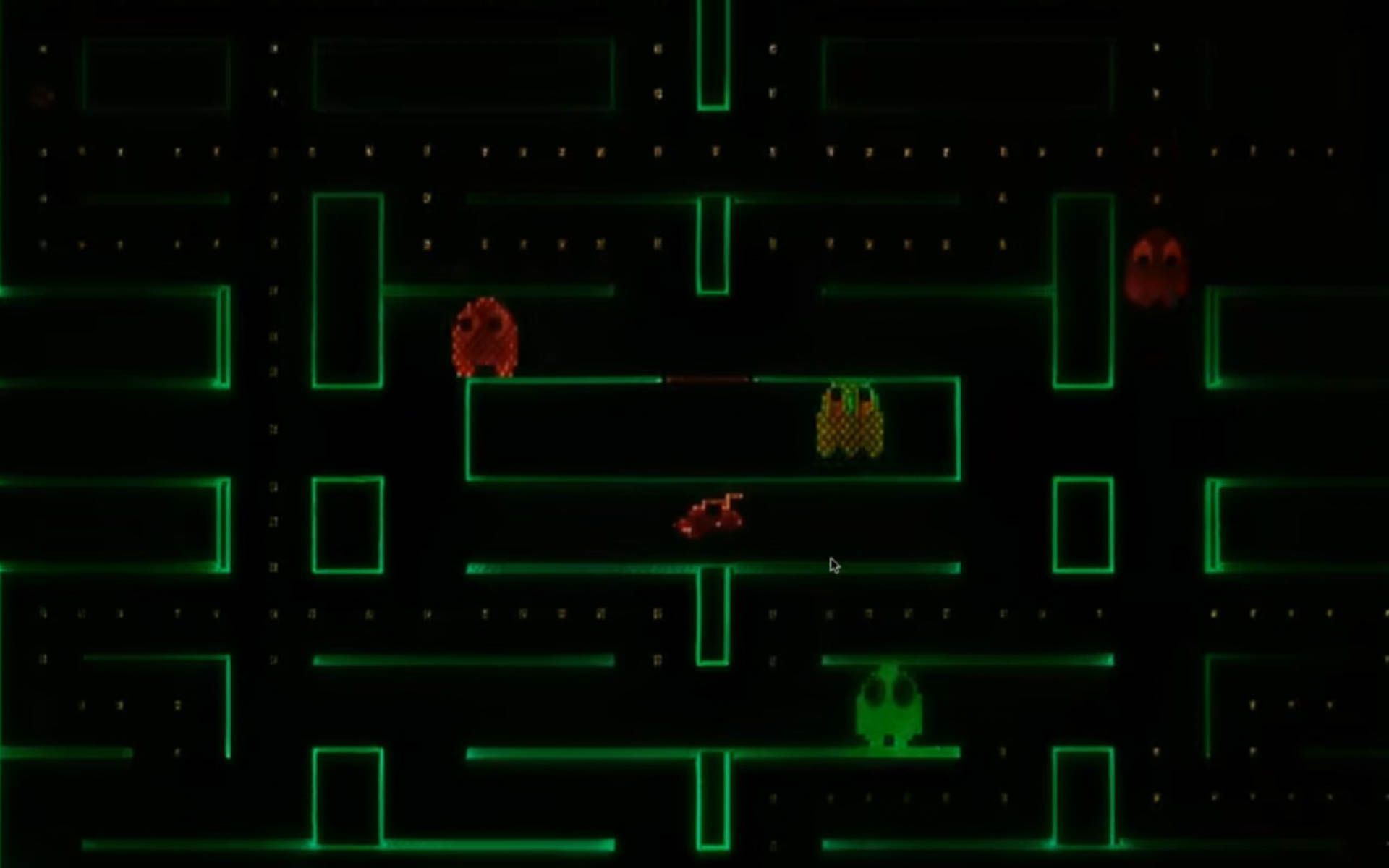
The bleeding-edge landscape of neural rendering has officially breached the realm of absurdity. In a masterclass of hardware-agnostic hacking, YouTuber Valery Kryzhanovsky has successfully intercepted the graphics pipeline of the MS-DOS classic Pac-Man, forcing Nvidia’s leaked, highly experimental DLSS 5 upscaler to render a 1980s flat 2D arcade maze. While modern silicon architectures like Nvidia’s Blackwell leverage proprietary Tensor Cores to accelerate generative frame reconstruction and advanced ray reconstruction in triple-A titles, this experiment pushes neural upscaling far beyond its intended architectural boundaries. By routing the legacy game through the MAME emulator and utilizing ReShade paired with RenoDX, this mod bypasses native API calls to force a deep learning algorithm onto a flat bitmapped grid.
Market positioning for this experiment is less about practical graphical fidelity and more about stress-testing the limits of leaked pre-release neural payloads. While DLSS 5 is fundamentally engineered to ingest motion vectors, depth buffers, and high-frequency geometric metadata from modern 3D titles, applying it to a flat canvas yields unpredictable algorithmic hallucinations. The mod demonstrates that unconstrained neural weights will aggressively attempt to invent spatial depth where none exists, turning simple sprite-based vectors into grotesque, hyper-shaded entities complete with newly generated cheekbones and sunken eye sockets. It serves as an empirical warning and a technical curiosity regarding how opaque AI upscaling models operate when starved of true volumetric input data.
Core Architectural & Technological Innovations
At the heart of this bizarre visualization pipeline is a complex dependency stack. Because Pac-Man lacks modern rendering APIs, standard vertex shaders, or spatial depth buffers, Kryzhanovsky utilized the MAME arcade emulator to provide a running graphics context. ReShade acts as the primary hook, allowing custom DLL injection directly into the rendering pipeline, while RenoDX exposes otherwise locked DLSS parameters for manual tweaking and HDR color space manipulation. However, a single pass—or 1x scaling—proved wholly inadequate for legacy 2D sprites, yielding virtually zero perceptible neural modification.
To circumvent this limitation, the experiment relies on a 4x Multipass architecture. By forcing the rendering pipeline to iteratively stack multiple upscaling passes upon itself, the neural network is tricked into accumulating micro-adjustments across successive frames. While this technique can occasionally approach a pseudo-photorealistic aesthetic in retro games featuring basic environmental occlusion like Duke Nukem, it fundamentally breaks down in Pac-Man. Because the algorithm lacks temporal context and spatial depth maps, it invents lighting, shadows, and anatomical features out of sheer statistical probability, stripping away vital UI elements like score dots while rendering ghosts into terrifying, hollow-eyed monstrosities across its Natural, Default, Cinematic, and Denoise rendering modes.
Empirical Specifications & Benchmark Matrix
| Feature / Metric | Native MS-DOS Pac-Man Baseline | DLSS 5 + 4x Multipass Injected State | Modern Triple-A DLSS 5 Implementation |
|---|---|---|---|
| Target Geometry | Flat 2D Bitmapped Sprites | Flat 2D Sprites forced into 4x Pass | Complex 3D Polygonal Meshes (CAD/RT) |
| Input Data Required | None (Direct Color Framebuffer) | Injected via ReShade & RenoDX Hooks | Motion Vectors, Depth Buffers, HDR |
| Tensor Core Utilization | 0% (CPU/Basic GPU Rasterization) | Unoptimized / Software Emulated Hook | Native Hardware Acceleration (Blackwell) |
| Visual Integrity | Crisp, Pixel-Perfect Arcade UI | Glitchy, Hallucinatory, Missing Dots | High Fidelity, Artifact-Minimized 4K |
Thermal, Efficiency & Real-World Ergonomics
Forcing a neural network to hallucinate volumetric lighting and facial structures onto a 4x Multipass feedback loop introduces massive, unnecessary computational overhead. While running a vintage game like Pac-Man natively consumes negligible power, routing the frame buffer through MAME, ReShade, RenoDX, and an undertrained 150MB DLSS 5 build spikes GPU utilization and introduces severe frame pacing penalties. The lack of temporal stability means the neural weights must calculate massive variations per pass, completely defeating the efficiency gains that upscaling technology is natively designed to deliver.
From a real-world ergonomics and usability standpoint, this mod is thoroughly unusable for actual gameplay. The rendering modes actively hinder core mechanics: the Denoise mode completely wipes out the pellet dots required to clear the maze, while Default and Cinematic modes distort the ghosts to the point of visual obstruction. It highlights a critical hardware-software dependency: neural upscalers are not universal magic wands. Without proper foundational data—such as reliable motion vectors and accurate depth maps—AI models simply resort to statistical guessing, transforming a clean retro experience into a sluggish, glitch-ridden tech demo.
The Definitive Verdict
Valery Kryzhanovsky’s Pac-Man DLSS 5 experiment is a brilliant exercise in technical hubris. It brilliantly illustrates the deterministic limits of AI upscaling when applied to non-Euclidean, flat 2D environments. While it fails as a practical enhancement tool—obliterating the game board, erasing crucial HUD elements, and turning harmless ghosts into nightmare fuel—it remains a fascinating empirical look at the behavior of undertrained neural networks. For hardware enthusiasts, it is a stark reminder that software intelligence is only as reliable as the geometric data fed into its pipeline.