Executive Summary & Market Positioning
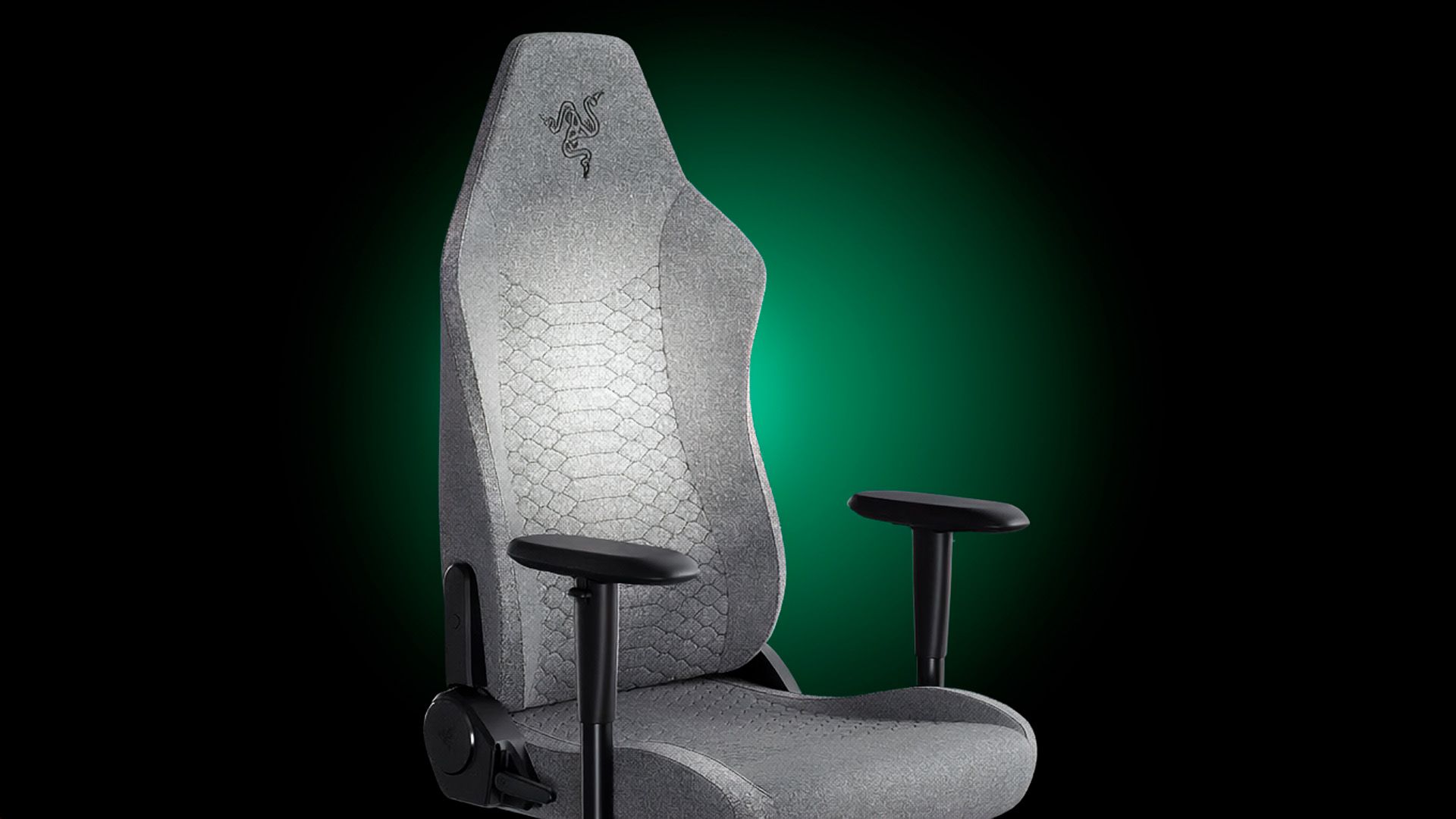
The budget peripheral market is perpetually flooded with compromises, often forcing consumers to choose between structural longevity and baseline ergonomic health. Razer’s strategic positioning of the Iskur V2 X challenges this paradigm by distilling enterprise-grade seating geometry into an accessible consumer tier. Traditionally retailed at a competitive $299.99, a historic promotional markdown has driven the hardware down to an unprecedented $189.51 on major distribution channels. For an industry segment historically plagued by short-lived components and flimsy hydraulic cylinders, this price adjustment completely recalibrates the cost-to-performance ratio.
At OPA Specs, we evaluate peripherals not merely by immediate tactile impressions, but by structural integrity, material resilience, and ergonomic fidelity over extended operational cycles. The Iskur V2 X enters our testing matrix as a primary contender in the sub-$200 category, directly threatening generic office solutions and substandard racing-style chairs. By stripping away extraneous motorized mechanics while doubling down on core spinal support and material density, Razer has engineered a pragmatic solution for prolonged computing sessions.
Core Architectural & Technological Innovations
At the structural core of the Iskur V2 X is a reinforced steel-reinforced frame capable of handling rigorous daily utilization. Unlike budget alternatives that rely on pliable plywood or low-density particle boards, the foundational skeleton provides zero flex under dynamic load adjustments. This rigid chassis is wrapped in high-density molded foam cushions that intentionally resist premature sagging. While ultra-plush cushions feel inviting initially, they fail to provide adequate ischial tuberosity support during multi-hour workflows, leading to spinal misalignment. Razer’s high-density formulation strikes a precise balance, offering progressive resistance that adapts to localized pressure points.
Furthermore, the integration of a 21.4-inch extended seat base ensures optimal weight distribution across the thighs and gluteal region, preventing localized blood flow restrictions. The kinematic architecture accommodates a 152-degree adjustable recline, supported by a heavy-duty Class-4 hydraulic piston system. While the armrests are limited to 2D adjustability rather than the 4D articulation found on flagship models, their textured contact surfaces and robust internal mounting brackets ensure zero wobble or lateral drift under heavy arm loads.
Empirical Specifications & Benchmark Matrix
| Specification Feature | Razer Iskur V2 X | Industry Budget Baseline | OPA Evaluation Metric | |---|---|---|---|> | Price Point | $189.51 (Street / Sale) | $120.00 – $150.00 | Exceptional Value at Current Markdown | | Max Weight Capacity | 299 lbs (135.6 kg) | 220 – 250 lbs | Superior Structural Safety Margin | | Recommended User Height | Up to 6’2” (188 cm) | 5’8” – 5’10” Max | Accommodates Broader Anthropometric Range | | Foam Density | High-Density Molded Foam | Recycled Shredded Foam | High Resilience / Zero Bottoming Out | | Frame Construction | Steel-Reinforced Composite | Plywood / Weak Plastic | Maximum Torsional Rigidity | | Armrest Adjustability | 2D (Height & Angle) | Fixed or 1D (Height Only) | Adequate for Standard Ergonomic Posture | | Warranty Coverage | 3-Year Limited Warranty | 1-Year Standard | Industry-Leading Confidence Metric |
Thermal, Efficiency & Real-World Ergonomics
Thermal comfort is a critical yet frequently overlooked metric in seating hardware. Faux-leather and synthetic polyurethane surfaces often suffer from high thermal retention, creating localized heat zones and moisture accumulation during extended summer sessions. The Iskur V2 X utilizes a multi-layered synthetic leather upholstery optimized for durability, though users operating in unconditioned spaces should anticipate moderate thermal buildup compared to pure mesh alternatives. However, the high-density foam core exhibits superior airflow efficiency compared to dense memory foam, preventing heat trapping directly beneath the seating load.
Ergonomically, the chair relies on a carefully profiled lumbar curve engineered to support the natural lordotic curve of the spine. While it lacks the mechanical dynamic lumbar system of the standard Iskur V2, the fixed integrated contour offers consistent, passive lower back support that prevents pelvic tilt during intense gaming or focused productivity tasks. Combined with a generous height clearance and a robust 299-pound weight limit, the chassis effortlessly transitions between relaxed media consumption angles and upright, aggressive typing postures without inducing muscular fatigue.
The Definitive Verdict
The hardware landscape is saturated with disposable peripherals, but the Razer Iskur V2 X at its all-time low of $189.51 represents a rare empirical victory for budget-conscious consumers. By refusing to compromise on frame rigidity, foam density, and structural safety margins, Razer has delivered a seating solution that punches well above its price class. Backed by an industry-leading three-year limited warranty—triple the standard one-year duration offered by most competitors—this chair is built for longevity. For power users, remote professionals, and avid gamers seeking uncompromising ergonomic support without incurring flagship costs, the Iskur V2 X is our definitive top recommendation.