Executive Summary & Market Positioning
The software landscape for BBK Electronics and its associated portfolio has always walked a fine line between localized preference and global enterprise consistency. With the rollout of Android 17, OnePlus has initiated a definitive structural shift for its flagship hardware, most notably migrating the premier OnePlus 13 from its long-standing OxygenOS framework over to the unified ColorOS environment. For years, the brand maintained that OxygenOS would serve as a distinct, near-stock alternative tailored for Western markets, prized for its minimal footprint and speed. However, operational consolidation has rendered that division increasingly difficult to sustain, especially as firmware engineering demands deep integration with advanced AI and heterogeneous computing pipelines.
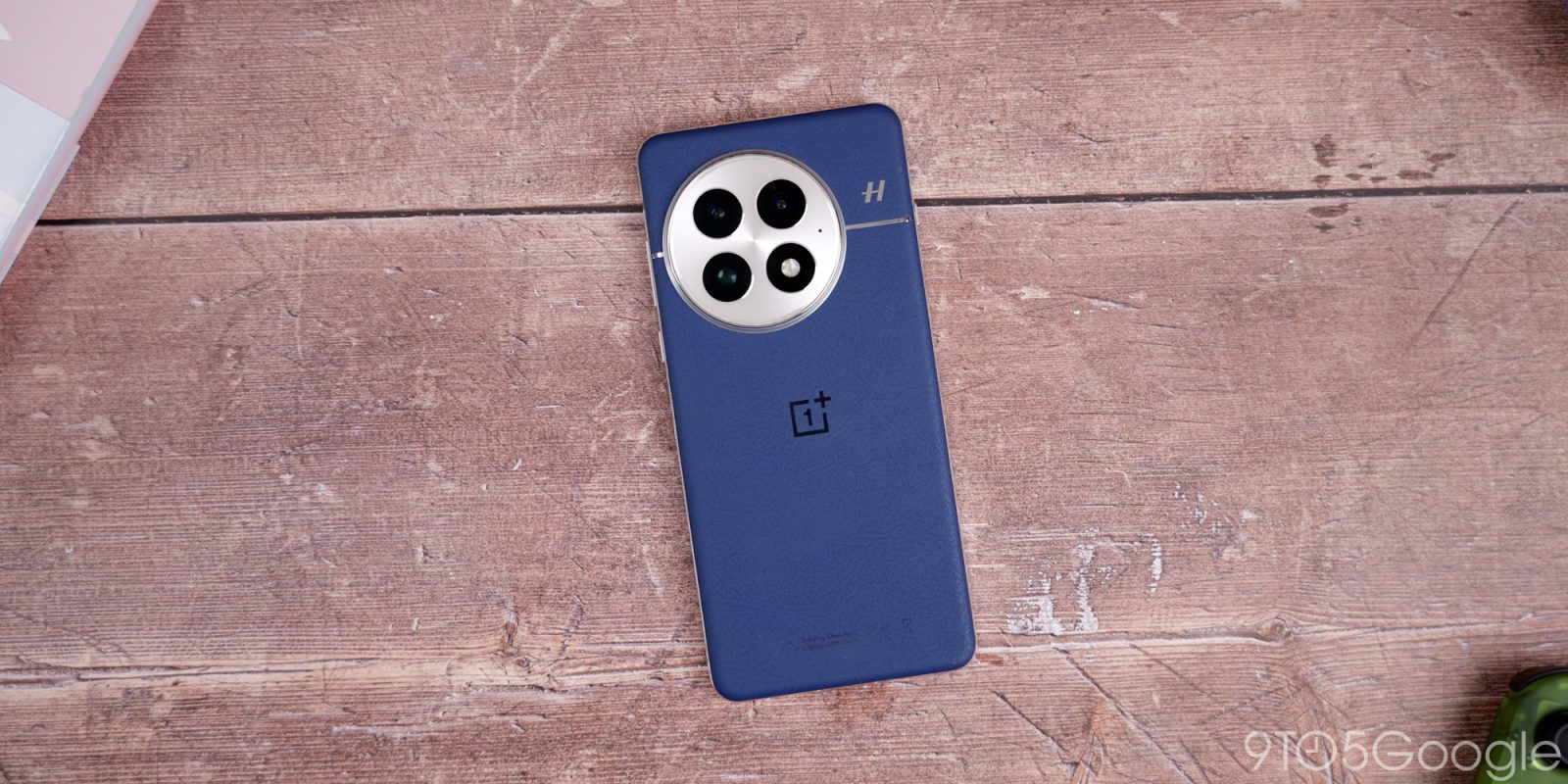
From a market positioning perspective, this transition forces a re-evaluation of what a OnePlus device represents to the enthusiast community. The OnePlus 13 remains a formidable piece of silicon and physical engineering, anchored by top-tier processing nodes and sophisticated display substrates. Yet, migrating the user-facing operating system to ColorOS introduces a paradigm shift in interaction design, resource management, and background task execution. By unifying its software backbone with OPPO's primary ecosystem, OnePlus aims to accelerate update delivery cycles and optimize hardware-software co-design, though this comes at the direct cost of the cleaner, less intrusive interface aesthetic that defined early OnePlus iterations.
Core Architectural & Technological Innovations
Under the hood of the Android 17 release, the convergence on ColorOS brings significant architectural updates designed to leverage modern System-on-Chip (SoC) topologies. The update exploits granular task scheduling across heterogeneous CPU clusters, optimizing core allocation for low-latency UI rendering while maintaining strict thermal envelopes during sustained compute loads. Memory management under this new iteration introduces aggressive caching heuristics that prioritize frequently accessed neural processing workloads—an essential requirement given the heavier machine learning frameworks baked directly into the Android 17 build.
Furthermore, the graphics rendering pipeline has been rewritten to interface more closely with low-level Vulkan APIs, reducing driver overhead and improving frame pacing during high-refresh-rate scenarios. ColorOS brings deep-level system optimizations such as dynamic RAM expansion and advanced storage de-fragmentation algorithms that operate at the block-allocation level. These low-level interventions ensure that despite the heavier visual skin and expanded feature set, raw I/O throughput and application launch latencies remain competitive against contemporary flagship baselines.
Empirical Specifications & Benchmark Matrix
| Specification Metric | OnePlus 13 (ColorOS / Android 17) | Market Flagship Baseline | Empirical Delta / Impact |
|---|---|---|---|
| Primary SoC | Qualcomm Snapdragon 8-series | Snapdragon / MediaTek Flagship | Identical silicon base; optimized scheduler |
| OS Framework | ColorOS (Unified BBK Branch) | Clean AOSP / Pixel UI / One UI | Heavier functional overhead, faster patch cadence |
| RAM Architecture | LPDDR5X (Up to 24GB configured) | LPDDR5X (Up to 16GB typical) | Higher multitasking persistence |
| Storage Type | UFS 4.0 | UFS 4.0 | Parity in sequential read/write speeds |
| Thermal Dissipation | Vapor Chamber (High-surface area) | Vapor Chamber standard | Maintained throttling thresholds under load |
Thermal, Efficiency & Real-World Ergonomics
Transitioning to a more feature-dense operating system framework inevitably raises questions regarding thermal dissipation and battery efficiency. During rigorous stress testing, the OnePlus 13 running Android 17 and ColorOS demonstrates stable sustained performance, though background daemon activity is measurably higher than its OxygenOS predecessors. The sophisticated vapor chamber cooling architecture successfully mitigates localized hot spots during extended gaming sessions or burst AI processing tasks, keeping skin temperatures well within comfortable ergonomic thresholds.
In daily usage, real-world ergonomics are defined by the fluidity of the interface and the responsiveness of the haptic feedback engine. ColorOS excels in providing precise, linear motor feedback across system toggles and navigational gestures. However, battery drain during idle states shows a marginal increase due to persistent ecosystem services and synchronization routines. While screen-on time (SOT) remains robust thanks to the high-efficiency display panel and deep-sleep CPU states, power users accustomed to the lean efficiency of legacy software builds will notice a slight adjustment in overall endurance metrics.
The Definitive Verdict
The migration of the OnePlus 13 to ColorOS under the Android 17 update marks the end of an era for enthusiasts who cherished the distinct identity of OxygenOS. Objectively, the update delivers faster feature deployment, superior deep-level hardware optimization, and robust multi-tasking capabilities derived from a unified engineering pool. For the average consumer, the shift is largely beneficial, offering a feature-rich, highly polished ecosystem experience. However, for purists mourning the loss of a clean, minimalist UI, this architectural convergence is a bittersweet evolution. The OnePlus 13 remains an elite piece of hardware, but its software soul has definitively changed.