Executive Summary & Market Positioning
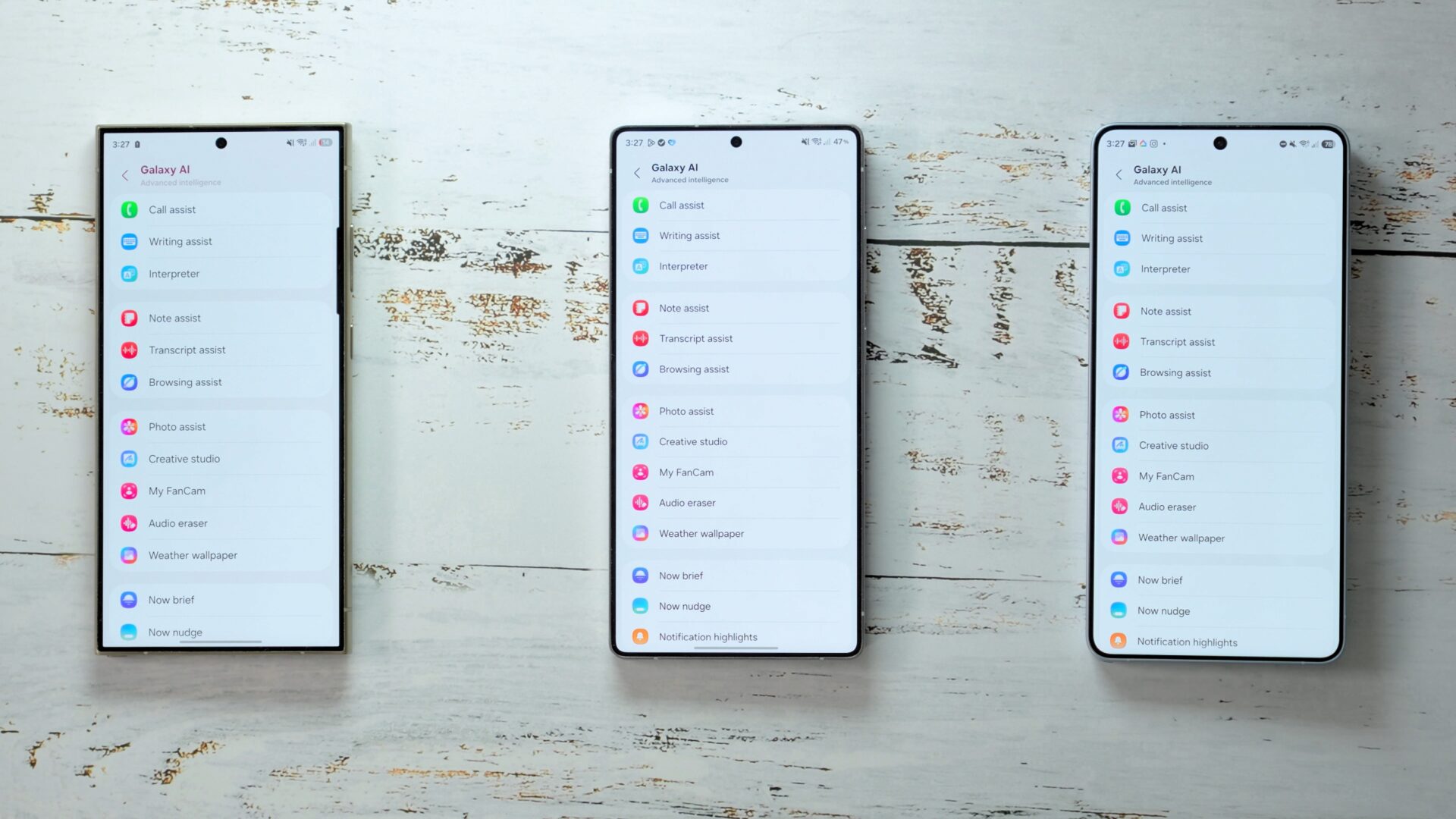
Samsung’s software lifecycle management faces a monumental stress test with the rollout of One UI 9 across three distinct silicon generations: the Snapdragon 8 Gen 3 / Exynos 2400 inside the Galaxy S24, the Snapdragon 8 Elite / Exynos 2500 powering the S25, and the newly established flagship silicon driving the Galaxy S26. Historically, major point releases of One UI introduce fragmented feature sets that favor the newest hardware, often artificially gating machine learning tasks behind newer Neural Processing Units (NPUs). However, One UI 9 defies this convention by delivering an aggressive feature parity rollout that bridges a three-year generational gap, ensuring legacy users aren't left entirely in the dust while preserving strategic incentives for hardware upgrades.
From a market positioning standpoint, Samsung is shifting its software strategy from a pure hardware-selling incentive to an ecosystem longevity play. By backporting advanced contextual intelligence pipelines—such as Call Brief and the advanced My FanCam cropping tool—to the 2024 vintage Galaxy S24, Samsung validates its extended seven-year support promise. Yet, a microscopic audit of the update reveals subtle silicon-level boundaries. While the core AI engines compute locally across all three tiers, minor hardware exclusions, particularly concerning notification handling on the legacy S24 and selective omissions on the FE (Fan Edition) variants, underscore the inescapable physical limits of aging mobile platforms when paired with heavy, modern software workloads.
Core Architectural & Technological Innovations
The architectural backbone of One UI 9 centers on optimized on-device inference orchestration, leveraging heterogeneous computing blocks across the S-series SoC matrix. A primary highlight is the deployment of My FanCam, an intelligent cropping and tracking pipeline that processes existing and legacy video clips to isolate and follow subjects dynamically. Because this feature runs locally without cloud round-trips, it relies heavily on the vector math capabilities of the onboard NPU, executing smoothly on the S24's older processing blocks despite the generational leap in TOPS (Tera Operations Per Second) found in the S26's newer silicon.
Furthermore, system-level enhancements like Now Nudge and custom Now Brief cards demonstrate a refined approach to proactive computing. Now Nudge aggregates real-time screen context to suggest immediate actions, such as calendar parsing from chat logs, while customizable Now Brief cards allow users to pin up to three modular data widgets (weather, health, telemetry) scheduled precisely by user preference. Meanwhile, Samsung has revamped Bixby with conversational AI capabilities backed by Perplexity integration, introducing dedicated home screen widgets that bypass the hardware Side button. This allows power users to map Google Gemini to physical triggers while maintaining rapid access to multimodal voice queries within Bixby's refreshed interface.
Empirical Specifications & Benchmark Matrix
| Feature / Metric | Galaxy S24 Series (One UI 9) | Galaxy S25 Series (One UI 9) | Galaxy S26 Series (One UI 9) | Market Baseline / Standard |
|---|---|---|---|---|
| Primary SoC NPU (TOPS) | ~40 - 42 TOPS | ~60 - 65 TOPS | ~80+ TOPS | 50+ TOPS (2026 Flagship Standard) |
| Call Brief AI Support | Supported (Omitted UI Text) | Fully Supported | Fully Supported | Standard Local Inference |
| My FanCam Processing | Supported (Local Video Crop) | Supported (Accelerated) | Supported (Optimized) | NPU-Dependent Media Pipe |
| Now Nudge / Brief | Supported (Custom Cards) | Fully Supported | Native Integration | Contextual OS Standard |
| Samsung DeX Overhaul | Updated Multitasking & UI | Updated Multitasking & UI | Advanced Multi-Desktop | Desktop Convergence Standard |
Thermal, Efficiency & Real-World Ergonomics
Deploying a resource-intensive software architecture like One UI 9 across legacy hardware naturally introduces thermal and power management concerns. Running complex background models for Call Brief and persistent context analyzers like Driving Report—which logs telematics via Bluetooth connection to automotive units—places an ongoing baseline load on the system-on-chip. On the Galaxy S24, users may observe a marginal increase in idle power consumption immediately post-update as indexing and NPU recalibration settle, whereas the superior thermal dissipation designs and energy-efficient process nodes of the S25 and S26 handle these persistent background routines with negligible battery degradation.
Ergonomically, the UI refinements in One UI 9 focus heavily on reducing cognitive load and visual clutter. Settings menus have been streamlined by stripping redundant descriptive text blocks from main menu entries, pushing granular explanations into secondary submenu layers. Samsung DeX receives substantial quality-of-life updates, including cleaner desktop previews, seamless cross-desktop navigation, and an auto-hide taskbar setting that elevates the mobile-to-desktop transition. Additionally, the new "Warranty and care" hub consolidates diagnostics, repair requests, and multi-device account tracking into a single panel, drastically cutting down the navigation friction typical of older software builds.
The Definitive Verdict
One UI 9 is a masterclass in software longevity execution, successfully bridging three generations of Galaxy hardware while resisting the urge to lock every new feature behind the latest silicon paywall. For Galaxy S24 owners, receiving deep AI integrations like My FanCam and Call Brief makes the update feel like a genuine hardware refresh. However, the definitive winner remains the Galaxy S26 series, which pairs these software additions with the raw NPU headroom and thermal efficiency required to run them without battery or performance compromises. Users holding onto older devices can upgrade with confidence, knowing their hardware remains remarkably capable, albeit with a few minor notification and processing asterisks.