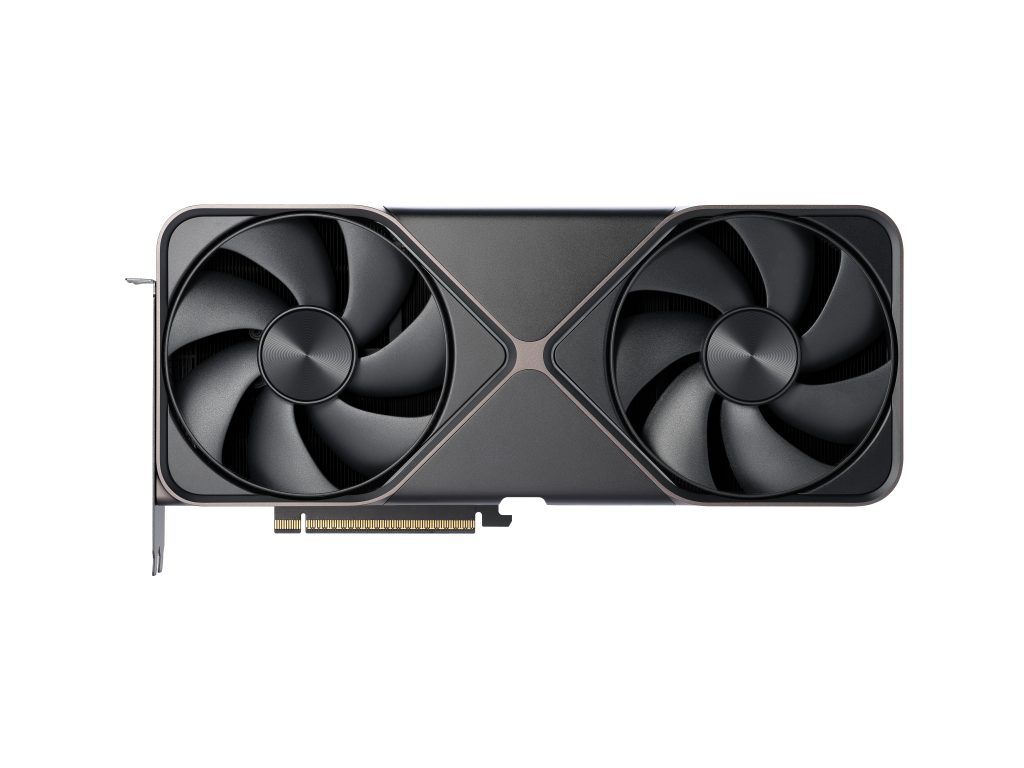
Executive Summary & Market Positioning
The GPU landscape is undergoing a tectonic shift, driven by the relentless gravity of the enterprise AI sector. According to recent reports surfacing from hardware leakers like MEGAsizeGPU, Nvidia is reportedly moving to sequester its flagship GB202 silicon—previously earmarked for the consumer-facing GeForce RTX 5090—exclusively for its professional RTX Pro lineup. This strategic pivot highlights a fundamental transition in Nvidia’s business model: the prioritization of high-margin workstation and data center deployments over the volatility of the enthusiast gaming segment. As the cost of premium GDDR7 memory modules continues to climb, the economics of producing a sub-$2,000 consumer flagship have become increasingly difficult to justify against the insatiable demand for AI-compute-capable hardware.
To bridge the widening gap in the high-end gaming market, Nvidia is allegedly preparing a revised RTX 5080 SKU featuring a 24GB frame buffer. This represents a pragmatic, if reactive, approach to sustaining market relevance. By boosting the memory capacity of the 5080, Nvidia is effectively hedging against the obsolescence of its consumer lineup, ensuring that enthusiasts who are priced out of the $6,000+ professional tier still have a viable, VRAM-heavy option. This move serves to pacify the consumer demographic while allowing the company to maximize the yield of its top-tier silicon where it matters most: the enterprise profit center.
Core Architectural & Technological Innovations
The pivot to a 24GB RTX 5080 relies heavily on the implementation of high-density 3GB GDDR7 memory modules. Shifting to this memory configuration allows the 5080 to maintain high memory bandwidth while doubling the capacity of its predecessor’s expected baseline. This is not merely an exercise in raw volume; it is a response to the reality of modern game engine requirements, where high-resolution textures and complex ray-tracing assets are pushing the limits of the standard 16GB VRAM tier. By aligning the 5080 with a 24GB ceiling, Nvidia effectively future-proofs the card against the memory-hungry demands of next-generation engine architecture.
Technologically, the integration of 3GB modules on a 256-bit bus creates a unique thermal and electrical footprint. While the GB202 silicon remains the crown jewel, the modified 5080 will likely utilize a heavily binned version of the Blackwell architecture. This ensures that even with a reduced CUDA core count compared to the original RTX 5090 target, the card can sustain the necessary throughput for high-fidelity ray tracing and path-traced rendering. The challenge for Nvidia will be balancing these clock speeds with the increased thermal density inherent in high-density memory modules, a task that will likely force a re-evaluation of board design and cooling solutions.
Empirical Specifications & Benchmark Matrix
| Feature | RTX 5080 (Rumoured) | RTX 5090 (Original Baseline) | Market Requirement |
|---|---|---|---|
| VRAM | 24GB GDDR7 | 32GB+ GDDR7 | 16GB - 24GB |
| Memory Bus | 256-bit | 512-bit | 256-bit+ |
| Silicon | Blackwell (Binned) | Blackwell (Full GB202) | High-Performance |
| TDP | 300W - 350W | 600W+ | 300W - 450W |
| Est. Price | High-Premium ($1,200+) | N/A (Professional Only) | Enthusiast Tier |
Thermal, Efficiency & Real-World Ergonomics
Transitioning the RTX 5080 to a 24GB configuration introduces significant thermal management challenges. The increased density of the VRAM modules typically results in higher operating temperatures, requiring robust heat dissipation solutions and optimized PCB layouts to prevent thermal throttling. Users should expect thicker, more aggressive cooling shrouds if Nvidia chooses to maintain a silent acoustic profile. However, the move to a 300-350W TDP, while substantial, remains far more manageable for standard consumer power supplies than the extreme power draws previously associated with flagship Blackwell cards, potentially making this iteration a more practical choice for system integrators and SFF (Small Form Factor) enthusiasts.
From a real-world utility standpoint, the 24GB buffer is a game-changer for creators and AI-hobbyists. While many gamers might argue that 16GB is sufficient for contemporary titles, the inclusion of 24GB democratizes the hardware for local LLM (Large Language Model) inference and heavy creative workloads. If Nvidia delivers on this spec, they successfully differentiate the 5080 as a hybrid card—bridging the gap between a pure gaming GPU and a quasi-workstation engine—which could ironically drive sales in the very AI-centric sectors they are currently prioritizing.
The Definitive Verdict
If these reports hold, the discontinuation of the RTX 5090 for the general consumer market is a watershed moment for the GPU industry. It signals the end of the "no-holds-barred" era of consumer graphics, replaced by a strategic allocation model favoring professional capital. The 24GB RTX 5080 emerges as the clear winner in this scenario: it provides the essential capacity required for modern high-resolution gaming and entry-level AI development without the astronomical pricing or thermal absurdity of a professional-only GB202 SKU. For the enthusiast market, it is not just a replacement; it is the most logical point of entry for the next generation of hardware.