Nvidia RTX Spark Hardware Launch: Comprehensive Architectural Review and Market Impact
Executive Summary & Market Positioning
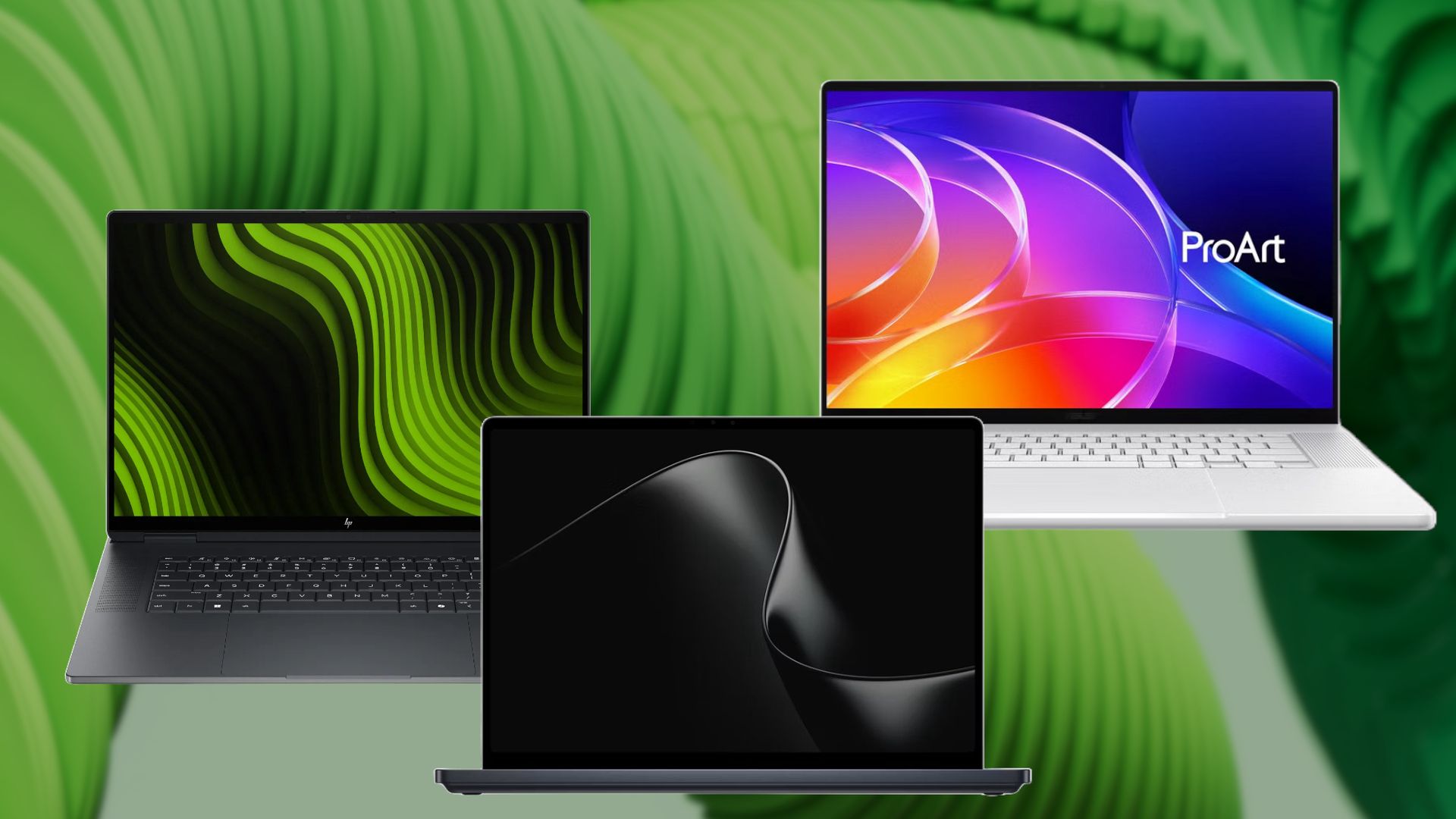
Nvidia’s official commercial rollout of the RTX Spark platform marks a monumental shift in mobile computing architecture. As major OEMs—including Asus, Microsoft, Lenovo, HP, and Dell—open immediate fulfillment pipelines, the industry is witnessing the maturation of high-efficiency heterogeneous systems designed to capture the burgeoning agentic AI workstation market. Initial inventory spans localized retail channels like Best Buy alongside expansive direct-to-consumer configurations, establishing a price-to-performance matrix that begins at a formidable $2,599 entry point and stretches past $6,999 for maximum memory implementations.
Positioned squarely at the intersection of professional workstation utility and ultra-mobile productivity, the RTX Spark ecosystem challenges legacy x86 paradigms. By marrying proprietary CPU compute blocks with advanced graphics and unified memory structures, Nvidia is targeting creative professionals, data scientists, and power users who demand massive local model inference capabilities. However, the premium pricing tiers, particularly for 128GB configurations from vendors like Asus and HP, mean these platforms will cater strictly to enterprise deployments and specialized engineering workflows rather than mainstream consumer segments.
Core Architectural & Technological Innovations
At the silicon level, the RTX Spark platform breaks new ground by integrating a robust CPU subsystem—scaling up to a 20-core Grace architecture—alongside a cutting-edge Blackwell GPU microarchitecture. Depending on the tier, these chips feature scalable graphics engines housing up to 6,144 CUDA cores in top-bin configurations, though entry-level 32GB models scale back to a 5,120-core layout to optimize yields and thermal profiles. This tight coupling allows for massive parallel compute capability directly on the mobile die, mitigating inter-chip latency bottlenecks inherent in discrete CPU-GPU topologies.
Crucially, the platform leverages high-bandwidth unified memory architectures scaling from baseline 24GB tiers up to an impressive 128GB ceiling. This vast memory pool is instrumental for running large language models and multi-modal generative AI locally without offloading to cloud infrastructure. Coupled with Windows 11 optimizations tailored for agentic AI workloads, the RTX Spark hardware stack provides the low-latency memory bandwidth and tensor acceleration required to run continuous background autonomous agents efficiently.
Empirical Specifications & Benchmark Matrix
| Platform / Model | Processor Core Count | GPU Core Count | Unified Memory Max | Display Tech & Refresh | Baseline Launch Price |
|---|---|---|---|---|---|
| Market Baseline (Legacy x86) | 8-16 Cores | Discrete Mobile GPU | 64GB DDR5 / LPDDR5X | 1600p IPS / OLED @ 60-120Hz | $1,800 – $2,400 |
| Asus ProArt P14 (RTX Spark) | 18/20-Core N1X | 5,120 Cores | 24GB | 14-inch 3K OLED (Touch) | $2,599.99 |
| Microsoft Surface Laptop Ultra | 18-Core N1X | 5,120 - 6,144 Cores | 128GB | 15-inch 3K Touchscreen | $2,599.99 |
| Asus ProArt P16 (RTX Spark) | 20-Core Grace | 6,144 Cores | 128GB | 16-inch 4K OLED (Touch) | $4,399.99 |
| HP OmniBook Ultra 16 | 20-Core Grace | 6,144 Cores | 128GB | 16-inch 3K OLED @ 120Hz | $3,199.99 |
Thermal, Efficiency & Real-World Ergonomics
Packing a 20-core Grace processor and a dense Blackwell GPU into chassis profiles as thin as 14 and 16 inches presents formidable thermodynamic challenges. OEMs have responded with advanced vapor chamber cooling networks and multi-phase thermal interface materials to sustain boost clocks under prolonged computational loads. Despite these engineering hurdles, the efficiency gains of the unified architecture ensure that idle and light-load power draws remain remarkably restrained, preserving battery life during standard productivity tasks.
Ergonomically, the devices emphasize premium industrial design, featuring high-refresh-rate OLED touch displays that range from 3K to 4K resolutions with vibrant color gamuts suited for content creation. While entry-level configurations manage heat dissipation quietly, pushing top-tier configurations with 128GB of memory under sustained all-core rendering or localized LLM training will undoubtedly engage aggressive fan profiles. Users should expect audible acoustics under peak multi-threaded stress, though chassis skin temperatures remain well within regulatory comfort limits.
The Definitive Verdict
Nvidia's RTX Spark rollout represents a triumphant technological leap, successfully delivering desktop-class AI inference and rendering capabilities into remarkably sleek mobile form factors. For professionals requiring massive unified memory pools—such as the 128GB configurations offered by Asus, Microsoft, and HP—the platform justifies its steep investment by eliminating memory bottlenecks for local AI workloads.
However, for the average buyer, the pricing premium—scaling up to nearly $7,000 for maxed-out variants—demands careful cost-benefit analysis. The Microsoft Surface Laptop Ultra emerges as the definitive value winner at its $2,599 entry point, offering a balanced blend of portability, hardware specifications, and expansive configuration ceilings. If your workflow relies heavily on localized agentic AI and heavy parallel compute, RTX Spark is an absolute paradigm shift; otherwise, mainstream users can safely wait for second-generation yield maturity.