Executive Overview & Market Positioning
Chinese artificial intelligence labs face severe computing bottlenecks as Nvidia implements aggressive global restrictions on overseas cloud rentals. Driven by intense scrutiny from U.S. lawmakers, Nvidia has verbally instructed worldwide data center partners that at least 51% of their deployed services must be allocated to non-Chinese firms. This policy, paired with Fleet Intelligence tracking requirements in Southeast Asia, significantly curtails the ability of Chinese hyperscalers like Moonshot, Tencent, ByteDance, and Alibaba to lease high-performance foreign infrastructure.
Domestically, the compute shortfall remains critical. While Huawei and domestic players like Baidu and Cambricon project a combined domestic supply of up to 3.5 million chips, total Chinese demand exceeds 5 million and is scaling rapidly. To bridge this shortfall, domestic firms have purchased over 1 million export-compliant gaming and workstation cards. However, these solutions—such as the RTX Pro 6000D and RTX 5090—are architecturally limited and primarily suited for simpler workloads like prefill. Although Huawei's Ascend 910C outperforms these consumer-derived architectures in specific metrics, the deep entrenchment of CUDA across global AI frameworks continues to drive massive demand for Nvidia alternatives despite inflated domestic pricing.
Empirical Benchmark Matrix
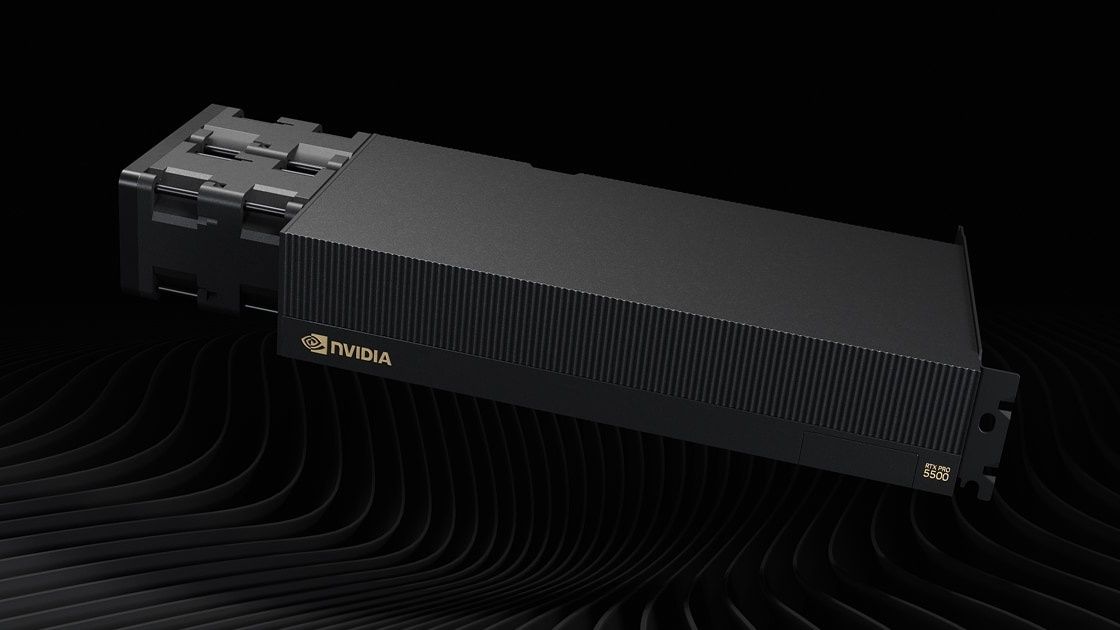
The hardware disparity between export-compliant domestic options, licensed accelerators, and restricted architectures underscores the severity of the compute deficit. The newly detailed RTX Pro 5500 features 84GB of GDDR7 memory with ECC, delivering 1.4 TB/s of memory bandwidth across a PCIe Gen 5 x16 interface. While it supports Multi-Instance GPU (MIG) partitioning, it lacks native NVLink connectivity and offers a fraction of the raw throughput found in enterprise-grade Blackwell accelerators.
| GPU Model | Memory Architecture | Memory Bandwidth | Interconnect | China Market Access Status |
|---|---|---|---|---|
| RTX Pro 5500 | 84GB GDDR7 | 1.4 TB/s | PCIe Gen 5 x16 | Export-compliant; sampling Dec, Q1 2027 delivery |
| H200 | 141GB HBM3E | 4.8 TB/s | NVLink | Case-by-case U.S. license; Beijing withholding approvals |
| B300 | 288GB HBM3E | 8.0 TB/s | NVLink (1.8 TB/s) | Banned for direct sale; strictly restricted overseas rentals |
Thermal, Efficiency & Definitive Verdict
From a thermal and electrical efficiency perspective, the RTX Pro 5500 is engineered to draw up to 600W, making it a high-density footprint for workstations and designated servers, yet it pales against the enterprise capabilities of the B300, which yields roughly 3.4 times the memory capacity and 5.7 times the bandwidth. With the proposed Remote Access Security Act threatening to close overseas leasing loopholes and Nvidia enforcing strict cloud partner quotas, Chinese AI labs are trapped between restricted foreign neoclouds and constrained domestic alternatives. Ultimately, hardware fragmentation and tightening geopolitical gatekeeping will permanently alter the economics of cross-border AI training clusters.