Executive Summary & Market Positioning
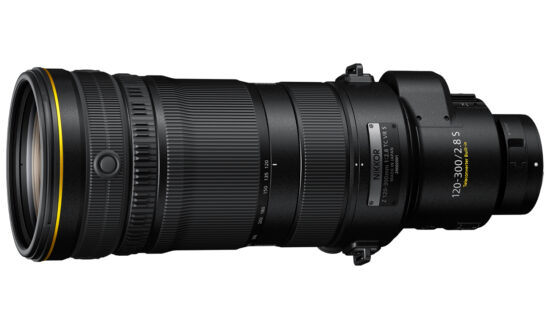
The announcement of the Nikon Nikkor Z 120-300mm f/2.8 TC VR S marks a monumental inflection point for high-end sports, wildlife, and photojournalistic hardware. Designed specifically to anchor the professional Z-mount ecosystem, this specialized fast telephoto zoom bridges a critical operational gap between traditional 70-200mm workhorses and ultra-costly, inflexible prime lenses. By integrating a dedicated constant aperture alongside an internally housed teleconverter, Nikon is directly challenging legacy DSLR-era blueprints with a native mirrorless optic engineered for ultra-high-resolution sensor topologies.
Positioned squarely at the pinnacle of optical engineering, this lens is slated for strictly limited production runs, signaling that Nikon is prioritizing uncompromising tolerances over mass-market volume. Early supply chain indicators confirm extended delivery wait times, underscoring its status as an elite tool for institutional agencies and premier professionals. As mirrorless camera bodies push past 45 megapixels with rapid burst rates, optical systems must resolve unprecedented levels of detail without introducing chromatic aberrations or marginal light falloff. The Nikkor Z 120-300mm f/2.8 TC VR S arrives not merely as an evolutionary update to its F-mount predecessor, but as a complete optical redesign optimized for the wide flange distance and short back focus unique to the Nikon Z mount.
Core Architectural & Technological Innovations
At the heart of the Nikkor Z 120-300mm f/2.8 TC VR S is an advanced optical formula featuring an integrated 1.4x teleconverter. This internal module can be engaged instantaneously via a flick of a dedicated mechanical switch, transforming the lens into a 168-420mm f/4 focal powerhouse without breaking the weather seal or exposing the internal glass elements to field particulates. This architecture maintains exceptional optical center alignment, preventing the mechanical degradation commonly associated with stacked external teleconverters. Nikon’s proprietary coating technologies—including ARNEO and Nano Crystal coats—are heavily deployed across specialized low-dispersion (ED) and Super ED glass elements to effectively neutralize ghosting, flare, and axial chromatic aberration under severe backlighting conditions.
Autofocus performance has also been aggressively modernized. Driven by multiple high-speed stepping motors (STM) working in tandem, the lens achieves near-silent, lightning-fast focal acquisition capable of tracking erratic subjects across complex spatial planes. This focus drive architecture is tightly coupled with Nikon's advanced Vibration Reduction (VR) system, which provides up to 5.5 stops of stabilization compensation—scaling even higher when paired with Synchro VR enabled flagship bodies like the Z9 and Z8. The mechanical barrel is engineered with meticulous weather-sealing gaskets throughout, ensuring reliable operation in adverse environmental extremes from torrential downpours to fine desert particulates.
Empirical Specifications & Benchmark Matrix
| Specification Parameter | Nikkor Z 120-300mm f/2.8 TC VR S | Industry Baseline (Standard f/2.8 Zoom) |
|---|---|---|
| Focal Length Range | 120-300mm (168-420mm w/ built-in 1.4x TC) | 70-200mm or 120-300mm (External TC) |
| Maximum Aperture | f/2.8 (f/4 with internal TC engaged) | f/2.8 constant |
| Optical Construction | Complex multi-element with ED/Super ED glass | Standard fluorite and low-dispersion elements |
| Stabilization (VR) | Up to 5.5 stops (Synchro VR compatible) | 4.0 to 4.5 stops |
| Focus Actuator | Multi-group High-Speed STM | Ring USM or standard linear motors |
| Weather Sealing | Comprehensive professional-grade gaskets | Standard moisture resistance |
Thermal, Efficiency & Real-World Ergonomics
Handling a specialized f/2.8 telephoto zoom requires a delicate balance between structural rigidity and operational fatigue management. The chassis of the Nikkor Z 120-300mm f/2.8 TC VR S utilizes a magnesium alloy construction that successfully drops considerable weight compared to legacy F-mount equivalents, while maintaining extreme torsional stability. Weight distribution has been meticulously shifted rearward toward the camera mount, reducing the moment of inertia when tracking fast-moving vertical subjects over extended periods. The positioning of the zoom ring, focus ring, and the integrated teleconverter lever is ergonomically optimized, allowing a professional operator to adjust focal parameters and engage the 1.4x multiplier purely by tactile memory without un-shouldering the rig.
From a thermal and environmental perspective, the exterior barrel finish features a high-grade heat-reflective coating that prevents rapid internal temperature fluctuations when shooting under direct, harsh sunlight. This thermal mitigation is crucial for preventing microscopic glass element expansion that could otherwise induce subtle focus drift during prolonged outdoor assignments. Furthermore, the electronic data communication pathways between the lens microprocessor and the host body operate with zero noticeable latency, ensuring that EXIF metadata, focus-breathing corrections, and aperture steps are recorded instantaneously even during high-frequency electronic shutter bursts.
The Definitive Verdict
The Nikon Nikkor Z 120-300mm f/2.8 TC VR S is an engineering tour de force that redefines versatility for professional telephoto shooters. By seamlessly merging a native f/2.8 aperture with an instantly deployable 1.4x teleconverter within a robust, weather-sealed Z-mount housing, Nikon has effectively eliminated the need to swap lenses or external glass in high-pressure field environments. While its limited production runs and inevitable long wait times mean acquiring one will require patience and capital, its optical fidelity, autofocus precision, and ergonomic refinement make it an indispensable flagship asset. For sports, wildlife, and event professionals locked into the Z ecosystem, this lens is a definitive, uncompromising benchmark investment.