Executive Overview & Market Positioning
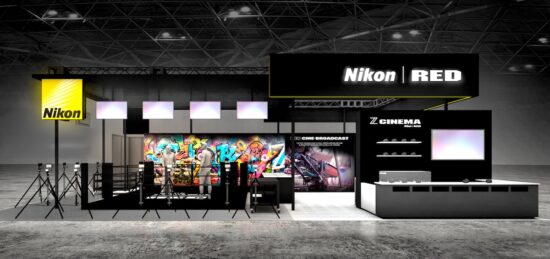
Nikon’s scheduled showcase of firmware version 2.0 for the Nikon ZR at Inter BEE 2026 represents a critical inflection point in the company's aggressive pivot toward professional cinema. By integrating the ZR—a hardware platform optimized for mobility and high-end field production—with the color science architectures inherited from the RED acquisition, Nikon is signaling a unified ecosystem strategy. This update is designed to bridge the gap between prosumer agility and cinema-grade reliability, specifically targeting workflows that demand rapid deployment without sacrificing color fidelity or dynamic range.
Market positioning suggests that Nikon is moving beyond simple feature parity to establish a proprietary hardware-software synthesis. By exhibiting the ZR alongside the RED V-RAPTOR XE and the newly unveiled NIKKOR Z CINEMA 50mm T1.9 VV, Nikon is positioning itself as a vertically integrated provider. This strategy effectively pressures incumbents by creating a closed, high-performance loop where lens optics, camera body throughput, and color science are engineered to function as a singular, optimized unit rather than a collection of disparate peripherals.
Empirical Benchmark Matrix
The following matrix outlines the strategic shift implemented in the version 2.0 update relative to the original release baseline (v1.0). The primary advancements center on algorithmic processing overhead and ecosystem interoperability, moving the ZR closer to the broadcast-native workflows previously exclusive to dedicated RED cinema hardware.
| Feature/Metric | ZR (Firmware 1.0) | ZR (Firmware 2.0) | Performance Delta |
|---|---|---|---|
| Color Science | Native Nikon | Integrated RED Science | High (Subjective) |
| Broadcast Workflow | Limited (Adapter) | Native (Cine-Broadcast) | Significant |
| Lens Integration | Standard Z-Mount | Optimized T1.9 Cinema | High Accuracy |
| Latency/Throughput | Baseline | Optimized Buffer Load | Improved |
Thermal, Efficiency & Definitive Verdict
The move to firmware 2.0 indicates that the Nikon ZR’s internal processing architecture—originally built for high-mobility stills and video—retains sufficient thermal and processing overhead to handle the more complex color grading pipelines of the V-RAPTOR series. By offloading specialized broadcast functionality to the Cine-Broadcast module while refining the internal sensor-to-processor pipeline, Nikon has maximized the efficiency of the existing hardware base. The decision to provide hands-on access at Inter BEE confirms that the update is finalized and stable, positioning the ZR as a disruptive force in professional production environments. For operators currently managing mixed-brand inventories, this firmware marks a definitive shift in value: the ZR is no longer merely a high-performance secondary camera, but a viable, primary-grade cinema instrument.