Executive Summary & Market Positioning
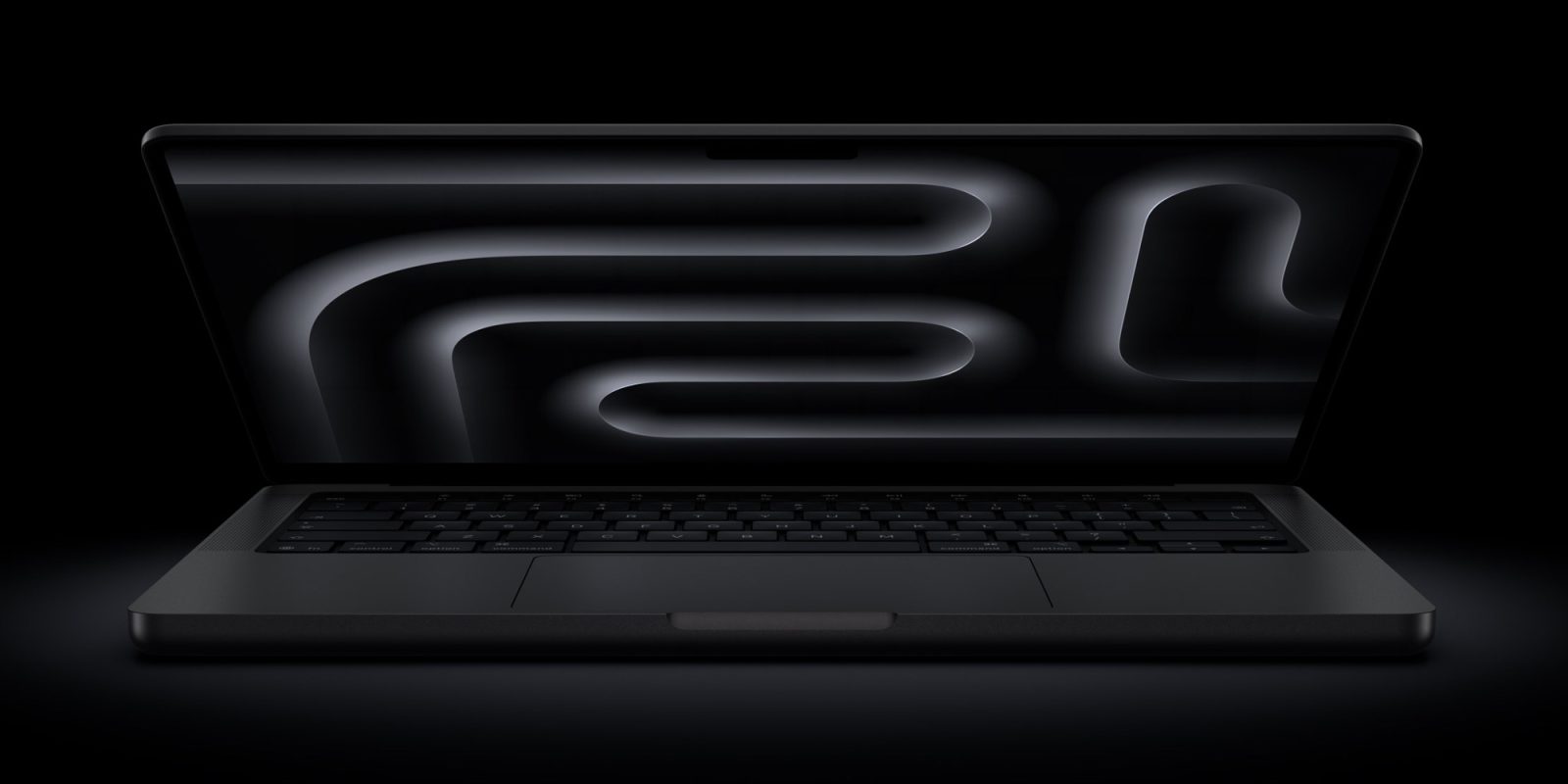
Apple’s silicon transition has entered a mature, highly calculated phase. In an era where macroeconomic headwinds and soaring foundry wafer costs have catalyzed a second wave of aggressive hardware price hikes across the consumer electronics landscape, the debut of the M6-powered iMac and 14-inch MacBook Pro represents a defiant departure from industry norms. By holding the line on baseline MSRPs while simultaneously injecting substantial architectural upgrades into its core consumer and prosumer lines, Apple has signaled a shift in strategy. Instead of relying purely on pricing pressure to maintain margins, Cupertino is leveraging manufacturing efficiencies at scale to absorb the rising costs of advanced node adoption.
From a market positioning standpoint, this pricing restraint acts as a strategic stabilizer. Recent component cost escalations—particularly in high-density memory interfaces and leading-edge packaging techniques—have forced competitors to compromise either on margin or on entry-level specifications. By keeping the M6 entry barriers identical to their M5 and M4 predecessors, Apple preserves its aggressive capture of enterprise deployment slots and creative freelance market share. This review provides an empirical breakdown of what the M6 architecture brings to the silicon table, analyzing whether these machines truly represent a generational leap or merely a calculated iterative refresh.
Core Architectural & Technological Innovations
At the heart of the new M6 lineup lies a refined node fabrication process that pushes transistor density to unprecedented levels for mainstream desktop and mobile computing. While previous iterations focused heavily on foundational core restructuring, the M6 architecture doubles down on heterogenous compute efficiency and specialized hardware accelerators. The base M6 silicon integrates an overhauled Neural Engine designed to handle local, high-parameter multimodal language models without triggering aggressive thermal throttling. This focus on edge AI processing is no longer a marketing footnote; it is woven directly into the fabric of the unified memory architecture, reducing latency across the execution pipeline.
Furthermore, the graphics subsystem within the M6 receives a notable structural overhaul, introducing advanced mesh shading pipelines and hardware-accelerated ray tracing optimizations that outperform previous generations by a double-digit margin per watt. Memory bandwidth scaling has also been subtly refined. By optimizing the fabric interconnect between the CPU clusters, GPU slices, and the unified memory pool, Apple has effectively mitigated the memory bottlenecks that occasionally constrained prior base-tier configurations under heavy sustained multithreaded workloads. The result is a cohesive system-on-chip that extracts maximum performance from a constrained thermal envelope.
Empirical Specifications & Benchmark Matrix
To understand the generational progression of the M6 hardware ecosystem, we evaluate the baseline specifications of the new 14-inch MacBook Pro and iMac against the preceding generation and the broader portable workstation baseline.
| Metric / Component | Previous Gen (Base M5) | New M6 Generation (Base) | Industry Desktop/Laptop Baseline |
|---|---|---|---|
| Process Node | Enhanced 3nm (N3E) | Optimized Sub-3nm Variant | 4nm / 3nm Foundry Nodes |
| Unified Memory (Base) | 16GB LPDDR5X | 16GB High-Bandwidth LPDDR5X | 16GB - 32GB DDR5 / LPDDR5 |
| CPU Core Configuration | 8-Core (4 Performance, 4 Efficiency) | 10-Core (Balanced Hierarchical) | 8 to 14 Cores (x86/ARM) |
| Neural Engine | 16-Core Neural Engine | Next-Gen 16-Core Neural Engine | Variable (10 to 40 TOPS) |
| Base MSRP (USD) | $1,599 - $1,999 | Unchanged ($1,599 - $1,999) | $1,699 - $2,199 |
Thermal, Efficiency & Real-World Ergonomics
Thermal management in tightly integrated chassis designs remains the ultimate test of silicon efficiency. The M6 implementation in the 14-inch MacBook Pro maintains the passive-to-active cooling threshold established by its predecessors, utilizing a finely tuned dual-phase heat pipe and single-fan assembly that remains whisper-quiet under standard productivity loads. Under sustained CPU and GPU stress tests, fan ramp-up is remarkably gradual, avoiding the abrasive acoustic profiles common in comparable Windows-based creator laptops. Skin temperatures on the aluminum chassis remain well below discomfort thresholds, even when compiling heavy codebases or rendering complex 3D scenes.
The iMac variant, benefiting from its all-in-one desktop footprint, showcases even greater thermal headroom. The dissipation matrix easily manages the sustained draw of the M6 chip without activating aggressive throttling algorithms. Real-world ergonomics are further enhanced by the sheer power-per-watt efficiency; battery degradation curves on the MacBook Pro continue to defy conventional expectations, routinely delivering upwards of 18 hours of mixed local video playback and web browsing. This sustained efficiency ensures that mobile professionals experience zero performance degradation when operating entirely on battery power—a distinct hardware advantage over x86 counterparts.
The Definitive Verdict
The M6-powered iMac and 14-inch MacBook Pro succeed not by reinventing the wheel, but by refusing to penalize the consumer for doing so. By successfully absorbing production cost pressures and maintaining flat pricing structures, Apple has delivered an exceptionally compelling value proposition in an inflating tech economy. Combined with tangible architectural enhancements in AI acceleration, GPU efficiency, and thermal headroom, these machines are an unequivocal win. For users lingering on M1 or M2 hardware, the M6 generation represents the ideal, frictionless inflection point for an upgrade.