Executive Summary & Market Positioning
The physical media renaissance has caught the consumer electronics ecosystem by surprise. Driven by a broader consumer pushback against purely cloud-dependent streaming services and digital rights management fatigue, sales of retro media have surged dramatically. Compact discs and vinyl records continue to post double-digit year-over-year gains. In response, Tier-1 and boutique audio brands alike have flooded the market with a wave of modern, feature-rich CD players and transports starting as low as $89, alongside premium audiophile flagships. However, this commercial upswing masks a severe underlying architectural vulnerability: a critical supply chain bottleneck driven by the cessation of optical drive and laser pickup mechanism production.
While marketing departments trumpet the return of the silver disc, hardware engineering realities tell a starkly different story. Major legacy transport suppliers have quietly shuttered their production lines, leaving high-end audio manufacturers scrambling. Elite audio houses such as PS Audio and Naim have been forced to halt production on flagship units because their core optical components are simply no longer manufactured. This structural disconnect between rising consumer demand and shrinking upstream fabrication capabilities threatens to turn the current hardware boom into a disposable era of unfixable devices, placing long-term device longevity and right-to-repair initiatives in extreme jeopardy.
Core Architectural & Technological Innovations
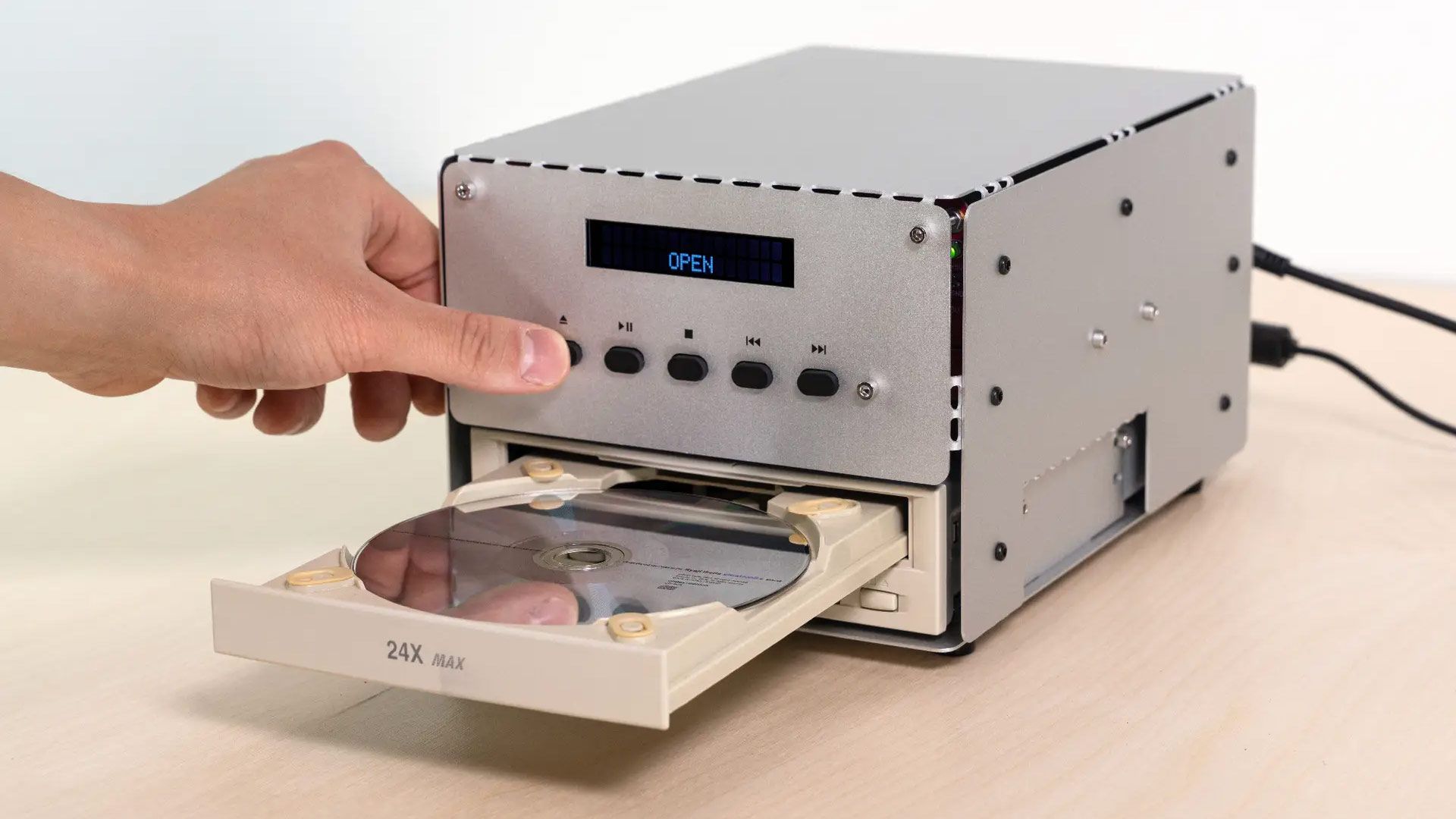
Designing a modern high-end CD player requires a precarious balancing act between mechanical precision, optical tracking accuracy, and digital signal processing. Unlike solid-state playback devices, optical transports rely on micro-actuators, laser diodes, spindle motors, and proprietary servo-control chipsets that operate at tight microscopic tolerances. Among current market participants, hardware sourcing strategies diverge wildly. Brands like Musical Fidelity lean heavily on external merchant silicon and mechanism suppliers, recently routing production through specialized fabricators like SUOS-HiFi. Three of Musical Fidelity's latest models integrate SUOS disc mechanisms directly, while a fourth marries a SUOS servo with an alternate tray-loading assembly.
Conversely, heavyweights like Marantz pursue a vertically integrated approach, developing their proprietary optical mechanisms in-house. This internal design philosophy grants Marantz relative immunity to third-party component deprecation, though questions remain regarding their external foundry dependencies. Meanwhile, brands caught without in-house silicon design divisions face insurmountable integration hurdles. When D&M—Marantz’s parent company—ceased external commercial sales of its optical drives, PS Audio exhausted its supply buying out remaining stock for its PMG Super Audio CD Transport. Similarly, Naim encountered terminal supply walls with the Uniti Star, finding its alternative sourcing pipeline abruptly cut off when its replacement supplier also abandoned the niche category.
Empirical Specifications & Benchmark Matrix
| Hardware Parameter | Merchant-Sourced Transport (e.g., Musical Fidelity / SUOS) | Vertically Integrated Transport (e.g., Marantz In-House) | Legacy Audiophile Transport (e.g., PS Audio / Naim Discontinued) | Market Baseline Standard |
|---|---|---|---|---|
| Drive Mechanism Origin | Outsourced (SUOS-HiFi / Third-Party) | Proprietary In-House Design | Discontinued D&M / Unnamed OEM | Outsourced Merchant Silicon |
| Repairability Index | Low (Dependent on dwindling stock) | High (Long-term internal support) | Zero (End-of-life, stock restricted to warranty) | Moderate to Low |
| Servo Controller Architecture | Merchant IC / Off-the-shelf | Custom Application-Specific IC | Proprietary Legacy Silicon | Standardized Chipset |
| Supply Chain Resilience | Fragile (Vulnerable to OEM shutdowns) | Robust (Controlled manufacturing pipeline) | Compromised (Terminal component obsolescence) | Vulnerable |
Thermal, Efficiency & Real-World Ergonomics
From a thermal and electrical efficiency standpoint, modern CD players are remarkably stable compared to high-power computing or graphics hardware. The primary power draws stem from the linear or switched-mode power supplies, master clock generators, and the mechanical rotational motors. However, the mechanical nature of optical playback introduces unique vibrational and acoustic ergonomic challenges. High-precision laser pickups demand rigorous chassis damping, balanced tray mechanisms, and low-noise brushless motors to prevent jitter-inducing mechanical resonance from corrupting the digital bitstream.
In real-world deployment, the current component shortage compromises these physical ergonomics. When an audio manufacturer is forced to substitute a specialized proprietary transport with an off-the-shelf alternative, acoustic noise floors and error-correction overhead often degrade. Furthermore, because remaining OEM stockpiles are strictly ring-fenced for warranty and repair obligations rather than new production, end-users face a precarious ownership cycle. A minor laser pickup failure or spindle motor burnout on a newly purchased player could render a $1,000+ hi-fi component completely unfixable, effectively transforming premium hardware into electronic waste due to upstream component neglect.
The Definitive Verdict
The current optical media revival suffers from a fatal architectural flaw: an industrial reliance on fading supply chains for complex mechanical components. While companies like Marantz prove that vertical integration and in-house mechanism design provide a viable shield against market volatility, boutique brands lacking massive R&D budgets cannot easily replicate these engineering feats—as PS Audio has openly admitted. For consumers and audiophiles investing in the CD renaissance, the takeaway is clear. Prioritize brands that maintain long-term commitments to component repairability, proprietary in-house transport designs, or modular architectures. Until merchant silicon fabricators step forward to service the surging demand for optical drives, investing in players built on precarious third-party component foundations remains a high-risk gamble.