Executive Summary & Market Positioning
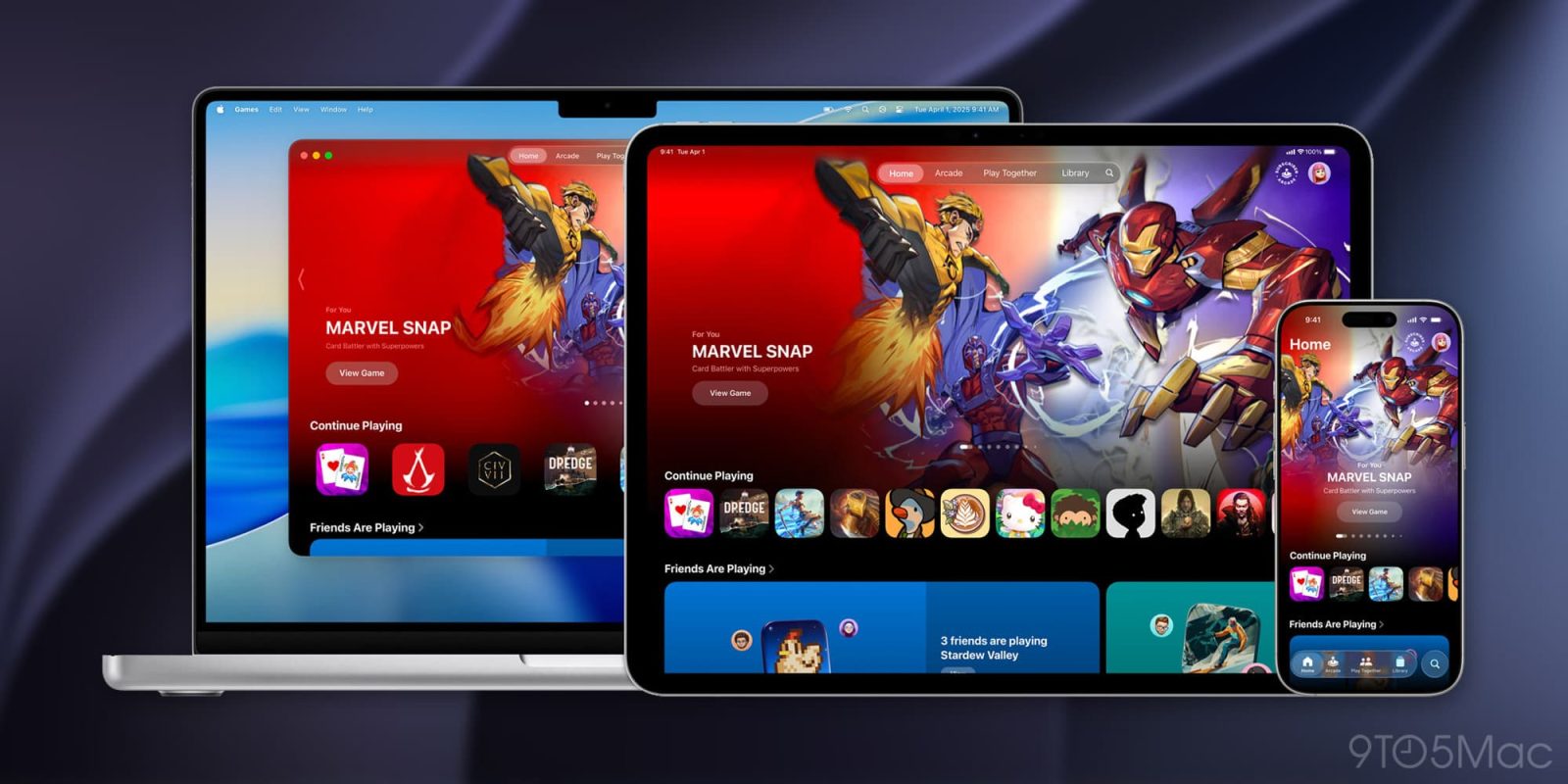
Apple’s recent high-level discourse regarding its gaming ecosystem—spearheaded by the new App Store chief, Carson Oliver—marks a definitive pivot in how Cupertino views its custom silicon footprint. For years, critics and power-users alike have noted a stark architectural paradox within the Apple ecosystem: industry-leading graphics processing units embedded in iPhones and iPads running on bespoke A-series and M-series chips, yet largely starved of native, AAA-grade software portfolios. The ongoing maturation of Apple Arcade, alongside an aggressive push into high-end, console-quality ports, signals a concerted engineering and commercial effort to bridge the gap between pure raw silicon capability and actualized gaming workloads.
From a market positioning perspective, Apple is no longer content to let iOS merely serve as a casual playground for freemium puzzle titles and hyper-casual microtransaction engines. By fostering environments that welcome traditional premium software models—exemplified by complex multiplatform titles running natively with hardware-accelerated ray tracing—Apple is directly challenging handheld gaming PCs and traditional mobile consoles. This strategy relies heavily on the upward scalability of its unified memory architecture and tightly controlled hardware-software co-design, positioning the iPhone 17 Pro and upcoming mobile iterations not merely as communication devices, but as formidable, pocket-sized heterogeneous compute nodes.
Core Architectural & Technological Innovations
The technological bedrock enabling this gaming renaissance is Apple’s relentless push into advanced silicon manufacturing nodes and hardware-level ray tracing. Modern A-series SoCs feature dedicated ray tracing acceleration blocks that offload complex light-bounce calculations from general-purpose execution units, allowing sustained frame rates in visually demanding environments. Furthermore, the inclusion of Mesh Shading hardware accelerates geometry processing pipelines, significantly lowering the CPU overhead required to render dense, dynamic virtual worlds.
Simultaneously, the Metal 3 graphics API acts as the crucial software translation layer, providing developers with low-level access to hardware resources. Innovations like MetalFX Upscaling leverage spatial and temporal upscaling algorithms—akin to DLSS or FSR in the desktop space—to render native game scenes at lower resolutions before upscaling them with minimal visual degradation. This drastically reduces GPU load, preserving thermal headroom and battery longevity while maintaining crisp visual fidelity on high-density OLED panels.
Empirical Specifications & Benchmark Matrix
| Technical Parameter | Apple Mobile Ecosystem (A19 Pro / M-Series) | Traditional Handheld Gaming Baseline | Modern Flagship Smartphone Baseline |
|---|---|---|---|
| Process Node | 3nm Enhanced (N3B/N3E) | 4nm / 6nm (Zen 4/RDNA 3) | 4nm (Snapdragon 8 Gen Series) |
| Memory Bandwidth | Up to 150 GB/s (Unified Architecture) | 88 GB/s (LPDDR5X) | 77 GB/s (LPDDR5X) |
| Ray Tracing Hardware | Dedicated Ray Tracing Cores (Gen-2) | Software/RDNA 3 Based | Adreno Ray Tracing Blocks |
| API Ecosystem | Metal 3 with MetalFX Upscaling | Vulkan / DirectX 12 | Vulkan / OpenGL ES |
| Max Thermal Envelope | ~8W – 15W (Dynamic Burst) | 15W – 30W (TDP Configurable) | ~8W – 12W (Throttling Prone) |
Thermal, Efficiency & Real-World Ergonomics
Translating desktop-tier rendering techniques into a fanless mobile chassis inevitably invites strict thermodynamic challenges. While Apple’s silicon boasts industry-leading performance-per-watt metrics, sustaining long sessions of heavy graphical workloads causes localized thermal saturation. Without active cooling fans, thermal energy must dissipate passively through the chassis frame and display glass. Under prolonged AAA gaming loads, the SoC's thermal control algorithms must dynamically throttle clock speeds to prevent surface temperatures from exceeding comfortable ergonomic limits for handheld use.
Real-world ergonomics are thus heavily dictated by thermal management and software optimization. The integration of MetalFX Upscaling mitigates excessive power draw by lowering the native rendering resolution, directly translating to cooler device temperatures and extended battery playtime. However, heavy reliance on passive cooling means that ambient temperature and protective case usage play a massive role in sustained frame-rate stability. Users engaging in extended sessions will inevitably experience performance tapering unless paired with external Peltier-cooled accessories.
The Definitive Verdict
Apple’s evolving gaming strategy represents a masterclass in leveraging vertical hardware integration to reshape software expectations. While challenges remain in matching the sustained thermal headroom of dedicated handheld gaming PCs, the raw computational horsepower, unified memory bandwidth, and sophisticated APIs like Metal 3 make iOS an undeniably potent gaming platform. For developers, the friction of porting to Apple silicon is steadily decreasing; for consumers, the promise of true AAA gaming in a pocket-sized form factor is finally moving from marketing aspiration to empirical reality.