Executive Summary & Market Positioning
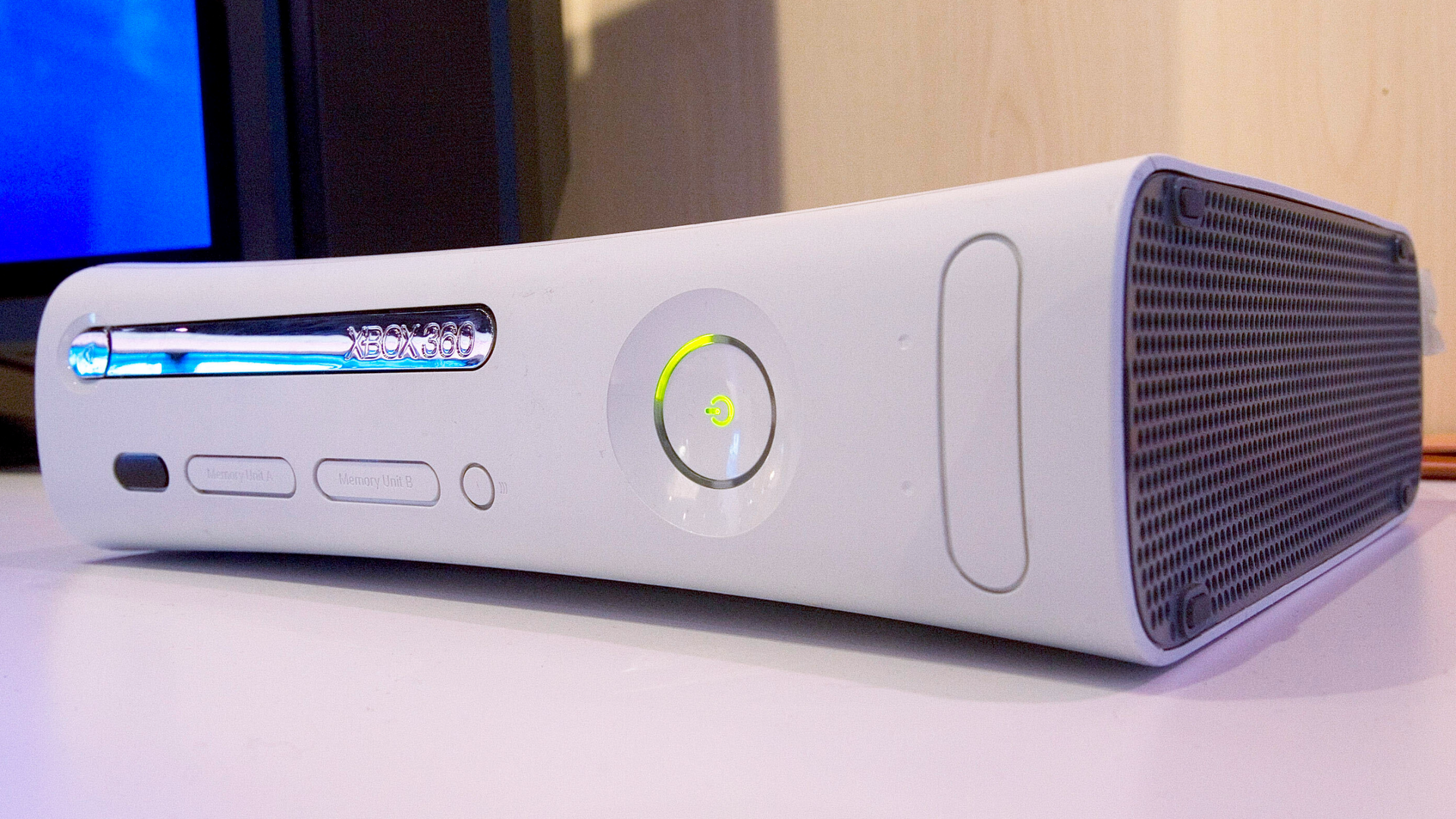
The landscape of hardware security is perpetually defined by an arms race between proprietary silicon architects and relentless independent researchers. For nearly two decades, Microsoft’s Xbox 360 stood as a bastion of iterative, defense-in-depth architecture, absorbing wave after wave of exploits ranging from modified DVD firmware in 2006 to hypervisor breaches in 2007. Yet, the most resilient physical vector proved to be the CPU force-reset exploit introduced in 2011—a hardware-level attack requiring immense patience, specialized glitch chips, and highly volatile soldering techniques. For many enthusiasts, executing this maneuver was a multi-year ordeal of failed logic gates and shelved motherboards.
Enter the democratization of micro-instrumentation. Recently, Scottish hacker Joshua Kennedy successfully concluded a nine-year personal hardware saga by leveraging a ubiquitous $4 Raspberry Pi Pico to execute what specialized modchips struggled to accomplish a decade prior. This development highlights a fascinating paradigm shift in consumer silicon engineering: while manufacturers lock down modern cryptographic pipelines with impenetrable software layers, the raw availability of ultra-low-cost, high-precision programmable microcontrollers transforms historically prohibitive hardware exploits into trivial weekend projects. The barrier to entry has officially plummeted, shifting the power dynamic of physical silicon analysis directly into the hands of the hobbyist community.
Core Architectural & Technological Innovations
At the heart of this successful mod lies a brutal confrontation with high-precision timing and silicon physics. The Reset Glitch Hack (RGH) does not rely on a software vulnerability; rather, it targets the physical execution pipeline of the console's central processor. By injecting a minuscule, precisely timed electrical pulse directly into the CPU's hardware reset pin during boot, the hack induces a voltage sag or timing anomaly that forces the CPU to execute its current instruction incorrectly. This momentary logic fault allows the system to bypass Microsoft's deeply entrenched layers of hardware cryptography, opening the door to arbitrary code execution via custom loaders like XeLL (Xenon Linux Loader).
Achieving this feat requires nanosecond-level accuracy. The window of opportunity is minuscule, varying wildly across different Xbox 360 hardware revisions (such as Xenon, Falcon, Jasper, and Trinity). Historically, this demanded dedicated, application-specific modchips like the Matrix Coolrunner paired with custom programmers and complex parallel-port workarounds. By substituting these legacy components with a Raspberry Pi Pico, modders gain access to a dual-core ARM Cortex-M0+ processor operating at 133 MHz with programmable input/output (PIO) state machines. The Pico not only handles the firmware extraction via the console's NAND interface header (utilizing utilities like PicoFlasher), but also orchestrates the deployment of community-refined timing files—such as those curated by Octal450—with a level of deterministic clock precision that makes legacy glitch-chips obsolete.
Empirical Specifications & Benchmark Matrix
| Feature / Metric | Legacy 2017 Modding Standard | Modern Raspberry Pi Pico Implementation | Architectural Delta |
|---|---|---|---|
| Core Hardware Component | Matrix Coolrunner Rev D + FPGA | Raspberry Pi Pico (RP2040 SoC) | Modern ARM Cortex-M0+ vs. Legacy CPLD/FPGA |
| Unit Cost | $15 – $30 (Plus programmer) | $4.00 (Standard retail) | ~80% reduction in hardware overhead |
| NAND Flash Extraction | Requires dedicated NAND flasher | Handled natively via PicoFlasher utility | Integrated single-device workflow |
| Timing Resolution | Variable / Dependent on CPLD logic | 133 MHz deterministic clock cycles | Sub-nanosecond deterministic control |
| Setup Complexity | High (Parallel ports, custom drivers) | Low (USB drag-and-drop firmware) | Substantially lowered barrier to entry |
Thermal, Efficiency & Real-World Ergonomics
From a thermodynamic and electrical integration standpoint, retrofitting a modern microcontroller into a legacy console architecture presents distinct layout challenges. The Xbox 360 motherboard, particularly in its earlier revisions, is a complex thermal maze notorious for high localized heat loads around the GPU and CPU core packages. Introducing an external wire harness to route timing signals from the Raspberry Pi Pico requires meticulous trace management to prevent electromagnetic interference (EMI) from skewing the delicate pulse sent to the CPU reset pin.
Fortunately, the Raspberry Pi Pico operates with an exceptionally low thermal envelope, drawing minimal current from the host system's 3.3V rails. This ensures that the integration does not introduce thermal throttling risks or strain the console's internal Power Management IC (PMIC). The physical ergonomics of the installation have similarly evolved; where hackers once contended with clunky parallel port adapters and temperamental drivers, the Pico’s native USB-C or Micro-USB connectivity allows for rapid iteration, firmware updates, and timing file re-flashes without ever needing to desift the core wiring harness. It is an exercise in clean, elegant hardware integration applied to archaic silicon.
The Definitive Verdict
The completion of Joshua Kennedy's nine-year modding odyssey via a $4 microcontroller serves as a profound testament to the relentless evolution of the maker community. While the Xbox 360 remains a vintage platform by contemporary metrics, the methodologies forged through its exploitation continue to resonate across the broader hardware security landscape. The Raspberry Pi Pico emerges as the definitive winner here—not merely as a tool, but as a great equalizer in hardware hacking. For engineering analysts and retro-computing enthusiasts alike, this milestone proves that longevity in silicon defense is ultimately bounded by the democratization of precision instrumentation.