Executive Overview & Market Positioning
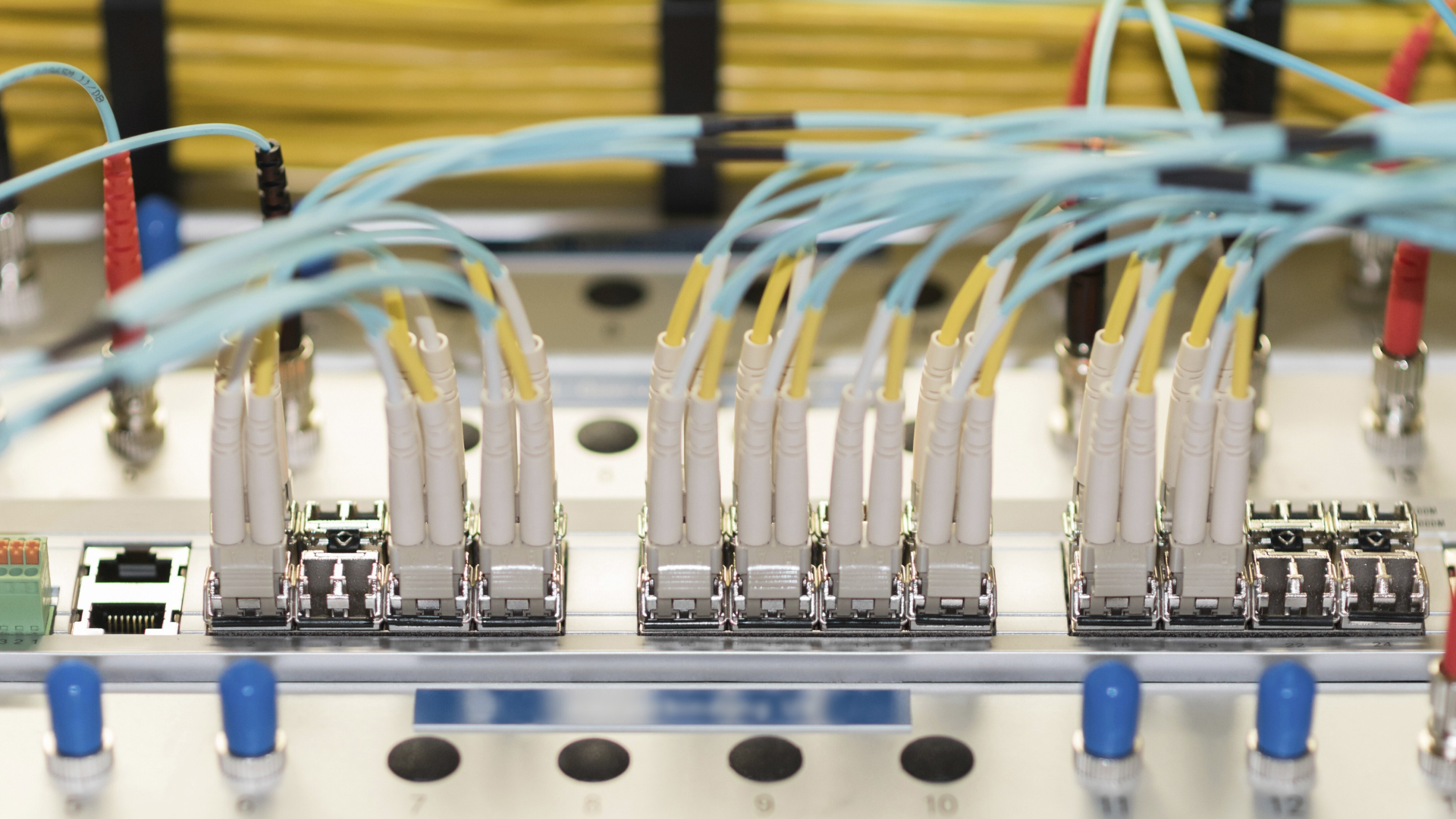
Microsoft, in collaboration with the Information Technology Industry Council (ITI), is actively lobbying against a potential FCC import ban on Chinese-manufactured optical transceivers. As hyperscale providers accelerate the deployment of massive AI-compute clusters, these transceivers have become critical, high-margin components. They serve as the primary bridge for electrical-to-optical (E/O) signal conversion, enabling the low-latency, high-bandwidth interconnects required to scale GPU clusters across thousands of racks. With Chinese manufacturers currently commanding a 56% to 66% global market share, the industry views an abrupt exclusion as a systemic threat to infrastructure expansion.
From a market positioning standpoint, the restriction introduces a severe supply-side elasticity mismatch. While American entities like Coherent and Lumentum maintain domestic manufacturing capability, their current output capacity is insufficient to replace the volume historically provided by Chinese competitors. Industry stakeholders argue that without these modules, high-performance silicon—such as H100/B200-series GPUs—remains functionally siloed. Consequently, the proposed ban represents a direct friction point between geopolitical security mandates and the physical reality of AI-scale hardware throughput requirements.
Empirical Benchmark Matrix
To understand the performance ceiling and scaling requirements, we compare the current standard transceiver landscape against the proposed high-tier restriction threshold. The 3.2 Tbps threshold represents the next generation of AI-fabric interconnects, while sub-800G modules remain the current volume workhorse for intra-cluster traffic.
| Specification | Current Standard (400G-800G) | High-Performance (3.2 Tbps) | Supply Status |
|---|---|---|---|
| E/O Efficiency | Baseline (0.5 pJ/bit) | Optimized (<0.3 pJ/bit) | High Vol (CN) / Limited (US) |
| Data Throughput | 800 Gbps | 3.2 Tbps | R&D Focus (Global) |
| Latency (ns) | <100ns | <50ns | Low-latency Critical |
| Adoption Phase | Mature / Scaling | Emerging / 2029 Maturity | Nascent |
Thermal, Efficiency & Definitive Verdict
From a thermal engineering perspective, optical transceivers offer a definitive advantage over copper-based electrical interconnects. By shifting to light-based transmission, hyperscalers significantly reduce thermal output per rack, essential for high-density compute environments where cooling overhead is already at a breaking point. Banning existing supply chains without a calibrated phase-in period risks not only a capital expenditure shortfall but an efficiency regression, as operators might be forced to revert to higher-power electrical copper solutions to maintain connectivity. A staggered, tier-based restriction—targeting only the high-end 3.2 Tbps infrastructure—is the only viable pathway to safeguard national security without crippling the U.S. AI build-out cycle. Until domestic foundries achieve necessary economies of scale, the current, near-monopolistic dependency on foreign components remains the primary bottleneck for data center commissioning.