Executive Summary & Market Positioning
The contemporary component ecosystem presents a challenging landscape for system builders. While acquiring bleeding-edge graphics processors and high-frequency DDR5 memory modules remains a capital-intensive endeavor, upgrading the visual output interface represents a pragmatic and transformative avenue for system enhancement. For years, organic light-emitting diode (OLED) technology stood as an elusive luxury for desktop enthusiasts, restricted by exorbitant MSRPs and pervasive anxieties regarding panel longevity and burn-in degradation. However, maturity in panel manufacturing and wider consumer adoption have initiated a dramatic pricing correction, bringing elite-tier visual fidelity within reach of a broader audience.
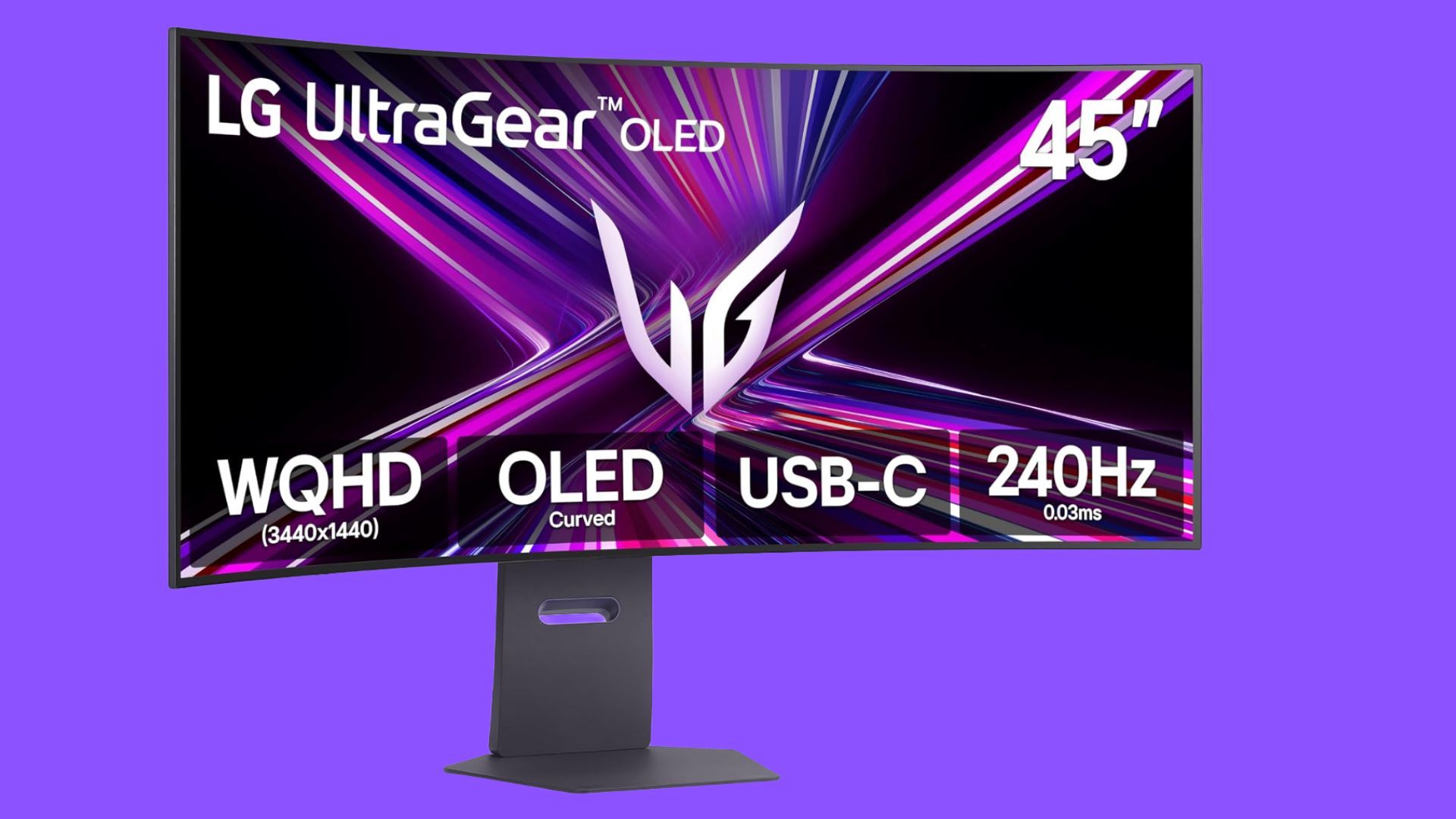
Enter the LG UltraGear 45GX900A-B, a massive 45-inch ultrawide display that currently disrupts the high-end monitor market through an aggressive retail discount. Initially commanding a prohibitive $1,699.99 at launch, this display has plummeted by nearly 48 percent, resting at an empirical sweet spot of $884.99. This valuation shift fundamentally alters the competitive matrix for ultra-enthusiast displays. By pairing a sprawling canvas with the infinite contrast and instantaneous pixel response times inherent to self-emissive organic compounds, LG is targeting power users who demand uncompromising immersion without absorbing the severe early-adopter premium that historically plagued OLED adoption cycles.
Core Architectural & Technological Innovations
At the foundational core of the LG UltraGear 45GX900A-B lies an advanced W-OLED panel architecture engineered to eliminate the motion blur and ghosting artifacts traditionally associated with conventional liquid-crystal displays. Unlike backlit IPS or VA matrices that rely on polarizing layers and liquid crystal alignment—inherently constrained by molecular response times—self-emissive pixels shift states instantaneously. This allows the 45GX900A-B to achieve a blistering 0.03ms gray-to-gray response time. Coupled with a native 240Hz refresh rate, fast-moving vectors in competitive titles render with exceptional clarity, virtually eradicating trailing edges and ensuring that human-input latency is matched by instantaneous pixel switching.
Beyond raw temporal performance, the architectural geometry of the display commands attention. The panel employs a tight 800R curvature radius across its 45-inch diagonal footprint. This aggressive wrap-around geometry ensures that the viewer’s eyes maintain a equidistant focal plane across the entire WQHD (3440 x 1440) canvas, enhancing peripheral immersion in simulation titles and open-world environments. Furthermore, the absence of a traditional backlight allows for a staggering contrast ratio of 1,500,000:1. Because individual subpixels can be driven to complete absolute zero luminance, dark-scene performance achieves true, inky blacks without the blooming or halo effects typical of mini-LED local dimming zones.
Empirical Specifications & Benchmark Matrix
| Feature / Metric | LG UltraGear 45GX900A-B | Standard OLED Baseline | Conventional IPS Gaming Baseline |
|---|---|---|---|
| Panel Type | W-OLED Curved | W-OLED / QD-OLED | Fast IPS / Nano IPS |
| Screen Size & Curvature | 45-inch, 800R | 27-inch to 34-inch, Flat / 1800R | 27-inch to 32-inch, Flat / 1500R |
| Native Resolution | WQHD (3440 x 1440) | QHD (2560 x 1440) / UWQHD | QHD (2560 x 1440) |
| Refresh Rate | 240Hz | 144Hz – 240Hz | 144Hz – 180Hz |
| Response Time (GtG) | 0.03ms | 0.03ms – 0.1ms | 1ms – 5ms |
| Peak Luminance | 1300 Nits | 250 – 1000 Nits | 350 – 600 Nits |
| Color Gamut Coverage | 98.5% DCI-P3 | 95% - 99% DCI-P3 | 90% - 95% DCI-P3 |
| Adaptive Sync | FreeSync & G-Sync Compatible | Variable Refresh Rate | FreeSync & G-Sync |
Thermal, Efficiency & Real-World Ergonomics
Managing thermal dissipation in large-format OLED panels is a critical engineering challenge, particularly when driving high peak luminance levels. The LG UltraGear 45GX900A-B incorporates sophisticated thermal management solutions behind its chassis to dissipate heat evenly across the organic substrate, mitigating the risk of localized thermal stress and premature pixel wear. While self-emissive displays draw dynamic power depending on the average picture level (APL)—consuming less power on dark scenes and higher wattage during bright, full-screen white flashes—the panel balances energy delivery efficiently while maintaining its impressive 1300-nit peak brightness output in HDR mode.
Ergonomically, the hardware extends its utility beyond pure PC gaming integration. Recognizing modern multi-device desktop workflows, LG has equipped the display with robust connectivity options, including HDMI 2.1 ports that facilitate uncompressed variable refresh rates for current-generation consoles like the PlayStation 5 and Xbox Series X. DisplayPort 1.4 handles primary high-bandwidth PC output, while a versatile USB Type-C port featuring 65-watt power delivery simplifies docking for productivity laptops. The heavy-duty stand offers comprehensive height, tilt, and swivel adjustments, though the sheer physical footprint of a 45-inch curved chassis mandates a deep desk surface for optimal viewing geometry.
The Definitive Verdict
The LG UltraGear 45GX900A-B represents a monumental shift in price-to-performance metrics for ultra-wide, large-format desktop displays. By successfully bridging the gap between extreme immersion, flawless motion handling, and deep cinematic contrast, it addresses the traditional compromises of early-generation OLEDs. At its original $1,699.99 MSRP, it occupied a niche sector reserved for the most affluent enthusiasts. However, securing this hardware at the heavily discounted empirical price point of $884.99 transforms it from an aspirational luxury into an exceptionally compelling investment. For system builders prioritizing peerless visual fidelity, instantaneous response times, and expansive multi-source connectivity, the 45GX900A-B earns an unreserved recommendation as a cornerstone display upgrade.