Executive Summary & Market Positioning
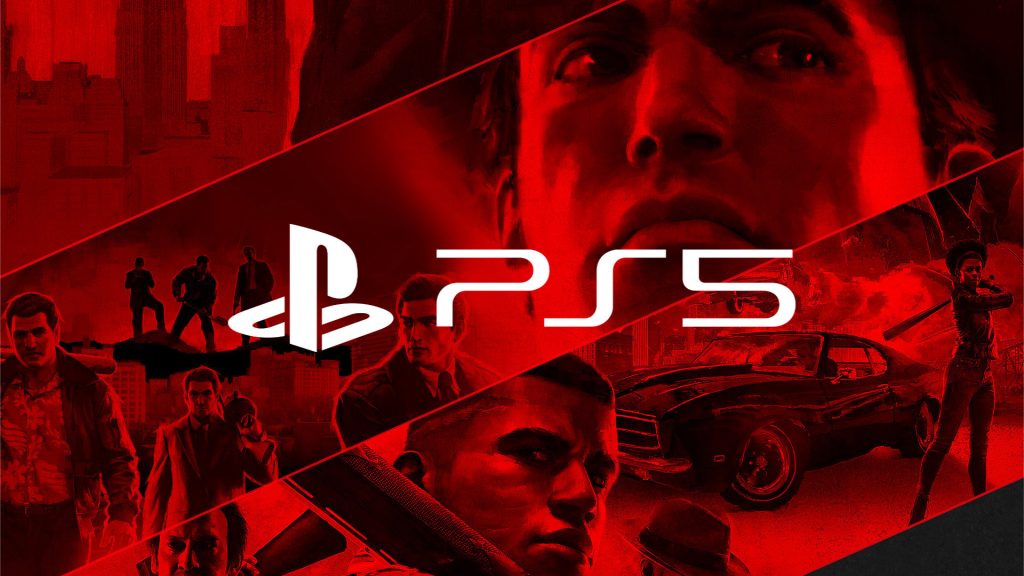
The landscape of cross-generational software is undergoing a necessary consolidation. With the recent discovery of ESRB listings for native PS5 and Xbox Series iterations of Mafia II: Definitive Edition and Mafia III: Definitive Edition, 2K Games is finally closing the architectural gap left by the fragmented release of The Omerta Collection. For years, these titles have existed in a state of suspended animation, relying on backward compatibility stacks that force modern hardware to emulate legacy instructions rather than leveraging native APIs like DirectStorage or high-bandwidth I/O throughput.
From a market positioning standpoint, this move validates the lifecycle extension strategy currently favored by major publishers. While the initial release of The Omerta Collection felt unfinished—providing a native experience for only the first entry—these forthcoming updates signal a commitment to platform parity. By moving away from legacy-mode execution, 2K is aligning these titles with the performance standards expected by current-gen users, specifically targeting higher resolution buffers and frame-time consistency that were previously unreachable under the overhead of last-gen containers.
Core Architectural & Technological Innovations
Moving these titles to native current-gen ports implies a migration from older graphics APIs, likely DX11 or early Vulkan implementations, to modern, low-overhead environments. This transition is critical for addressing the bottlenecks present in the original Mafia III build, which suffered from inconsistent frame pacing and visual artifacting on newer consoles. Native ports allow developers to bypass the rigid hardware virtualization limits of the PS4 Pro and Xbox One X, enabling them to implement more aggressive dynamic resolution scaling (DRS) and potentially higher-tier anisotropic filtering that the previous hardware simply couldn't stabilize.
Furthermore, the shift to native binaries facilitates deeper integration with SSD-centric architectures. While these games were not originally designed for rapid asset streaming, native ports offer the opportunity to implement improved texture streaming budgets. By stripping away the legacy code that governed HDD-bound seek times, the updated versions should theoretically eliminate the pop-in issues that plagued earlier iterations, providing a smoother streaming experience that makes better use of the custom NVMe controllers found in the PS5 and Xbox Series X.
Empirical Specifications & Benchmark Matrix
| Feature | Legacy Backwards Compatibility (Current State) | Anticipated Native Port (Performance Profile) |
|---|---|---|
| Graphics API | Legacy (DX11 / GNM) | Modern (DX12 Ultimate / GNMX) |
| Max Resolution | 1440p (Upscaled) | Native 4K (Dynamic Scaling) |
| Target Frame Rate | 30 FPS (Unstable) | 60 FPS (Stable) |
| Asset Streaming | HDD-Bound (Legacy) | SSD-Optimized (DirectStorage/I/O) |
| VRAM Utilization | Limited by Last-Gen API | Uncapped Utilization |
Thermal, Efficiency & Real-World Ergonomics
Running legacy titles via backwards compatibility often creates an inefficient thermal envelope. Because the hardware is not operating at its native instruction efficiency, it often cycles clock speeds erratically to compensate for unoptimized code paths. A native port will likely see improved thermal ergonomics; by optimizing CPU draw calls and GPU utilization through modern SDKs, the console can maintain a lower power state while delivering higher performance metrics. This is a crucial distinction for users with current-gen systems, where thermal noise and power consumption are key factors in sustained gaming sessions.
From an ergonomic standpoint, the benefits extend to input latency. Backwards compatibility often introduces a non-trivial input lag penalty due to the middleware required to bridge the console's I/O with older game code. A native port allows for direct access to the system's low-latency controller drivers, tightening the connection between player input and on-screen response. For a game series reliant on precision driving and character movement, this is the single most important technical upgrade beyond raw resolution.
The Definitive Verdict
The decision to move Mafia II and III to native binaries is an essential correction to a disjointed rollout. For the player, this is not merely an aesthetic update; it is an architectural overhaul that will fundamentally change the feel of these games. We recommend that current owners of The Omerta Collection expect a significant, transformative improvement in frame-time consistency and asset stream performance. 2K must now commit to a zero-cost upgrade path for existing owners, as these native ports represent the completion of a promise rather than a new standalone product. For enthusiasts, this update finally brings the Mafia trilogy into the modern era of hardware efficiency.