Executive Summary & Market Positioning
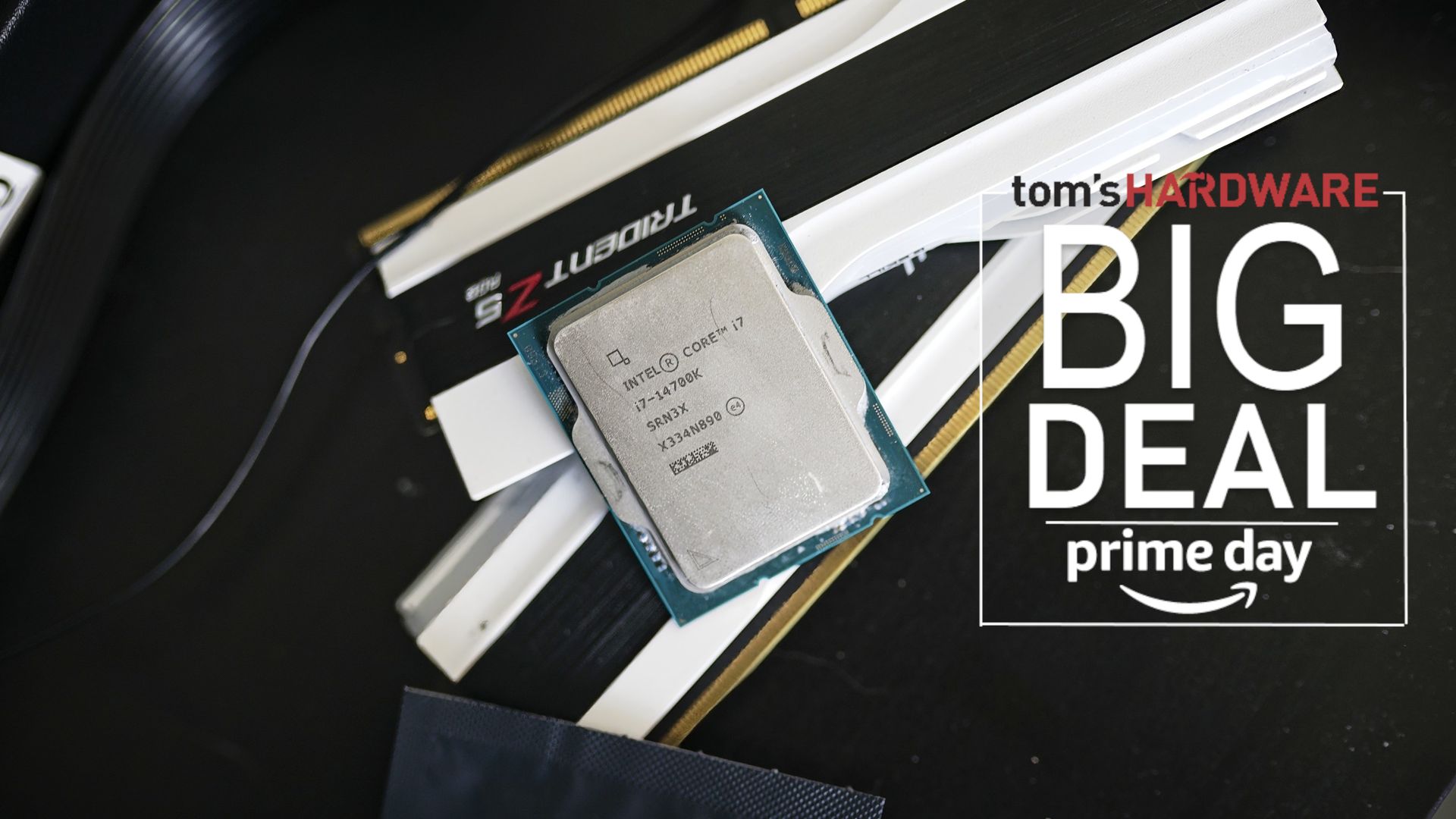
For the better part of a year, Intel’s 14th Generation Raptor Lake Refresh silicon occupied an awkward transitional tier within the enthusiast hardware ecosystem. Dogged by volatile pricing trajectories, lingering ecosystem noise regarding microcode stability patches, and the encroaching shadow of LGA1851 Arrow Lake architectures, these chips struggled to command their MSRP. However, the landscape of enthusiast-tier PC building has shifted dramatically. During the latest retail promotional cycles, specifically the Prime Big Deals Day window, historical pricing resistance has finally broken, driving multiple Core i7 and Core i9 SKUs down to unprecedented all-time low price points.
From a pure market positioning standpoint, this sudden downward correction transforms the calculus for budget-conscious performance seekers and legacy platform upgraders alike. While early adopters faced a bitter pill paying top-dollar for what was essentially a heavily binned, highly tuned refinement of the 13th Gen architecture, today’s discounted valuation repositions Raptor Lake Refresh as a high-value throughput king. For users anchored to the LGA1700 socket who bypassed previous generations, these discounted chips offer a final, highly potent drop-in upgrade path that bypasses the platform adoption tax of newer generation motherboards and DDR5 memory transitions.
Core Architectural & Technological Innovations
At the silicon level, the Raptor Lake Refresh family represents the absolute physical zenith of Intel’s monolithic 10nm (Intel 7) process node. The microarchitecture retains the proven hybrid design paradigm pioneered by Alder Lake, pairing high-performance Raptor Cove Performance-cores (P-cores) with high-density Gracemont Efficient-cores (E-cores). The primary differentiator for the 14th generation lies in aggressive frequency scaling, with flagship SKUs easily crossing the coveted 6.0 GHz out-of-the-box thermal and voltage ceiling using Intel's Thermal Velocity Boost algorithms, provided adequate cooling infrastructure is present.
Beyond raw clock velocity enhancements, architectural iterations in the Refresh series focused heavily on memory subsystem optimization and expanded algorithmic headroom. Native support for higher-frequency DDR5 memory kits has matured significantly, allowing tighter latencies and improved bandwidth scaling for memory-bound computational workloads. Furthermore, the inclusion of Application Optimization (APO) firmware extensions dynamically routes thread scheduling in supported gaming engines, squeezing a tangible performance delta out of the asymmetrical core layouts compared to baseline 13th Gen counterparts.
Empirical Specifications & Benchmark Matrix
To contextualize where these discounted processors stand in the current desktop hierarchy, we evaluate the flagship Core i7-14700K against its direct market competitors and predecessors across key architectural metrics:
| Specification / Metric | Intel Core i7-14700K | Intel Core i7-13700K | AMD Ryzen 7 7800X3D |
|---|---|---|---|
| Architecture | Raptor Lake Refresh | Raptor Lake | Zen 4 (Raphael) |
| Process Node | Intel 7 (10nm Enhanced) | Intel 7 (10nm Enhanced) | TSMC 5nm / 6nm |
| Total Cores (P+E) | 20 (8P + 12E) | 16 (8P + 8E) | 8 (8P + 0E) |
| Max Turbo Frequency | 5.6 GHz | 5.4 GHz | 5.0 GHz |
| L3 Cache | 33 MB | 30 MB | 96 MB (3D V-Cache) |
| Socket Compatibility | LGA1700 | LGA1700 | AM5 |
| Current Retail Trend | Discounted / All-Time Low | EOL / Clearance | Premium / High Demand |
Thermal, Efficiency & Real-World Ergonomics
Pushing silicon to the absolute bleeding edge of frequency scaling extracts a heavy toll in the thermodynamic domain. Raptor Lake Refresh is no exception; the aggressive voltage curves required to sustain all-core turbo states under heavy workloads generate significant thermal loads. Users pairing these chips with discounted motherboards must budget adequately for robust cooling solutions—specifically a minimum of a 360mm All-In-One (AIO) liquid cooler or a top-tier dual-tower air cooler to prevent thermal throttling during sustained multi-threaded operations like video rendering or scientific compilation.
Power draw under full synthetic load (such as Cinebench R23 or Blender) can easily breach PL2 limits, pushing power delivery circuits on the motherboard to their absolute limits. However, real-world ergonomics reveal a more nuanced narrative. While peak power consumption during heavy productivity is undeniably high, gaming workloads paint a much more balanced picture, drawing significantly less wall power while maintaining exceptional frame-rate stability. Recent microcode updates have also successfully mitigated the over-voltage anomalies that plagued early samples, resulting in vastly improved idle efficiency and long-term system stability.
The Definitive Verdict
Intel’s 14th Generation Raptor Lake Refresh CPUs are no longer plagued by poor value propositions. Thanks to aggressive price corrections on platforms like Amazon during Prime Big Deals Day, these processors have transitioned from questionable day-one buys into exceptionally compelling performance bargains. For builders currently operating on LGA1700 motherboards looking for a definitive, drop-in upgrade—or for workstation users who prioritize raw multi-threaded core counts over platform longevity—the current pricing dips make this silicon hard to ignore. While the dead-end socket remains a structural drawback for future-proofing, the immediate performance-per-dollar metric has never been more favorable.