Executive Overview & Market Positioning
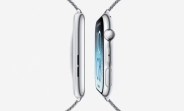
The upcoming Huawei Watch Air represents a significant shift in wearable industrial design, prioritizing mechanical efficiency and material science over the bloated sensor-stack approach typical of the current market. By targeting a 6.9mm chassis thickness, Huawei is effectively breaking the 9mm barrier that has long constrained smartwatches, placing the device in a category that prioritizes aesthetics and comfort without sacrificing the structural integrity provided by a titanium unibody. This strategic pivot aims to capture the premium segment where users prioritize the 'wearable' nature of a device, potentially creating a new sub-category of ultrathin smartwatches.
Market-wise, the Watch Air serves as a direct retort to the increasing thickness of the 'Fit' and 'Band' series. Huawei is clearly leveraging its vertical integration in materials and power cell manufacturing to solve the volumetric limitations of high-performance wearables. By migrating away from standard rectangular cells toward irregular, high-silicon stacked battery modules, Huawei is addressing the primary bottleneck of modern miniaturization: energy density-to-volume ratio.
Empirical Benchmark Matrix
The following table illustrates the volumetric progression of Huawei’s current wearable lineup, highlighting the significant reduction in z-axis footprint achieved by the Watch Air versus its predecessors.
| Model | Thickness (mm) | Material | Battery Tech |
|---|---|---|---|
| Huawei Watch Air | 6.9 | Titanium | High-Silicon Stacked |
| Huawei Band 11 | 8.99 | Polymer/Metal | Standard Li-Ion |
| Watch Fit 5 Pro | 9.5 | Metal/Alloy | Standard Li-Ion |
Thermal, Efficiency & Definitive Verdict
The technical achievement here lies in the implementation of the high-silicon battery architecture. Standard graphite anodes fail to provide the necessary capacity in such a restricted form factor, making the shift to silicon-dominant anodes critical. Silicon’s ability to intercalate more lithium ions allows for a higher energy density, effectively allowing Huawei to maintain reasonable daily battery life despite the massive volume reduction. From a thermal management perspective, the titanium unibody acts as a superior heat spreader compared to polycarbonate, allowing the device to dissipate heat generated during high-load tasks without active cooling systems. The verdict for OPA Specs is clear: if the Watch Air maintains even 80% of the functional parity found in the Fit 5 series, it will establish a new baseline for wearable ergonomics. Huawei is betting that mass-market users will sacrifice absolute sensor saturation for superior industrial design, a move that is likely to force competitors to accelerate their own R&D cycles for ultra-compact power delivery systems.