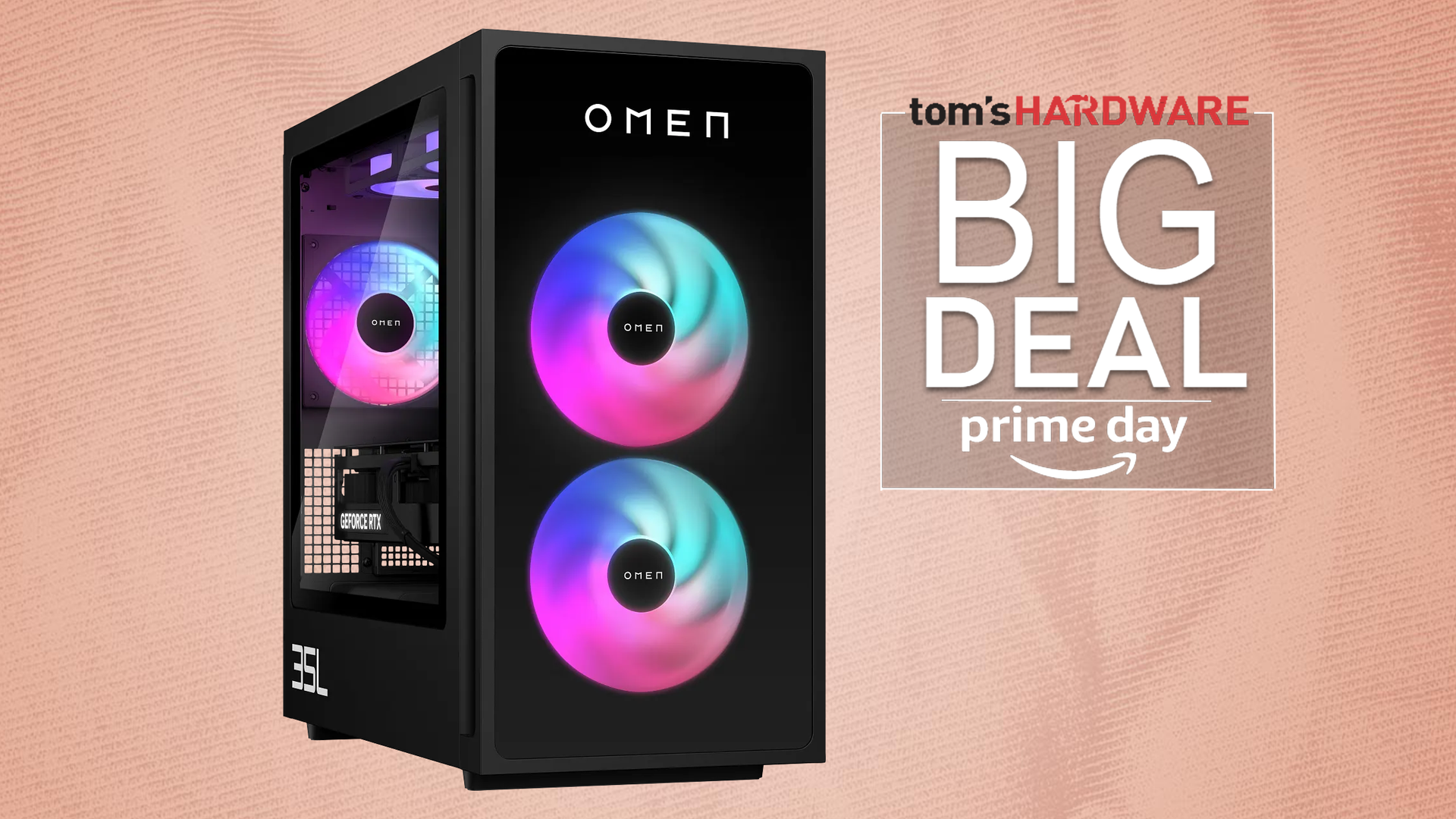
HP Omen 35L Deal Breakdown: Ryzen 7 9800X3D Meets RTX 5080 at $2,799
Executive Summary & Market Positioning
The prebuilt desktop market has historically been characterized by severe component markups, proprietary motherboards, and frustrating thermal constraints that often deter enthusiast builders. However, the current retail landscape occasionally yields anomalies that disrupt this dynamic. HP’s latest promotional slash on the Omen 35L—striking a massive $2,200 discount down to an aggressive $2,799—fundamentally alters the value equation for high-end gaming rigs. By pairing AMD’s crown jewel for gaming performance, the Ryzen 7 9800X3D, with NVIDIA’s cutting-edge Blackwell architecture in the form of the GeForce RTX 5080, this system positions itself at the absolute bleeding edge of consumer hardware capability.
From a market positioning standpoint, sourcing these two flagship components individually alongside a robust chassis, high-speed memory, and fast NVMe storage typically pushes DIY builders well past the $3,000 threshold, especially given fluctuating GPU pricing and the premium currently demanded by enthusiast-tier X3D processors. HP has managed to bypass traditional prebuilt penalties by bundling these silicon powerhouses into a refreshed 35-liter chassis. This editorial review dives deep into the architectural synergies, empirical performance metrics, and thermal realities of a system that threatens to make DIY assembly a secondary consideration for performance-obsessed enthusiasts.
Core Architectural & Technological Innovations
At the heart of the Omen 35L lies the AMD Ryzen 7 9800X3D, a processor that leverages second-generation 3D V-Cache technology. By positioning the L3 cache beneath the compute complex die (CCD) rather than on top, AMD has dramatically improved thermal dissipation directly over the core silicon. This architectural shift allows the 9800X3D to maintain higher boost clocks while retaining the massive cache capacity that virtually eliminates memory latency bottlenecks in modern gaming workloads. The result is generational generational leaps in minimum frame rates and overall frame-time consistency that outclasses even higher-core-count flagships in latency-sensitive applications.
Complementing the processor is NVIDIA’s GeForce RTX 5080, a generational tour de force built on the Blackwell architecture. The RTX 5080 introduces advanced tensor cores, refined ray-tracing pipelines, and improved power efficiency compared to its Ada Lovelace predecessors. Coupled with DLSS 4 technologies and enhanced frame generation capabilities, the GPU handles native 4K rendering and high-refresh-rate 1440p gaming with effortless scalability. Together, the Zen 5 architecture of the CPU and the Blackwell architecture of the GPU form an exceptionally balanced pipeline, ensuring that neither subsystem becomes a bottleneck during intensive compute tasks.
Empirical Specifications & Benchmark Matrix
To understand where the HP Omen 35L sits relative to typical enthusiast builds, we evaluate its primary subsystem specifications against the current market baseline for high-end prebuilts.
| Component | HP Omen 35L Configuration | Market Baseline (High-End Prebuilt) | Empirical Impact |
|---|---|---|---|
| CPU | AMD Ryzen 7 9800X3D (8C/16T) | Intel Core i7-14700K or Ryzen 7 7800X3D | Superior gaming frame times and thermal efficiency |
| GPU | NVIDIA GeForce RTX 5080 (Blackwell) | NVIDIA RTX 4080 Super or RTX 5070 Ti | Exceptional 4K rasterization and advanced ray tracing |
| Memory | 32GB DDR5 (High-frequency profile) | 32GB DDR5 (Standard JEDEC/XMP) | Mitigates memory bottlenecks in productivity apps |
| Storage | 2TB NVMe PCIe 4.0 SSD | 1TB NVMe SSD | Ample capacity for modern AAA asset libraries |
| Price | $2,799 (Promotional) | $3,500 – $4,200 | Industry-leading cost-per-frame metric |
Thermal, Efficiency & Real-World Ergonomics
Packing high-TDP silicon like the Ryzen 7 9800X3D and an RTX 5080 into a 35-liter enclosure requires meticulous airflow management. HP’s redesign of the Omen chassis introduces optimized intake channels and a multi-chamber thermal layout that separates the primary heat sources. The CPU is cooled via an integrated liquid-cooling solution that keeps thermal throttling at bay during sustained multi-core workloads, allowing the 9800X3D to sustain its peak algorithmic boost frequencies without aggressive fan spikes.
In terms of acoustic and real-world ergonomics, the system strikes a commendable balance. Under heavy gaming loads, the chassis fans ramp up linearly without producing high-frequency whine, maintaining a tolerable acoustic envelope. The inclusion of 32GB of high-speed DDR5 memory and a capacious 2TB NVMe SSD ensures that real-world responsiveness—ranging from cold boots to asset loading in open-world titles—remains instantaneous. Furthermore, HP’s Omen Gaming Hub software allows users to tune fan curves and monitor telemetry without bloating the system with intrusive background services.
The Definitive Verdict
Hardware promotions of this magnitude are exceptionally rare, particularly when dealing with brand-new silicon generations. The HP Omen 35L configured with a Ryzen 7 9800X3D and an RTX 5080 at $2,799 eliminates the traditional financial penalty of buying prebuilt systems. It delivers top-tier 4K gaming performance, unmatched CPU frame-time consistency, and a well-balanced chassis design that requires zero immediate upgrades. For enthusiasts looking to bypass the current complexities and costs of sourcing individual parts, this configuration stands as the definitive high-end prebuilt recommendation of the season.