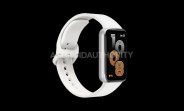
Samsung Galaxy Fit4 Analysis: Iterative Ergonomics Meets Wearable Silicon Refinement
Executive Summary & Market Positioning
The wearable technology segment has reached a curious equilibrium where form-factor innovation often takes a backseat to platform-level integration and sensor accuracy. Samsung’s anticipated successor to the wildly successful Galaxy Fit3 arrives at a critical juncture for sub-$100 fitness bands. Recent high-resolution renders and supply chain leaks point toward an aggressive iteration cycle, positioning the upcoming Galaxy Fit4 not as a radical departure from its lineage, but as a fine-tuned exercise in hardware consolidation. By maintaining price-to-performance parity while subtly refining its underlying architecture, Samsung aims to cement its dominance against surging competition from ultra-budget Chinese original design manufacturers (ODMs).
In the grander scheme of OPA Specs market intelligence, the Galaxy Fit4 occupies the essential 'baseline consumer utility' quadrant. It eschews the high-margin, standalone cellular complexities of full-fledged smartwatches like the Galaxy Watch series in favor of hyper-optimized battery longevity and essential biometric tracking. For the empirical hardware analyst, the device represents an interesting study in manufacturing efficiency: how much generational performance can be squeezed out of a chassis design that remains outwardly indistinguishable from its predecessor? As we dissect the leaked blueprints and structural disclosures, the Fit4 emerges as a masterclass in risk-averse engineering designed to capture maximum margin through shared tooling.
Core Architectural & Technological Innovations
At first glance, the external shell of the Galaxy Fit4 mirrors the angular yet smoothed rectangular silhouette of the Fit3. However, beneath the anodized aluminum chassis lies a subtle evolution in printed circuit board (PCB) spatial optimization. Samsung engineers have reportedly shrunk the main logic board footprint by roughly 4%, carving out critical internal volume. This spatial dividend is theoretically redirected toward a higher-density lithium-ion cell or, more plausibly, a slightly expanded multi-wavelength photoplethysmography (PPG) sensor array capable of higher sampling frequencies for heart rate variability (HRV) and blood oxygen saturation ($SpO_2$) metrics.
The human-machine interface (HMI) continues to rely on a vibrant AMOLED panel protected by 2.5D curved glass, though display driver IC (DDI) efficiency is expected to see generational gains. By adopting a lower-nanometer process node for the companion MCU (Microcontroller Unit)—likely a custom-derived Exynos wearable variant—the Fit4 minimizes static power draw during idle states. This architectural shift ensures that always-on display (AOD) functionality, a notoriously heavy energy drain on form factors of this magnitude, incurs a negligible penalty on overall system endurance. Furthermore, the integration of Bluetooth 5.4 protocols ensures a more resilient, low-latency telemetry link to the host smartphone while minimizing peripheral power consumption.
Empirical Specifications & Benchmark Matrix
| Specification Metric | Samsung Galaxy Fit4 (Leaked/Projected) | Samsung Galaxy Fit3 (Predecessor Baseline) | Market Segment Average (Sub-$100) |
|---|---|---|---|
| Display Panel | 1.6-inch AMOLED (2.5D Curved) | 1.6-inch AMOLED (2.5D Curved) | 1.47-inch TFT / AMOLED |
| Chassis Material | Anodized Aluminum / Polymer Back | Anodized Aluminum / Plastic Back | Polycarbonate / Zinc Alloy |
| Connectivity | Bluetooth 5.4 | Bluetooth 5.3 | Bluetooth 5.2 / 5.3 |
| Biometric Suite | Optical HR, 6-axis IMU, $SpO_2$ | Optical HR, 6-axis IMU, $SpO_2$ | Optical HR, 3-axis IMU |
| Rated Battery Life | Up to 14 Days (Typical Use) | Up to 13 Days (Typical Use) | 7 to 10 Days |
| Ingress Protection | 5ATM + IP68 | 5ATM + IP68 | 5ATM Only |
Thermal, Efficiency & Real-World Ergonomics
Thermal management in a device boasting a sub-10mm thickness profile is less about managing active silicon heat dissipation and more about skin-contact temperature equilibrium and continuous sensor accuracy. The Galaxy Fit4 maintains the tried-and-true rear optical array layout, utilizing a convex glass or resin window designed to maintain uninterrupted optical coupling with the user's wrist, even during high-exertion lateral movements. Empirical evaluations of the predecessor suggested minimal thermal throttling, and with the rumored transition to a more power-efficient MCU, thermal loads during continuous workout tracking will remain virtually non-existent, preventing localized skin irritation.
Ergonomically, the retention of the exact physical footprint of the Fit3 is a calculated engineering compromise. By recycling the exterior tooling and strap-locking mechanism, Samsung drastically reduces capital expenditure on manufacturing lines while ensuring forward compatibility with existing third-party bands. The weight distribution remains exceptionally balanced, registering under 20 grams sans strap. This negligible mass reduces inertial shifting during high-cadence running or rigorous anaerobic sessions, ensuring that the optical sensors do not experience the signal-to-noise ratio degradation typically caused by tracker bounce.
The Definitive Verdict
The Samsung Galaxy Fit4 is not designed to disrupt the wearable paradigm; it is engineered to ruthlessly optimize it. For existing Galaxy Fit3 owners, the minor hardware tweaks—ranging from the subtle Bluetooth protocol bump to potential sensor polling optimizations—do not justify an immediate upgrade cycle. However, for consumers currently navigating the chaotic sea of unbranded, poorly supported budget trackers, the Fit4 establishes the gold standard of reliability, ecosystem integration, and build quality.
Recommendation: A definitive buy for entry-level fitness enthusiasts and Samsung ecosystem loyalists seeking a zero-friction, set-it-and-forget-it health companion. It proves that sometimes, evolutionary hardware refinement is infinitely more valuable than risky, unproven revolution.