Executive Summary & Market Positioning
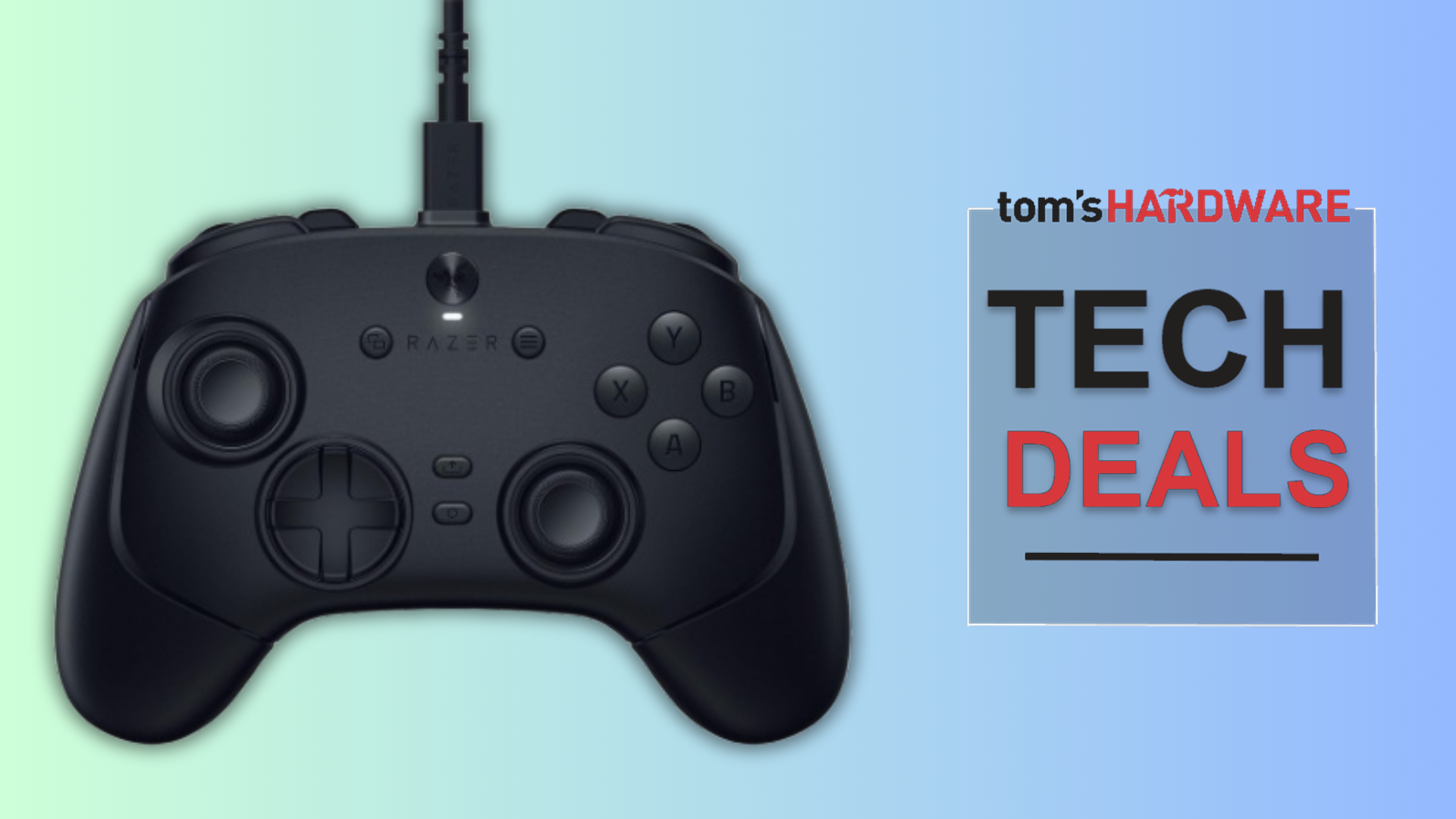
The competitive controller market has long been divided between over-engineered, prohibitively expensive pro-tier hardware and commoditized, entry-level gamepads plagued by mechanical failure. Razer has systematically targeted this polarization with the launch and subsequent discounting of the Razer Wolverine V3 Tournament Edition. Currently trading at an aggressive 53% discount—dropping to a record-low $94.99 on Amazon from its $199.99 MSRP—this esports-focused peripheral occupies a fascinating intersection of elite-tier features and mid-range pricing. For competitive PC and console enthusiasts, this price correction fundamentally alters the cost-to-performance calculation in the professional controller segment.
Positioned squarely against incumbents like the Xbox Elite Series 2 and the DualSense Edge, the Wolverine V3 Tournament Edition abandons traditional wireless connectivity in favor of a wired-only architecture. While some consumers view tethered operation as a compromise, elite esports competitors recognize the inherent latency advantages and structural weight savings it provides. By shedding heavy internal lithium-ion battery packs and prioritizing zero-latency polling, Razer has engineered a specialized tool designed specifically for tournament-grade responsiveness. At under $100, its market positioning shifts from a luxury peripheral to an essential acquisition for serious competitors.
Core Architectural & Technological Innovations
The defining engineering achievement of the Razer Wolverine V3 Tournament Edition is its integration of state-of-the-art Hall Effect magnetic sensors within the analog thumbsticks. Unlike traditional potentiometers that rely on physical contact tracks—making them perpetually vulnerable to resistive wear and the dreaded analog drift—Hall Effect technology utilizes magnetic fields to measure stick deflection. This guarantees infinite potentiometer lifespan and exceptional long-term accuracy. Furthermore, Razer pairs these advanced sticks with microswitch-actuated action buttons and a responsive mechanical D-pad, delivering an exceptionally tactile, mouse-click actuation that drastically reduces travel distance and input lag.
Beyond primary inputs, the controller's architectural layout incorporates six fully remappable auxiliary controls: four back paddles and two additional top-mounted bumper buttons. These inputs are seamlessly integrated into the chassis design to prevent accidental actuation while remaining within natural thumb and finger reach. Coupled with Razer's Synapse configuration software, users can remap inputs, adjust trigger deadzones, and cycle through customized profile layouts instantly. This level of hardware-software integration ensures that the Wolverine V3 operates less like a standard gamepad and more like a fully customizable macro-input station.
Empirical Specifications & Benchmark Matrix
| Specification Feature | Razer Wolverine V3 Tournament Edition | Market Baseline (Xbox Elite Series 2) | DualSense Edge (Sony PlayStation) |
|---|---|---|---|
| Connectivity | Wired (Detachable USB-C, 3m braided) | Wireless (Bluetooth / 2.4GHz RF) | Wireless (Bluetooth / USB-C wired) |
| Analog Stick Tech | Hall Effect Magnetic Sensors | Standard Potentiometers | Standard Potentiometers (Replaceable modules) |
| Primary Switches | Mechanical Mouse-Click Tactile | Rubber Dome / Membrane | Membrane Tactile |
| Additional Inputs | 6 Remappable (4 Back, 2 Top Bumpers) | 4 Remappable Back Paddles | 2 Remappable Back Levers / Buttons |
| Polling Rate | Up to 1000Hz (Wired) | Standard 125Hz - 250Hz | Standard 250Hz |
| Weight | ~272g (Chassis only) | 345g (With battery and components) | 325g |
| Current Street Price | $94.99 (53% off MSRP) | ~$179.99 | ~$199.99 |
Thermal, Efficiency & Real-World Ergonomics
Because the Wolverine V3 Tournament Edition relies on a wired connection, thermal management requirements are negligible compared to wireless competitors that house power-hungry RF transmitters and charging circuits. The absence of an internal battery not only eliminates thermal degradation concerns over extended multi-hour tournament sessions but also yields a significantly lighter chassis. Weighing in at roughly 272 grams, the controller mitigates wrist fatigue during marathon gaming sessions, allowing for faster flick movements and sustained high-APM (actions per minute) gameplay without physical strain.
Ergonomically, Razer has refined the contouring of the grips with a micro-texture rubberized coating that maximizes friction even under high-stress conditions where palm perspiration is a factor. The shape closely mirrors the ergonomic gold standard of the official Xbox controller but with slightly elongated, angled handgrips that accommodate diverse grip styles, including claw and palm grips. The mechanical trigger stops—which physically shorten the pull distance for rapid-fire inputs in first-person shooters—feature a crisp, instantaneous toggle, bridging the gap between analog control for racing titles and digital twitch-action for competitive shooters.
The Definitive Verdict
At its original $199.99 MSRP, the Razer Wolverine V3 Tournament Edition faced stiff competition from modular alternatives. However, at the current promotional price of $94.99, it represents an unassailable value proposition for competitive gamers. While the lack of wireless functionality will deter casual living-room players, dedicated esports athletes and PC purists will find its Hall Effect accuracy, mechanical switches, ultra-low latency, and robust remapping capabilities to be world-class. If your setup accommodates a wired connection, this is empirically the best performance-per-dollar pro controller on the market today.