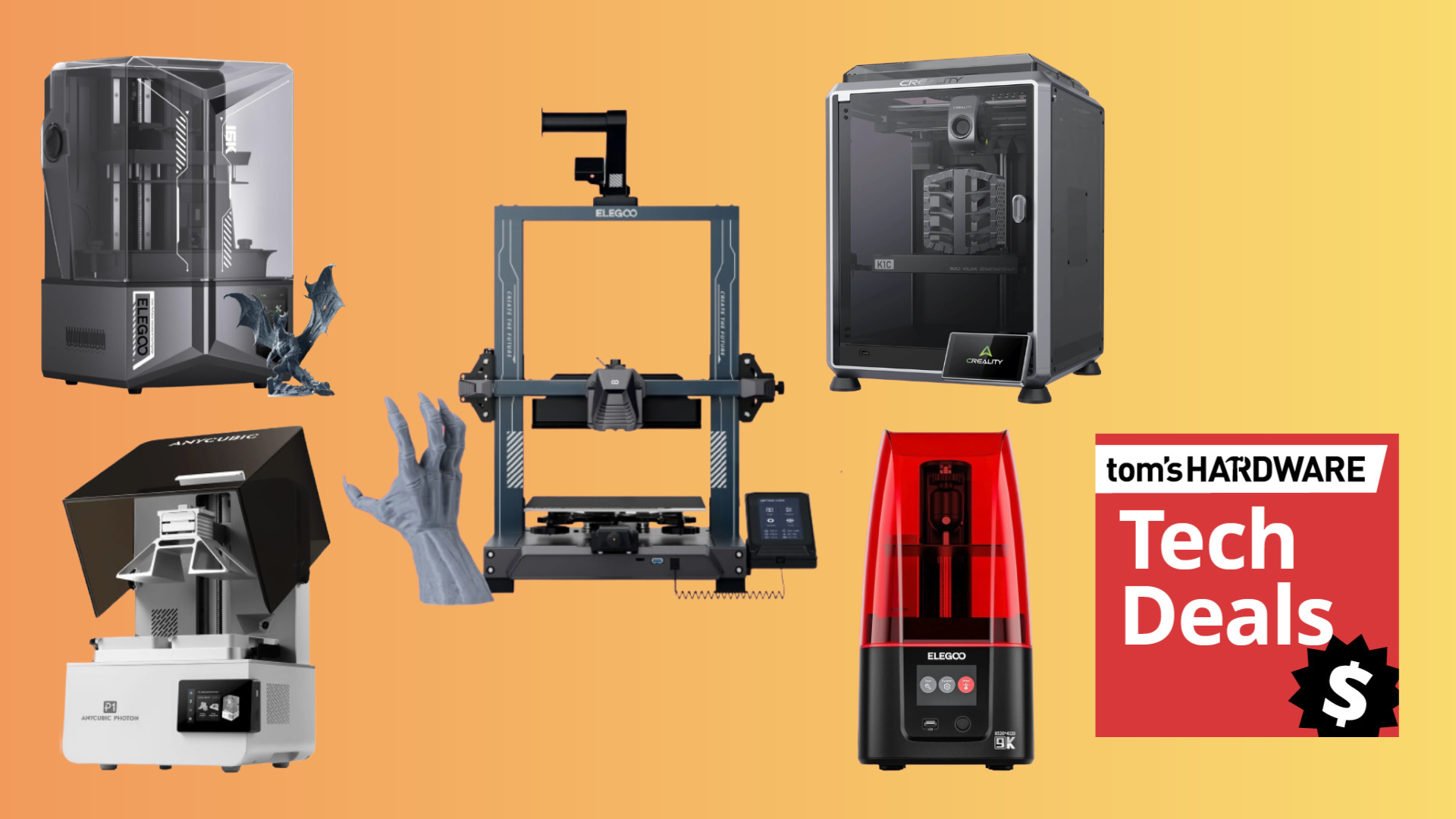
Executive Summary & Market Positioning
The additive manufacturing market is experiencing a profound structural price correction as major tier-one OEMs—including Bambu Lab, Elegoo, Creality, and Prusa—aggressively slash retail pricing ahead of the traditional holiday sales cycle. This early-season hardware clearance is not merely a tactical inventory flush; it represents a fundamental democratization of high-speed CoreXY architectures, automated bed leveling, and multi-color filament systems. Historically, enclosed, high-acceleration platforms capable of rapid deposition rates commanded a severe premium, often pricing hobbyists out of advanced engineering materials like ABS, ASA, and carbon-fiber-reinforced composites.
Today, entry-level barriers have plummeted, with entry-point hardware such as the Bambu Lab A1 Mini dropping to an unprecedented $199, while highly capable enclosed systems like the Elegoo Centauri Carbon 2 breach the sub-$320 threshold. This aggressive market positioning forces a rapid re-evaluation of return on investment (ROI) for both consumer tinkerers and small-batch prototyping facilities. By compressing the cost of high-speed kinematics and closed-loop motion control, manufacturers are effectively rendering legacy bed-slinger designs obsolete, shifting the baseline expectation of consumer additive manufacturing toward automated calibration, vibration compensation, and integrated multi-material management straight out of the box.
Core Architectural & Technological Innovations
The most significant hardware shifts visible across this promotional cycle involve the widespread adoption of refined kinematic structures and advanced thermal management systems. CoreXY architectures, once exclusive to enterprise-tier machines, now dominate the mid-range offerings from Creality and Bambu Lab, enabling vastly superior acceleration profiles and print speeds without introducing the inertial ringing artifacts typical of traditional Cartesian designs. Furthermore, the integration of advanced peripheral hardware—such as Bambu Lab's updated AMS 2 Pro multi-material system—highlights a relentless engineering focus on workflow automation, featuring active 65°C heated filament drying, upgraded high-torque feed motors, and ceramic feed inlets designed to eliminate abrasive wear.
Simultaneously, resin stereolithography (SLA) platforms are benefiting from radical precision upgrades. Systems like the Elegoo Mars 5 Ultra leverage ultra-high-resolution 9K monochrome LCD matrices to deliver exceptional sub-pixel boundary definition for micro-detail applications such as tabletop miniatures and dental prototyping. Concurrently, fused deposition modeling (FDM) heavyweights are standardizing industrial-grade extrusion paths, incorporating hardened steel nozzles and direct-drive print heads capable of handling high-flow engineering polymers. These technological trickle-downs ensure that even sub-$300 hardware packages benefit from closed-loop stepper motor feedback, AI-assisted print failure detection, and full-auto calibration protocols that eliminate manual Tramming errors.
Empirical Specifications & Benchmark Matrix
| Model | Architecture | Build Volume (mm) | Max Speed / Accel | Key Thermal & Extrusion Features | Promotional Price |
|---|---|---|---|---|---|
| Bambu Lab A1 Mini | Cartesian / Bed Slinger | 180 x 180 x 180 | 500 mm/s | Quick-swap hotend, Auto-calibration | $199 |
| Elegoo Centauri Carbon 2 | CoreXY Enclosed | 256 x 256 x 256 | 600 mm/s | Hardened steel nozzle, Enclosed chassis | $319 |
| Bambu Lab P1S w/ AMS 2 Pro | CoreXY Enclosed | 256 x 256 x 256 | 500 mm/s | 65°C active filament heating, AMS 2 Pro | $509 |
| Elegoo Mars 5 Ultra 9K | MSLA Resin | 143 x 89 x 153 | N/A (SLA) | 9K monochrome LCD, mechanical tilt release | $259 |
| Creality K1C 2025 | CoreXY Enclosed | 220 x 220 x 250 | 600 mm/s | Tri-metal steel-tipped nozzle, Klipper OS | $499 |
Thermal, Efficiency & Real-World Ergonomics
Thermal efficiency and acoustic signature remain critical differentiators in modern desktop 3D printing engineering. Enclosed CoreXY platforms, such as the Creality K1C and Bambu Lab P1S series, utilize sophisticated chamber thermoregulation to minimize thermal gradient warping when printing high-shrinkage polymers like ABS and polycarbonate. The inclusion of localized chamber heating and optimized auxiliary part-cooling fans ensures that overhang performance is maintained even at volumetric flow rates exceeding 25 cubic millimeters per second. Moreover, power delivery sub-systems have been optimized with high-efficiency switching power supplies that reduce idle power draw and mitigate thermal runaway risks through multi-tiered hardware fuses.
Ergonomically, the industry has pivoted hard toward turnkey appliance-grade operation. Gone are the days of tedious manual bed leveling via thumbwheels and paper gauges; the current crop of discounted hardware relies on load-cell sensors and eddy-current proximity probes to map mesh beds autonomously. User interfaces have similarly evolved, transitioning from clunky rotary-encoder monochrome displays to responsive color touchscreens and companion cloud applications that stream high-definition timelapses. Acoustic dampening algorithms—utilizing input shaping to actively cancel out resonant frequencies—have dramatically lowered operational decibel levels, making these high-speed machines viable for residential desktop environments and educational classrooms alike.
The Definitive Verdict
Navigating this wave of hardware discounts requires aligning specific project requirements with architectural capabilities. For absolute beginners and budget-conscious creators seeking a frictionless introduction to multi-color printing, the Bambu Lab A1 Mini at $199 is an unmatched value proposition. However, for users demanding engineering-grade materials, structural enclosures, and rapid iterative prototyping, the Elegoo Centauri Carbon 2 at $319 redefines the mid-tier performance ceiling. If budget permits an uncompromised multi-material ecosystem, the Bambu Lab P1S paired with the AMS 2 Pro ($509) stands as the ultimate engineering workhorse of the current sales cycle. Ultimately, hardware buyers should act decisively; while these price points represent historic lows, high-demand inventory is clearing rapidly across all major logistics channels.