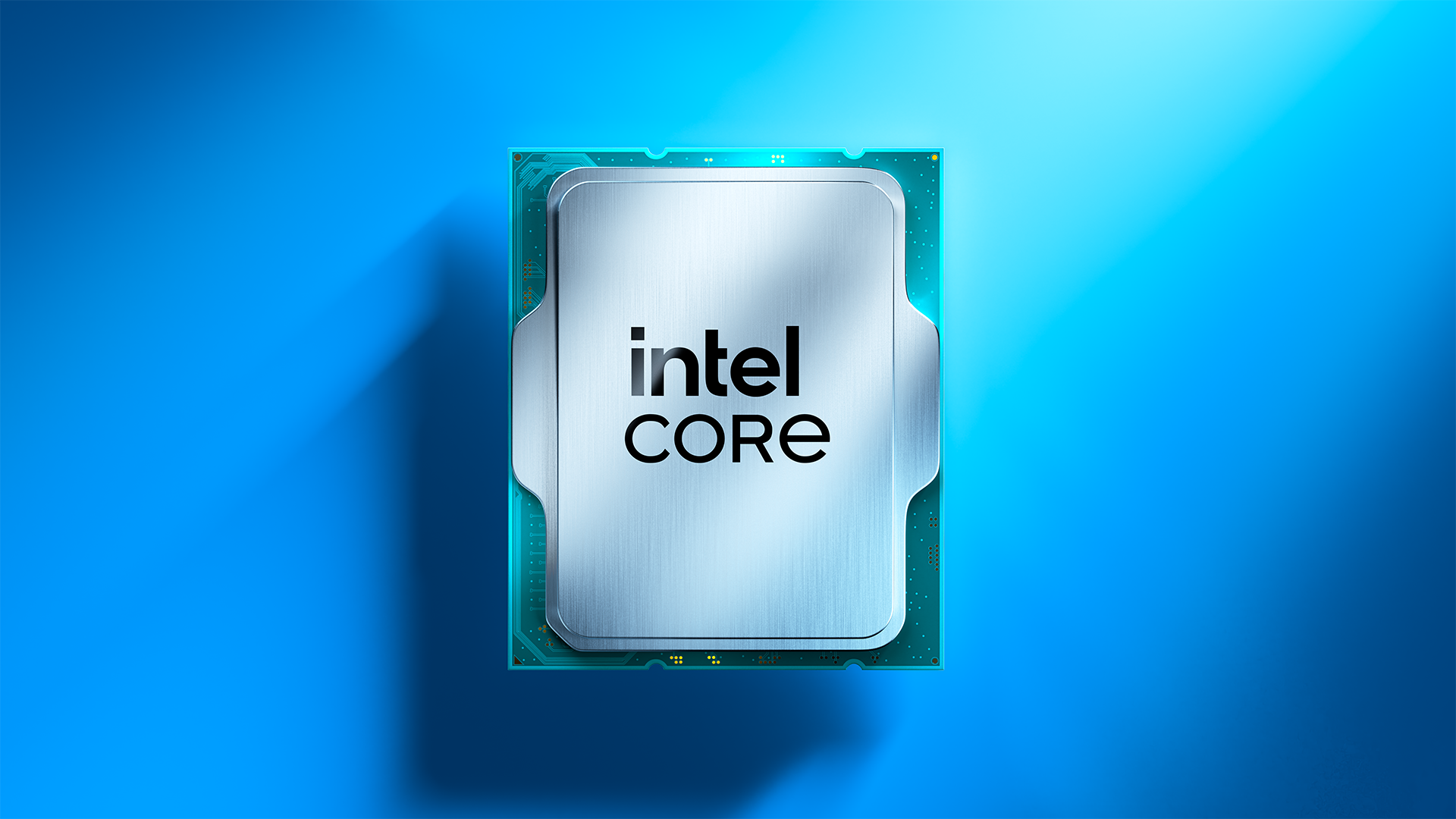
Executive Summary & Market Positioning
Recent telemetry and official microcode deployment schedules from primary motherboard vendors have inadvertently broken open Intel’s roadmap, confirming an unexpected yet pragmatic lifecycle extension for the venerable LGA 1700 platform. Gigabyte’s rolling distribution of comprehensive BIOS updates explicitly targets its B760 and H610 product stacks, engineering native compatibility for an unreleased processor family slated for early 2027. This strategy marks a significant pivot in Intel’s consumer strategy, heavily mirroring AMD’s long-standing philosophy of platform longevity. By breathing new life into an architecture originally introduced with 13th-generation Core processors, the silicon giant is directly addressing the mounting economic pressures faced by value-conscious system integrators.
The market positioning of this forthcoming "Rptor Lake Next" refresh is intrinsically tied to macroeconomic realities in the memory sector. With the persistent volatility of DDR5 pricing and the stabilizing yet resilient demand for high-capacity DDR4 infrastructure, the preservation of legacy memory ecosystems provides a crucial economic buffer. Notably, while the rollout currently prioritizes mainstream B760 and value-tier H610 chipsets—omitting enthusiast Z690 and Z790 boards for the time being—it creates a compelling upgrade path for millions of deployed systems. Rather than forcing a costly platform migration to newer sockets, users can execute a drop-in replacement, extracting maximum amortization value from existing chassis, power delivery networks, and memory modules.
Core Architectural & Technological Innovations
At its core, the Raptor Lake Next initiative represents a third microarchitectural iteration on the mature Intel 7 process node, relying on a hybrid core layout that blends Performance-cores (P-cores) and Efficient-cores (E-cores). Industry leaks point toward a tiered lineup spanning Core 3, Core 5, and Core 7 branding under the Core 200 moniker. The structural zenith of this refresh is expected to be a robust 20-core configuration featuring 8 P-cores and 12 E-cores, operating at a controlled 65W base power envelope. This careful optimization of cache topologies—such as a specialized 10-core SKU sporting 24MB of L3 cache—highlights an engineering focus on balancing multi-threaded productivity with strict thermal and electrical parameters.
From a platform enablement perspective, the engineering challenge lies in ensuring firmware stability across vastly different memory controllers. Supporting both high-speed DDR5 and legacy DDR4 on the same silicon requires intricate microcode adaptations by motherboard vendors like Gigabyte. The inclusion of DDR4 support down to entry-level H610 boards is a massive win for institutional and budget builders who refuse to compromise on RAM capacity due to soaring component costs. Furthermore, the retention of the LGA 1700 socket minimizes PCB redesign costs for board partners while leveraging mature power management ICs (PMICs) and VRM topologies that have been battle-tested over multiple generations.
Empirical Specifications & Benchmark Matrix
| Specification Metric | Intel Core 7 (Raptor Lake Next Leak) | Intel Core 5 (16-Core Variant) | Baseline: i7-14700K (LGA 1700) | Baseline: AMD Ryzen 7 7800X3D |
|---|---|---|---|---|
| Socket Compatibility | LGA 1700 | LGA 1700 | LGA 1700 | AM5 |
| Memory Support | DDR4 / DDR5 | DDR4 / DDR5 | DDR4 / DDR5 | DDR5 Only |
| Core Architecture | Hybrid (8 P-cores + 12 E-cores) | Hybrid (8 P-cores + 8 E-cores) | Hybrid (8 P-cores + 12 E-cores) | 8 Zen 4 Cores |
| Base Processor Power | 65W | 125W | 125W | 120W |
| Target Launch Window | Early 2027 (Rumored) | Early 2027 (Rumored) | Released (Q4 2023) | Released (Q2 2023) |
Thermal, Efficiency & Real-World Ergonomics
Power delivery and thermal management for the Raptor Lake Next stack are fundamentally shaped by the limitations and strengths of the Intel 7 process node. Because these processors are engineered to operate within traditional 65W and 125W thermal design power (TDP) envelopes, they avoid the extreme thermal dissipation hurdles seen in bleeding-edge, high-wattage enthusiast silicon. For real-world deployments in B760 and H610 motherboards—many of which feature modest, uncooled or lightly heatsinked VRMs—maintaining a 65W baseline for high-core-count variants like the 20-core Core 7 ensures that users will not melt their entry-level hardware during sustained multi-core rendering workloads.
Ergonomically, this translates to a frictionless drop-in upgrade experience. Users running aging 12th or 13th-generation entry processors can retain their existing CPU coolers, chassis airflow configurations, and power supply units. The reduction in electronic waste and capital expenditure cannot be overstated; avoiding platform swaps means zero motherboard extraction, no thermal paste re-application panic for novice builders, and absolute preservation of OS activation licenses tied to hardware IDs. Thermal performance will remain highly predictable, governed by standard tower air coolers rather than mandatory high-cost liquid cooling loops.
The Definitive Verdict
Gigabyte's proactive BIOS updates provide undeniable validation that Intel's LGA 1700 ecosystem is far from dead, securing an unprecedented third wind well into 2027. For cost-conscious builders, enterprise fleet managers, and budget gamers clinging to DDR4 memory or entry-level B760/H610 boards, Raptor Lake Next emerges as a brilliant, pragmatic bridge. While enthusiast purists chasing absolute architectural novelty will naturally look toward next-generation platforms like Nova Lake or AM5, the sheer value proposition of a drop-in 20-core CPU upgrade on a four-year-old socket is an engineering triumph. Intel and its board partners win the recommendation for prioritizing consumer relief amid stubborn memory pricing.