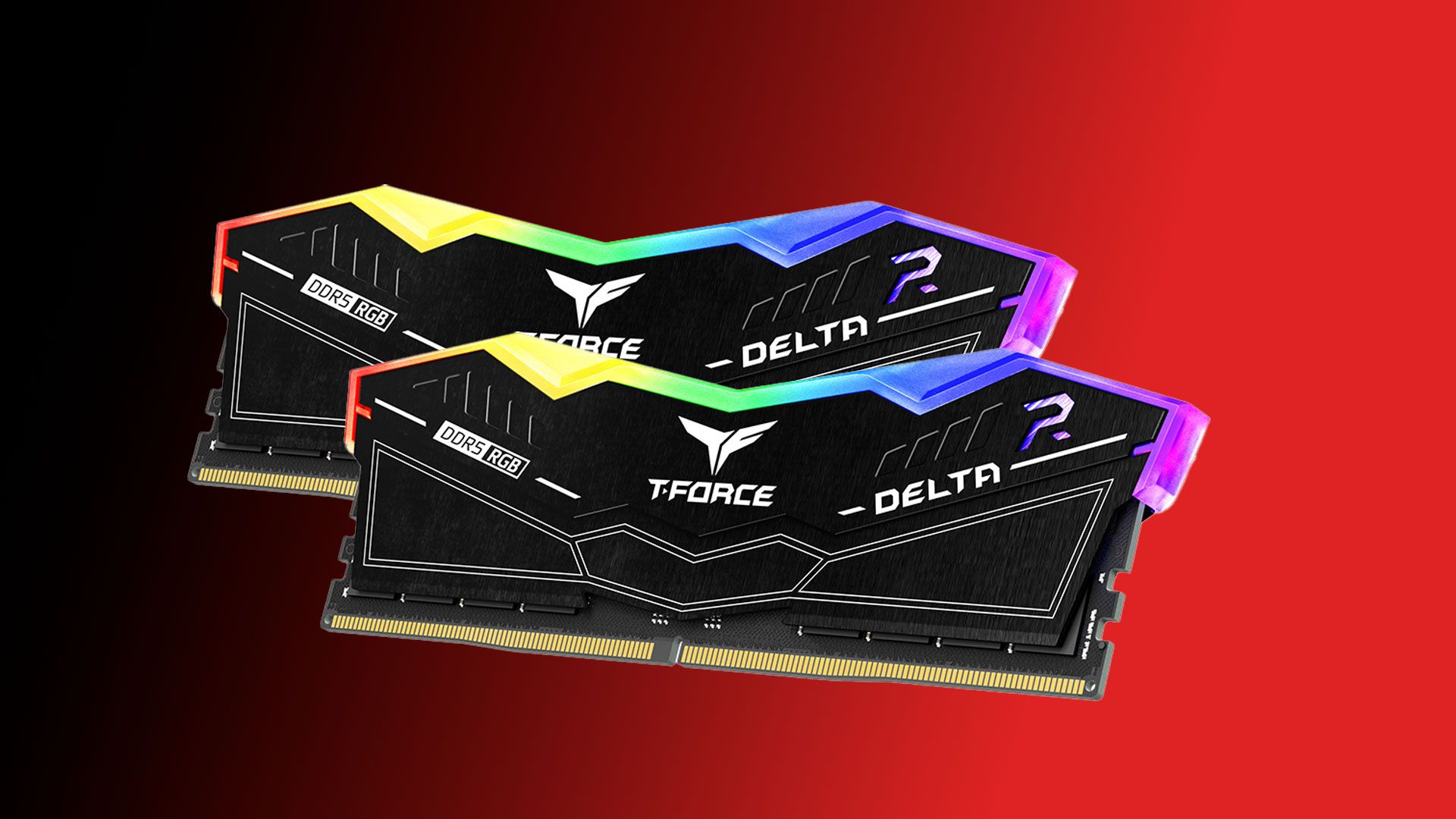
Executive Summary & Market Positioning
The memory subsystem landscape for desktop computing has faced a protracted period of high acquisition costs, particularly regarding high-capacity DDR5 modules. However, recent retail cycles, specifically highlighted during major promotional periods like Prime Big Deals Day, have introduced meaningful downward pressure on 32GB dual-channel kits. For years, early adopters faced a steep financial premium to transition away from mature DDR4 platforms, hampered by high initial production costs, complex Power Management Integrated Circuit (PMIC) sourcing, and lower initial wafer yields. Today, the 32GB capacity point—once considered a luxury tier—has solidified as the baseline requirement for modern productivity workloads, heavy multitasking, and high-fidelity gaming.
From a market positioning perspective, these recent price corrections bridge the gap between entry-level 16GB configurations and enthusiast-grade multi-channel setups. System builders utilizing Intel's LGA1700/LGA1851 architectures or AMD's AM5 platform can now integrate robust 32GB densities without disproportionately inflating their total bill of materials. This analysis examines the architectural shifts, thermal characteristics, and empirical value propositions of current 32GB DDR5 promotions, evaluating whether these discounted kits deliver the necessary bandwidth and stability to justify deployment in modern high-performance client machines.
Core Architectural & Technological Innovations
Transitioning from DDR4 to DDR5 involves fundamental shifts in memory architecture, the most notable being the division of a single memory channel into two independent 32-bit sub-channels. This architectural change drastically improves command-and-control efficiency, reducing latency overhead and maximizing memory controller utilization under sustained multi-threaded workloads. Furthermore, the integration of the Power Management Integrated Circuit (PMIC) directly onto the printed circuit board (PCB) marks a departure from motherboard-regulated power delivery. By moving the PMIC to the DIMM, manufacturers achieve tighter voltage granularity, improved signal integrity, and enhanced power efficiency, operating natively at 1.1V compared to DDR4's 1.2V baseline.
Another critical technological advancement found in contemporary 32GB kits is the widespread implementation of On-Die Error Correction Code (ECC). While distinct from enterprise-grade server ECC memory, On-Die ECC corrects single-bit errors within the memory chip itself, drastically improving data integrity at higher clock frequencies. Coupled with enhanced support for Intel XMP 3.0 and AMD EXPO profiles, modern kits allow users to bypass JEDEC baseline speeds with single-click profile activation. These profiles store custom voltage, frequency, and timing configurations directly on the SPD hub, ensuring reliable overclocking headroom and minimizing manual tuning complexities for system integrators.
Empirical Specifications & Benchmark Matrix
To contextualize the performance viability of discounted 32GB DDR5 kits, we compare standard promotional specifications against the broader market baseline for current-generation memory sub-systems.
| Specification Metric | Market Baseline (Entry DDR5) | Promotional 32GB Kit Standard | Enthusiast Tier (High-End) |
|---|---|---|---|
| Capacity | 32GB (2 x 16GB) | 32GB (2 x 16GB) | 64GB (2 x 32GB) |
| Data Rate (Frequency) | 4800 MT/s – 5200 MT/s | 5600 MT/s – 6000 MT/s | 6400 MT/s – 7200 MT/s |
| Primary Timings (CL) | CL40 – CL42 | CL30 – CL36 | CL32 – CL34 |
| Operating Voltage | 1.1V (JEDEC) | 1.25V – 1.35V | 1.40V – 1.45V |
| PMIC Type | Unlocked / Locked | Unlocked (Architectural) | Unlocked (High-Current) |
| Error Correction | On-Die ECC | On-Die ECC | On-Die ECC |
As illustrated in the matrix, promotional kits frequently punch above their weight class, pushing past sluggish JEDEC baseline speeds to hit the sweet spot of 5600 MT/s to 6000 MT/s paired with tight CAS latencies (CL30 to CL36). This specific bracket offers the optimal performance-per-dollar ratio for AMD Ryzen 7000/9000 series processors, where memory controllers operate synchronously with the Infinity Fabric clock.
Thermal, Efficiency & Real-World Ergonomics
Operating at higher clock frequencies inevitably generates thermal energy, making the physical design of the heat spreader a critical consideration for sustained stability. Modern discounted kits frequently utilize stamped aluminum or brushed extrusion heat sinks that balance aesthetic preferences with effective thermal dissipation. Because the PMIC is now onboard, localized hot spots can develop directly over the power management components. Quality kits incorporate thermal pads bridging the PMIC to the metal heat spreader, preventing thermal throttling during extended memory stress tests like TestMem5 or AIDA64 cache and memory benchmarks.
From an energy efficiency standpoint, the shift to 1.1V base voltage yields tangible dividends in system power draw and thermal output within restricted chassis environments. Even when XMP or EXPO profiles are engaged—raising operating voltages to between 1.25V and 1.35V—the electrical efficiency remains well within safe operational parameters. Real-world ergonomics are further enhanced by low-profile spreader options, ensuring that bulky dual-tower CPU air coolers do not experience physical clearance conflicts with the primary and secondary DIMM slots.
The Definitive Verdict
The convergence of mature manufacturing nodes, improved IC yields, and aggressive retail pricing has fundamentally transformed the 32GB DDR5 memory landscape. No longer an overpriced luxury, acquiring a high-speed, low-latency 32GB kit during promotional windows represents a highly rational capital allocation for any modern PC build. Enthusiasts and productivity professionals can now secure memory subsystems capable of matching the bandwidth demands of next-generation silicon without suffering the exorbitant premiums that characterized the early launch phases of the DDR5 standard. Definitive Recommendation: Prioritize kits rated at 6000 MT/s with CL30 to CL32 timings for optimal platform stability and maximum performance return on investment.