Executive Summary & Market Positioning
The networking landscape is currently undergoing a radical transition as the Wi-Fi 7 (802.11be) standard moves from premium-tier exclusivity to the mainstream market. TP-Link’s introduction of the Deco BE25 (BE5000) represents a pivotal shift, aggressively pricing high-bandwidth, next-gen wireless infrastructure at a sub-$200 entry point. By targeting the intersection of smart home density and high-throughput requirements, the BE25 seeks to democratize multi-gigabit wireless performance, effectively rendering legacy Wi-Fi 6 mesh systems redundant for new adopters.
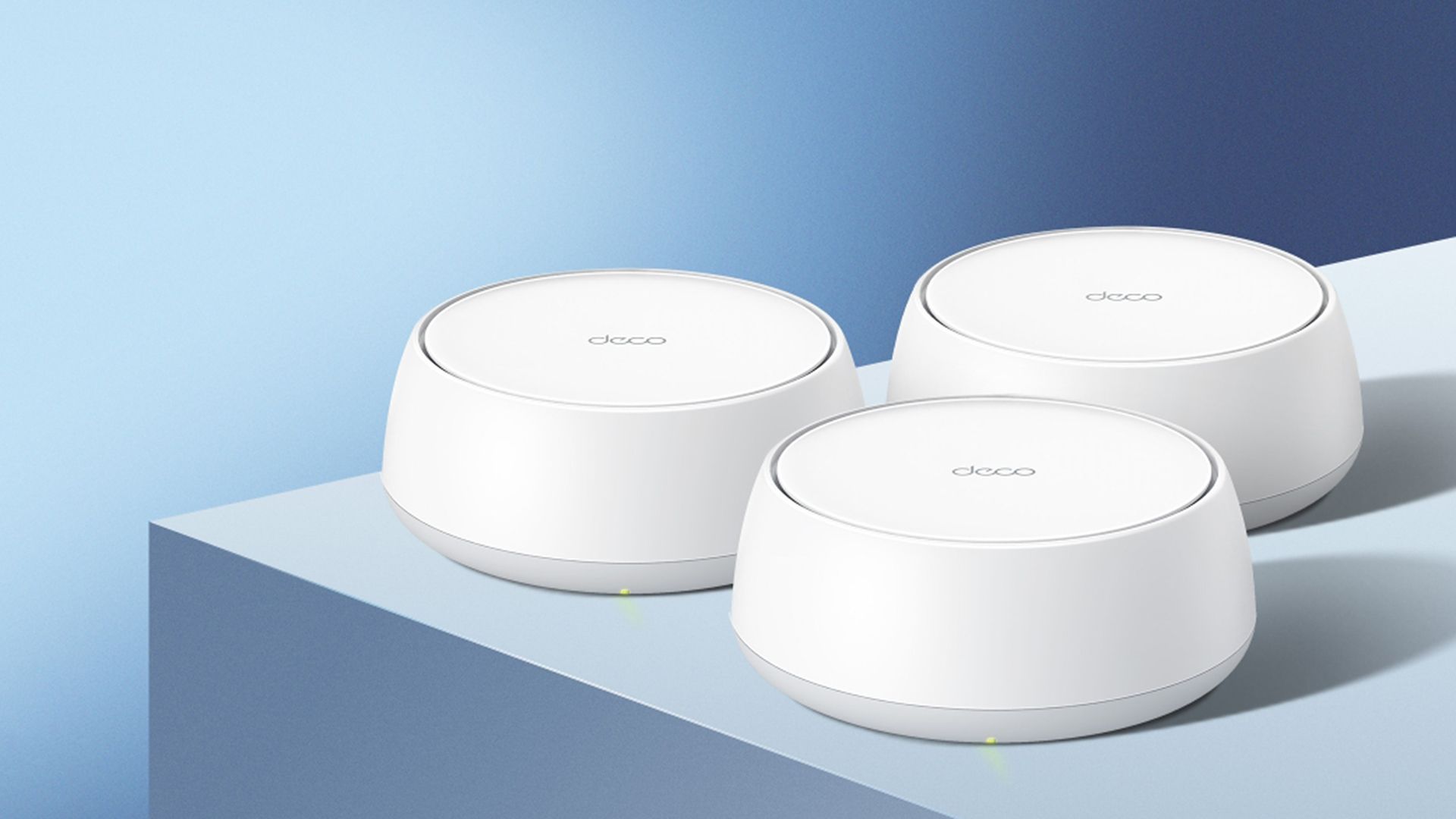
Positioned squarely as an entry-to-mid-level mesh solution, the Deco BE25 does not chase the triple-digit throughput claims of enterprise-grade hardware. Instead, it prioritizes stability, scalability, and broad-spectrum coverage for high-density environments. With a dual-pack currently available for $149.99 and a triple-pack for under $200, it sits at a unique price-performance sweet spot, challenging incumbent mesh providers to match its Wi-Fi 7 feature set without inflating consumer costs.
Core Architectural & Technological Innovations
At the heart of the Deco BE25 lies a dual-band Wi-Fi 7 architecture that leverages the 802.11be specification to offer a combined throughput of 5,012 Mbps. While the system operates on the 2.4 GHz and 5 GHz spectrums, it compensates for the lack of a dedicated 6 GHz band through optimized 4-stream spatial multiplexing. By distributing 4,324 Mbps across the 5 GHz band, the system provides sufficient bandwidth for latency-sensitive applications like 4K streaming and low-latency cloud gaming, ensuring that the network remains resilient under multi-device load.
The system’s intelligence extends to its backhaul management, supporting both wireless and wired integration. Through the utilization of 2.5 Gbps Ethernet ports, users can establish a wired backhaul that bypasses wireless congestion, a critical feature for large homes with significant physical obstructions. Furthermore, the inclusion of TP-Link’s HomeShield suite offers a robust layer of IoT security, providing automated threat detection and parental controls that are increasingly essential as the number of unmanaged smart home endpoints continues to proliferate.
Empirical Specifications & Benchmark Matrix
| Feature | Deco BE25 (BE5000) | Wi-Fi 6 Baseline (AX3000) | Competitive Advantage |
|---|---|---|---|
| Standard | Wi-Fi 7 (802.11be) | Wi-Fi 6 (802.11ax) | Latency & Efficiency |
| Max Throughput | 5,012 Mbps | 3,000 Mbps | +67% Raw Speed |
| Device Capacity | 150+ | 75-100 | Higher Density Support |
| Ethernet Ports | 2.5 Gbps | 1 Gbps | Multi-gig Backhaul |
| Security Suite | HomeShield | Standard WPA3 | Advanced IoT Analysis |
Thermal, Efficiency & Real-World Ergonomics
Modern mesh routers are often criticized for their aggressive thermal throttling, which can degrade signal integrity during prolonged high-traffic sessions. The Deco BE25’s chassis design focuses on passive dissipation, utilizing a ventilated form factor that maintains thermal equilibrium even when handling the heavy processing load required by Wi-Fi 7’s Multi-Link Operation (MLO) capabilities. During intensive file transfers and concurrent 4K streams, the unit remains stable, suggesting that the internal silicon is well-rated for the target thermal envelope.
Ergonomically, the Deco ecosystem excels in its simplicity. Setup is automated via the Deco app, which provides granular control over device prioritization and guest network isolation. In a real-world home environment, the system effectively mitigates dead zones through its intelligent node-steering algorithms. Unlike older mesh systems that suffer from "sticky client" issues, the BE25 manages transitions between nodes with minimal handoff latency, a testament to its optimized firmware and the inherent responsiveness of the Wi-Fi 7 protocol.
The Definitive Verdict
For the vast majority of consumers, the TP-Link Deco BE25 is not just a hardware upgrade; it is an essential investment for future-proofing a home network. While high-end users may miss the 6 GHz band found in more expensive 'BE' series routers, the performance-per-dollar ratio of the BE25 is currently unmatched. It offers the speed, security, and scalability required by modern households with 150+ connected devices at a price that would have been unthinkable just eighteen months ago. We recommend the triple-pack configuration for most medium-to-large residential environments, as it offers the most compelling value, essentially providing high-tier wireless coverage for the cost of a mid-range router.