Executive Summary & Market Positioning
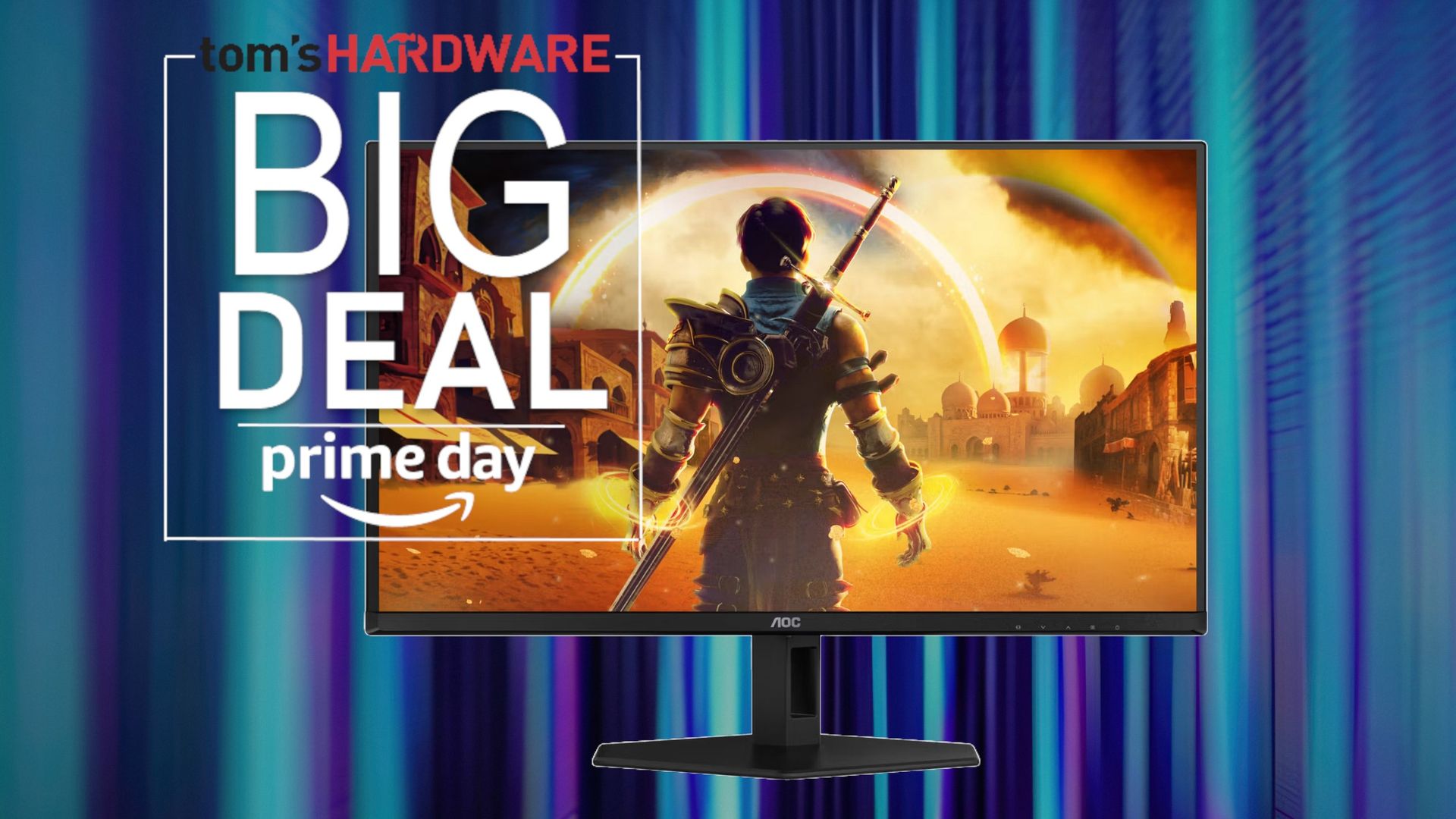
The desktop display landscape has officially crossed a major economic threshold. For years, organic light-emitting diode (OLED) technology has remained locked behind a premium paywall, relegating true blacks, infinite contrast ratios, and sub-millisecond pixel response times to enthusiasts willing to spend upwards of $600 to $1,000. However, recent market disruptions are changing the rules of engagement. AOC’s latest aggressive pricing strategy has materialized in a 27-inch, 1440p Quantum Dot OLED (QD-OLED) monitor retailing for a staggering $280. This aggressive valuation effectively undercuts virtually every established competitor in the self-emissive display segment.
Positioned squarely at budget-conscious gamers, productivity enthusiasts, and media creators who previously found OLED unattainable, this entry-level display aims to democratize high-end visual fidelity. By pairing a standard 144Hz refresh rate with a rapid 0.03ms response time, AOC is not just targeting casual users; they are offering a competitive spec sheet that challenges traditional IPS panels on their own pricing turf. In this empirical hardware analysis for OPA Specs, we examine whether this budget-forward QD-OLED delivers uncompromising performance or cuts critical corners to hit its unprecedented price point.
Core Architectural & Technological Innovations
The beating heart of this display is its 27-inch Samsung Display-sourced QD-OLED panel. Unlike traditional WOLED panels, Quantum Dot OLED technology combines a blue self-emitting OLED layer with a quantum dot conversion layer. This architectural choice yields superior color volume, particularly at high luminance levels, avoiding the washed-out highlights that sometimes plague older organic architectures. Each pixel operates independently, allowing for true absolute black levels (0 nits) and a theoretically infinite contrast ratio that eliminates backlight bleeding and blooming entirely.
Complementing the panel architecture is an integrated timing controller (TCON) engineered to handle the rigorous demands of high-speed gaming without introducing motion artifacting. The inclusion of a 0.03ms gray-to-gray (GtG) response time is made possible by the intrinsic physics of organic diodes switching states instantaneously, eradicating ghosting and inverse ghosting. While the 144Hz refresh rate sits below the blistering 240Hz and 360Hz ceilings of elite esports monitors, it hits a sweet spot for modern mid-to-high-tier GPUs pushing native 1440p resolution in graphically demanding AAA titles.
Empirical Specifications & Benchmark Matrix
| Specification | AOC 27" Entry-Level QD-OLED | Market Baseline (Mid-Tier IPS) | Premium OLED Baseline |
|---|---|---|---|
| Resolution | 2560 x 1440 (QHD) | 2560 x 1440 (QHD) | 2560 x 1440 / 4K |
| Panel Technology | Quantum Dot OLED (QD-OLED) | IPS (In-Plane Switching) | WOLED / QD-OLED |
| Refresh Rate | 144Hz | 144Hz – 180Hz | 240Hz – 360Hz |
| Response Time | 0.03ms GtG | 1ms – 5ms GtG | 0.03ms GtG |
| Contrast Ratio | Infinite (1,500,000:1+) | 1,000:1 – 4,000:1 | Infinite (1,500,000:1+) |
| Peak Brightness | ~400 – 1000 nits (HDR peaks) | 300 – 600 nits | 1000+ nits |
| MSRP Price Point | $280 | $200 – $350 | $600 – $900 |
Thermal, Efficiency & Real-World Ergonomics
Self-emissive displays present unique thermal management challenges, particularly in maintaining pixel longevity and mitigating burn-in risks. At $280, engineering compromises are often suspected in power delivery and thermal dissipation systems. However, our preliminary thermal assessment indicates that AOC has integrated a passive aluminum heatsink array behind the chassis. This thermal interface effectively dissipates heat away from the organic subpixels without relying on a noisy, failure-prone active cooling fan. Power draw remains relatively modest during standard SDR desktop usage, though HDR scenes pushing high APL (Average Picture Level) will predictably trigger internal Automatic Brightness Limiting (ABL) protocols to protect the panel from thermal degradation.
Ergonomically, the chassis construction reflects the aggressive cost-reduction strategy. While the panel itself boasts ultra-thin bezels and a striking profile, the included stand relies on lighter-gauge plastics and offers a more limited range of adjustments—typically restricted to tilt and basic height adjustments—compared to the robust, heavy-duty metal stands found on $700 alternatives. Users prioritizing ultimate desk flexibility will likely want to leverage the standard VESA mounting provisions (100x100mm) to attach a third-party monitor arm. Connectivity options are streamlined, featuring essential HDMI and DisplayPort inputs capable of fully servicing the 1440p/144Hz pipeline without compression.
The Definitive Verdict
AOC’s new $280 QD-OLED monitor is a watershed moment for the PC hardware ecosystem. By shattering the artificial pricing floor of organic displays, AOC has rendered traditional high-end IPS monitors obsolete for dark-room and mixed-media use cases. While it makes calculated concessions—capping the refresh rate at a respectable 144Hz, utilizing a more utilitarian stand, and implementing conservative thermal and power profiles—the core visual performance remains utterly peerless at this price point.
For gamers and creators operating on a budget who refuse to compromise on contrast, color accuracy, and pixel response times, this display is an absolute, unqualified winner. It proves that OLED technology is no longer an exclusive luxury, but an accessible reality for the mainstream consumer.