Executive Summary & Market Positioning
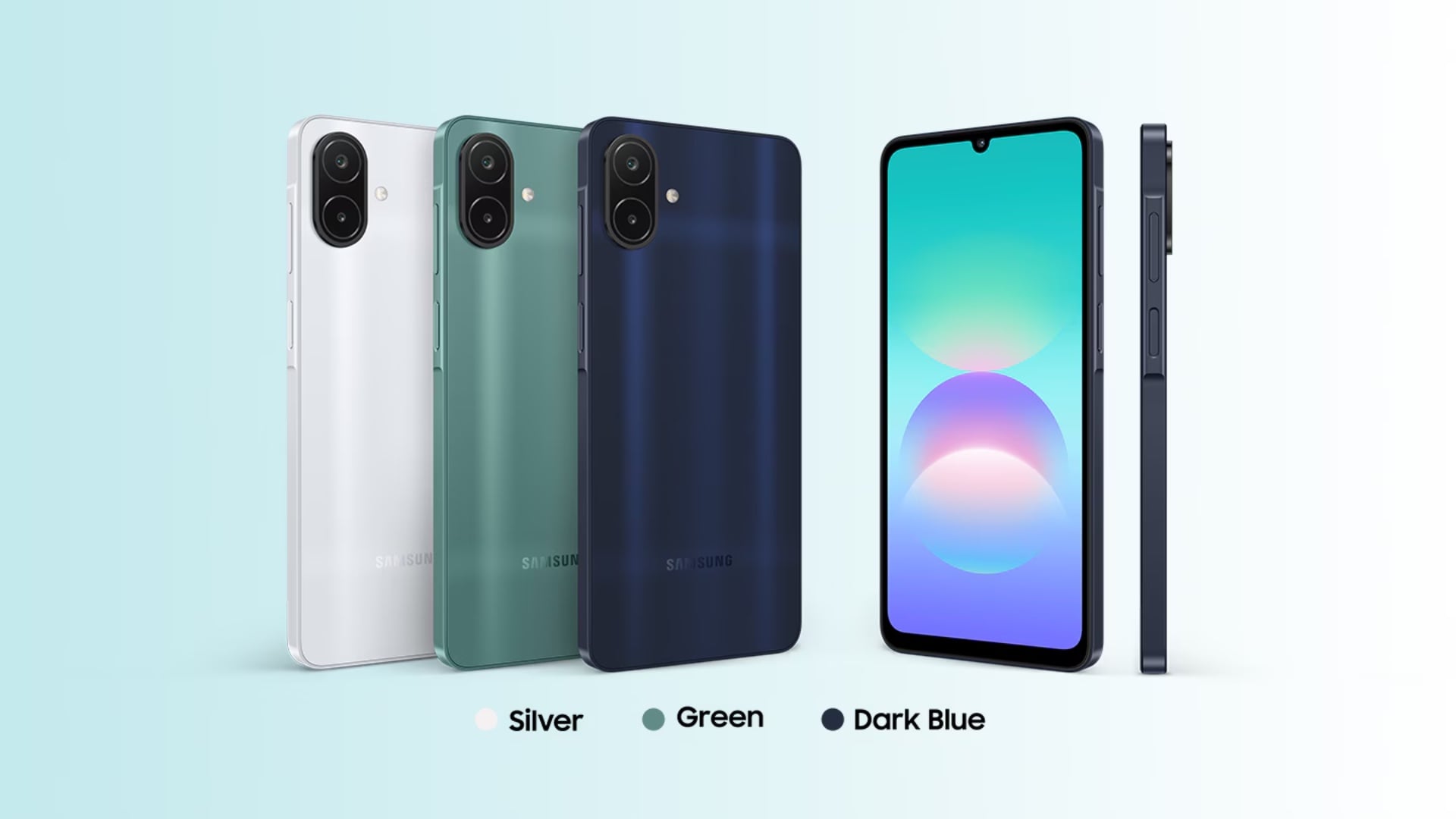
The entry-level smartphone segment has historically been characterized by planned obsolescence, fragile chassis designs, and software abandonment within eighteen months of initial retail release. Samsung is aggressively rewriting this narrative with the regional rollout of the Galaxy A08, which follows its initial deployment in Malaysia. Hitting the Indian market at an aggressive price point of INR 18,499 (approximately $195 USD) for its singular 4GB RAM and 64GB storage configuration, the device aims to capture value-conscious consumers who demand structural durability and exceptional longevity. Available in Dark Blue, Green, and Silver, the A08 bridges the historical gap between ultra-budget hardware compromises and enterprise-grade reliability.
Positioned against a saturated backdrop of domestic and international competitors in the sub-$200 bracket, Samsung’s latest offering is not designed to win raw computational benchmark races. Instead, its market positioning relies on an unprecedented software commitment—guaranteeing six major Android OS updates—and a hardened physical build profile. By introducing an IP64 dust and water resistance rating alongside a massive power reservoir into the ultra-budget tier, Samsung is effectively raising the baseline expectation for what an entry-level mobile device can and should deliver to developing and cost-sensitive markets globally.
Core Architectural & Technological Innovations
At the silicon level, the Galaxy A08 is powered by MediaTek's Helio G99+ processor, an iteration tailored for sustained efficiency and stable thermals in everyday productivity tasks. While restricted to 4GB of LPDDR4X RAM and 64GB of internal eMMC or UFS-based storage, the architecture cleverly compensates for local capacity constraints by integrating a dedicated microSD card slot capable of handling expansion up to a staggering 2TB. Software-wise, the device boots Android 17 overlaid with One UI 9.0, giving users immediate access to advanced interface optimizations and system-level features like Circle to Search, a capability previously restricted to upper mid-range and flagship hardware.
Optically, the device relies on a 50-megapixel primary rear sensor supported by a 2-megapixel auxiliary depth or macro unit, paired with an 8-megapixel front-facing shooter housed within a classic U-shaped display notch. Both camera pipelines support 1080p video recording at 30 frames per second. However, the true engineering marvel lies in the handset's software support lifecycle. Promising six major Android OS updates for an entry-level tier device represents a profound shift in silicon and software sustainability, ensuring that the hardware remains secure and functionally relevant deep into the next decade.
Empirical Specifications & Benchmark Matrix
| Hardware Dimension | Samsung Galaxy A08 Specification | Entry-Tier Market Baseline | Variance / Engineering Impact |
|---|---|---|---|
| Display Panel | 6.7-inch LCD, HD+ Resolution, U-Notch | 6.5-inch LCD, HD+ Resolution | Larger canvas; standard pixel density |
| Application Processor | MediaTek Helio G99+ | Unisoc T606 / Helio G85 | Superior power efficiency and sustained clock stability |
| Memory & Storage | 4GB RAM + 64GB Storage (+ 2TB MicroSD) | 4GB RAM + 64GB Storage (No expansion) | Massive storage scalability via dedicated slot |
| Battery & Charging | 6,000mAh capacity, 25W Fast Wired | 5,000mAh capacity, 15W Charging | +20% capacity increase and faster replenishment |
| Ingress Protection | IP64 Dust and Water Resistance | IP52 or Unrated | Enhanced physical durability against environmental elements |
| Software Longevity | 6 Major Android OS Upgrades | 2 to 3 Major Upgrades | Unprecedented support duration for the price tier |
Thermal, Efficiency & Real-World Ergonomics
Physical endurance is a defining characteristic of the Galaxy A08 chassis. Measuring 167.4 x 77.4 x 8mm and tipping the scales at 197 grams, the device manages to house an immense 6,000mAh battery cell without devolving into an unwieldy brick. This massive energy reservoir pairs exceptionally well with the power-thrifty MediaTek Helio G99+ silicon and the low-draw 6.7-inch HD+ LCD panel. In practical scenarios, this hardware synergy translates easily into a multi-day operational window under moderate use conditions, minimizing reliance on midday top-ups. When energy depletion finally occurs, 25W fast wired charging ensures that the massive cell returns to operational status with minimal downtime.
Ergonomically, the inclusion of an IP64 rating addresses a critical pain point in the budget segment, offering robust protection against accidental liquid splashes and particulate ingress. Security is handled via a side-mounted capacitive fingerprint reader seamlessly embedded within the power button, offering rapid biometric authentication. Connectivity options remain comprehensive yet practical, encompassing dual-SIM 4G LTE, Wi-Fi 5, Bluetooth 5.3, GPS, a legacy 3.5mm headphone jack for analog audio enthusiasts, and a standardized USB 2.0 Type-C port. The physical construction balances structural rigidity with accessible daily usability.
The Definitive Verdict
The Samsung Galaxy A08 successfully redefines the parameters of what consumers should expect from a sub-$200 smartphone. While constrained by its 4GB RAM allocation and HD+ display resolution, its engineering triumphs—namely a 6,000mAh battery, IP64 ingress protection, storage expandability up to 2TB, and an industry-shattering six years of major OS updates—far outweigh these minor compromises. For budget-conscious buyers in India and beyond, the Galaxy A08 stands as the definitive value champion, offering unmatched long-term reliability and physical resilience in a crowded marketplace.