Executive Summary & Market Positioning
The relentless scaling of generative artificial intelligence and the proliferation of hyper-scale data centers have triggered an unprecedented storage crisis across the enterprise ecosystem. As large language models ingest and generate petabytes of unstructured training telemetry, fine-tuning checkpoints, and synthetic datasets, the industry faces an acute bottleneck in managing "cold data"—mission-critical, rarely accessed information that must nonetheless be preserved securely. Enter Fujifilm's strategic counter-offensive: a substantial 10 billion yen ($63.3 million) capital injection earmarked for its Odawara plant. Slated for completion throughout fiscal year 2028, this financial commitment represents the company's largest infrastructure expansion in magnetic tape technology in over two decades, aiming to achieve a staggering 5x manufacturing capacity boost for advanced, ultra-high-density cartridges.
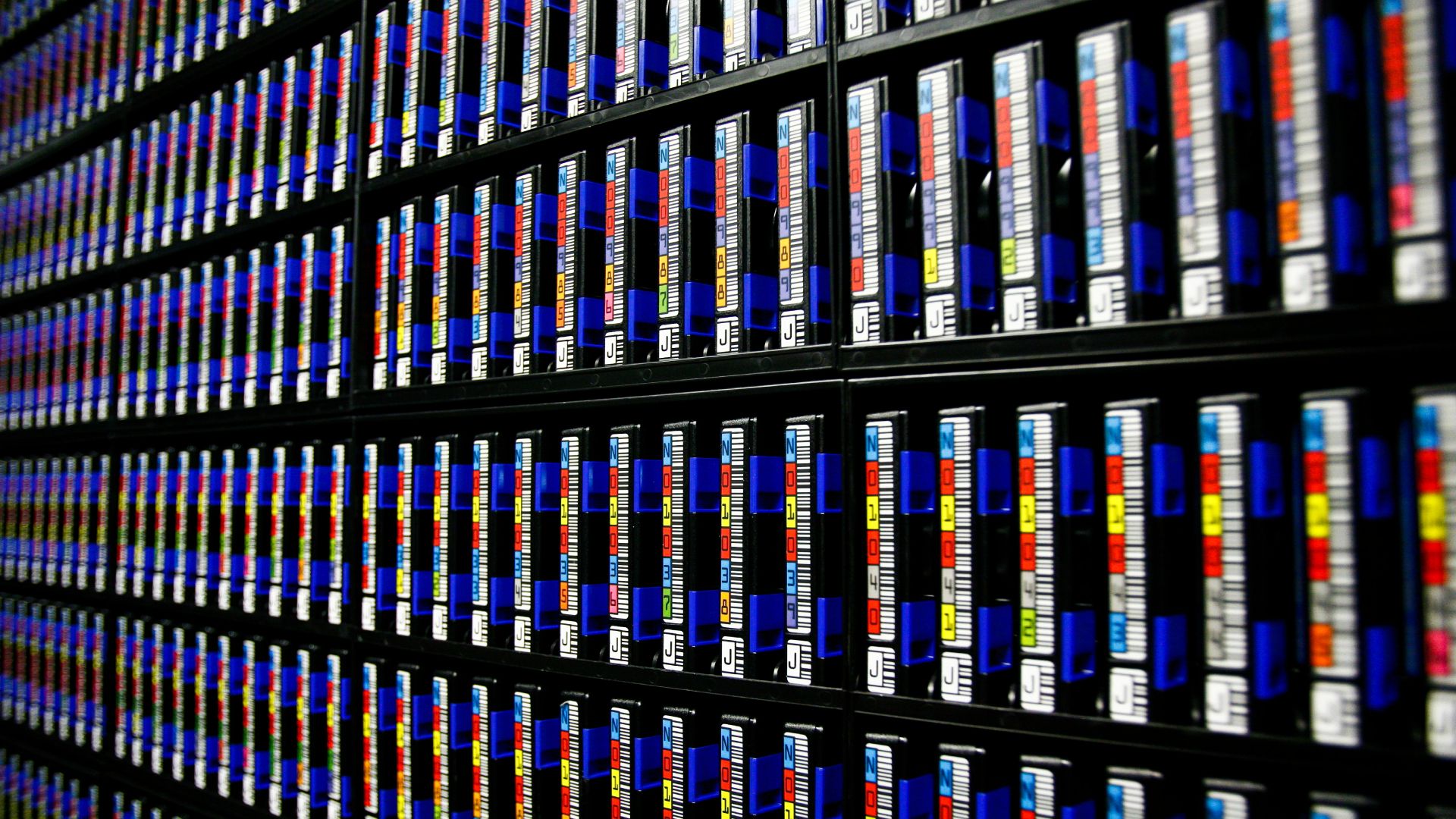
While consumer and hot-tier enterprise sectors fixate on ultra-fast solid-state drives and dense spinning disks, the backbone of modern cloud archiving is undergoing a profound structural renaissance. Magnetic tape, a medium pioneered for television broadcasting as far back as 1954, is no longer viewed as a legacy afterthought. Instead, it has emerged as the definitive economic and environmental bulwark against runaway data center operating expenditures. By scaling production of 100TB-class magnetic cartridges, Fujifilm is directly addressing the hyperscaler imperative for hyper-dense, non-volatile archival tiers that can absorb incoming exabyte-scale data ingestion streams without compounding power grid liabilities or inflating capital expenditure footprints.
Core Architectural & Technological Innovations
The technological viability of modern magnetic tape rests on radical advancements in particulate chemistry and media composition. Unlike legacy formats that suffered from severe volumetric limitations, contemporary high-capacity tapes leverage barium ferrite (BaFe) or Strontium Ferrite (SrFe) magnetic particles. These microscopic crystalline structures exhibit superior signal-to-noise ratios and exceptional thermal stability at ultra-high linear densities, allowing manufacturers to pack thousands of parallel tracks across a half-inch polymer substrate without destabilizing magnetic domains. Fujifilm's push toward 100TB native capacities relies on refining these ferrite formulations to dramatically reduce particle size while maintaining remanent magnetization and coercivity thresholds.
Simultaneously, the overarching Linear Tape-Open (LTO) roadmap continues to push physical boundaries, charting a trajectory toward an astonishing 365TB per cartridge over subsequent generations while rigidly preserving backward compatibility and physical form-factor standards. This architectural consistency stands in stark contrast to enterprise hard disk drives (HDDs) and solid-state drives (SSDs), which require complete mechanical redsigns, novel energy-assisted recording technologies like HAMR and MAMR, or complex 3D NAND flash stacking paradigms (such as recent 332-layer designs) to achieve similar density scaling. By retaining a modular cartridge design while exponentially scaling areal density, tape architecture delivers unmatched infrastructure longevity.
Empirical Specifications & Benchmark Matrix
| Storage Medium | Max Density / Capacity | Cost per TB (Relative) | Power Consumption (Idle) | Operational Lifespan | Environmental Footprint |
|---|---|---|---|---|---|
| Fujifilm Magnetic Tape | Up to 100TB+ (LTO Roadmap to 365TB) | Lowest (Baseline 1x) | 0W (Offline / Air-gapped) | 30+ Years | Lowest (Minimal embodied carbon) |
| Enterprise HDD (Helium) | 30TB - 65TB (Targeting 100TB) | Moderate (3x - 4x Tape) | High (Continuous spindle rotation) | 5 Years | Moderate |
| Enterprise SSD (QLC/SLC) | Up to 256TB | Highest (10x+ Tape) | Moderate-High (Static leakage power) | 5 - 7 Years | High (Intensive silicon fabrication) |
Thermal, Efficiency & Real-World Ergonomics
Beyond raw acquisition economics—where magnetic tape operates at a fraction of the cost per terabyte compared to HDDs and commands an even wider discount against enterprise SSDs—the thermodynamic profile of tape is its ultimate competitive differentiator. In a traditional data center environment, spinning hard disks require continuous power to maintain spindle velocity, generate substantial waste heat, and demand aggressive cooling infrastructures to prevent thermal degradation. Conversely, magnetic tape stored in automated tape libraries (ATLs) consumes precisely zero electrical power when idle. Once a write operation concludes, the cartridge is mechanically ejected and placed in passive storage, eliminating idle power draw and drastically mitigating thermal load within the facility.
Furthermore, empirical lifecycle analyses confirm that tape is intrinsically less polluting than its silicon and spinning-disk counterparts. The manufacturing lifecycle of high-density flash memory and complex mechanical hard drives involves energy-intensive cleanroom processes, rare-earth material extraction, and substantial chemical waste. Tape media, composed primarily of durable polymer bases and stable metallic oxide particles, boasts a significantly lower embodied carbon footprint coupled with an operational lifespan exceeding three decades. This durability profile all but eliminates the rapid hardware refresh cycles that plague flash-based storage arrays, directly mitigating electronic waste accumulation in hyper-scale deployments.
The Definitive Verdict
Fujifilm's $63 million bet on 100TB magnetic tape is a masterclass in pragmatic hardware engineering alignment. As artificial intelligence data centers push global power grids and capital budgets to their absolute breaking points, the industry can no longer afford to store cold and archival data on power-hungry, short-lived media. While solid-state drives and high-capacity HDDs remain unrivaled for hot and warm tiers where low latency and high IOPS are paramount, magnetic tape stands alone as the undisputed king of sustainable, ultra-dense cold storage. For infrastructure architects designing exabyte-scale facilities that must balance strict budgetary caps with aggressive net-zero carbon mandates, Fujifilm's forthcoming high-density tape ecosystem is not merely an alternative choice—it is an absolute architectural necessity.