Executive Summary & Market Positioning
AMD’s recent disclosure in Seoul marks a pivotal recalibration of its graphics strategy, signaling that the much-lauded FSR 4 architecture is no longer the exclusive preserve of discrete Radeon RX 9000 and 7000-series silicon. By extending Machine Learning-based upscaling to the APU and handheld ecosystem, AMD is directly addressing the performance ceiling currently faced by thin-and-light gaming laptops and the burgeoning handheld market. This move represents an aggressive democratization of high-fidelity upscaling, intended to bolster the value proposition of architectures like RDNA 3.5—found in the latest Strix Point and Strix Halo platforms—well ahead of the 2026 deadline.
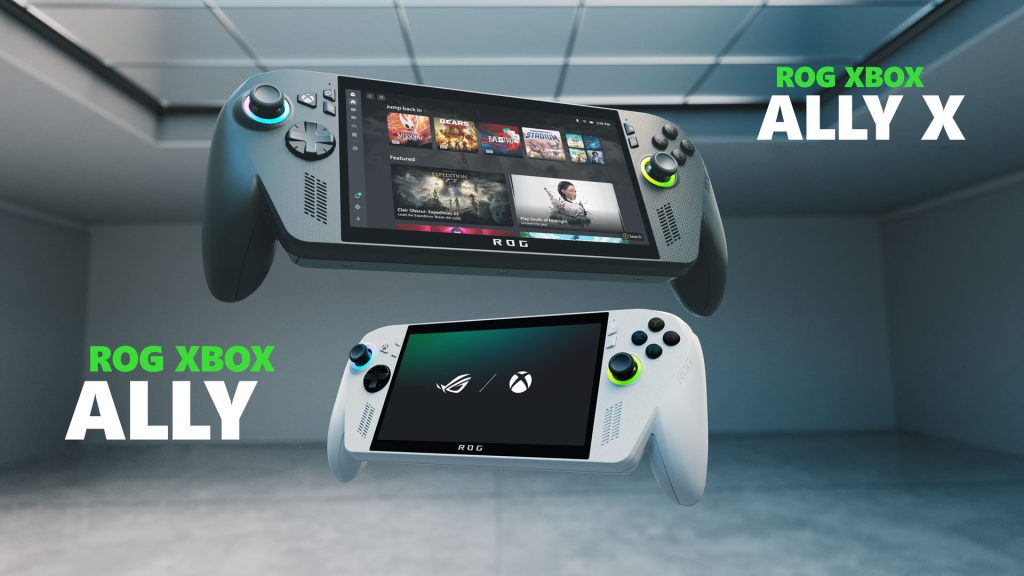
From a market positioning standpoint, this initiative is essential for AMD to maintain its competitive moat against NVIDIA’s DLSS dominance in the mobile space. Handhelds like the ROG Ally and Steam Deck have thrived on hardware efficiency, but the lack of native, lightweight ML upscaling has forced reliance on spatial or temporal algorithms that often struggle with ghosting and image instability at sub-1080p resolutions. By deploying a specifically optimized, 'lighter' FSR 4 model, AMD is positioning its APUs not just as low-power alternatives, but as viable, AI-augmented platforms capable of producing stable, high-fidelity visual output in power-constrained envelopes.
Core Architectural & Technological Innovations
At the heart of the FSR 4 evolution lies a shift toward a more granular, ML-driven pipeline optimized specifically for the Integrated Graphics Processor (iGP) constraints. Unlike the legacy temporal upscalers, the new FSR 4 iteration leverages dedicated AI compute blocks—or potentially repurposed vector units—to perform intelligent frame reconstruction with a minimal overhead footprint. This is a critical departure from the heavy-compute requirements of discrete GPU upscaling; by pruning the algorithmic complexity to fit the thermal and memory constraints of an APU, AMD is focusing on temporal stability and motion-vector refinement that is tailored for the sub-15W to 45W TDP ranges.
The deployment strategy involves a dual-track approach: bringing compatibility to existing silicon while preparing hardware-native support for upcoming mobile architectures. By targeting RDNA 3.5 silicon, AMD is banking on the refined cache hierarchies and increased memory bandwidth of the Strix family to handle the inference load. This transition is not merely about frame rate inflation; it is about establishing a robust foundation for 'perceptual stability,' ensuring that gaming on mobile hardware feels responsive while maintaining the visual fidelity expected of modern AAA titles, effectively decoupling frame generation from raw rasterization performance.
Empirical Specifications & Benchmark Matrix
| Specification | FSR 3 (Legacy/Temporal) | FSR 4 (Mobile/APU Opt) | Market Baseline (Competitor) |
|---|---|---|---|
| Core Technology | Temporal/Spatial Hybrid | ML-Driven Inference | ML-based Tensor/AI |
| Primary Hardware | All GPU Architectures | APU / Handheld / Mobile | Proprietary HW Units |
| Power Constraint | High Overhead | Ultra-Low Overhead | High Overhead |
| Latency Impact | Moderate | Low (Targeted) | Variable |
| Target Resolution | 1080p+ | 720p - 1080p | 1080p+ |
Thermal, Efficiency & Real-World Ergonomics
For handheld and laptop users, thermal headroom is the most precious resource. Traditional high-end upscaling solutions often induce thermal throttling by forcing the GPU to engage in high-frequency compute cycles. AMD’s decision to develop a lightweight version of FSR 4 is a direct response to this thermal tension. By lowering the compute-per-pixel ratio, the new upscaling model should ideally allow for a higher thermal ceiling for the CPU cores, enabling a more balanced power distribution during demanding gaming sessions. This directly benefits battery longevity and acoustic profiles, as lower sustained clock speeds translate into reduced fan noise.
Ergonomically, this update changes how users interact with handheld devices. Currently, many users lower internal render resolutions to gain frames, resulting in a 'soft' or 'smeared' image that detracts from the experience. An ML-driven, lightweight FSR 4 will allow these devices to upscale from aggressive internal resolutions (e.g., 540p or 720p) to native panel outputs with significantly improved edge reconstruction. This effectively 'buys back' the visual clarity that was previously sacrificed for playability, turning sub-par mobile experiences into desktop-class mobile gaming.
The Definitive Verdict
AMD’s commitment to bringing FSR 4 to the APU market is the single most important development for mobile gaming since the inception of the handheld PC category. By prioritizing image stability and latency in a power-efficient, lightweight package, AMD is signaling a shift away from 'raw power' metrics toward a 'perceptual quality' strategy. We anticipate this will make current-gen handhelds significantly more relevant through 2026. For prospective buyers or current owners of Strix Point devices, this is a clear win—the long-term viability of your hardware just significantly increased.