Executive Summary & Market Positioning
The democratization of artificial intelligence has created an insatiable appetite for localized, high-performance compute. AI creators, researchers, and enterprise developers are increasingly bypassing centralized cloud infrastructure in favor of self-hosted, edge-deployable hardware capable of handling massive open-weight models. However, this shift toward local inference has triggered an unexpected friction point: traditional consumer e-commerce platforms are actively clamping down on bulk purchases of high-end acceleration hardware. Recent incidents involving prominent creators and industry executives highlight a growing divide between open-market retail models and the strict regulatory frameworks governing advanced computing silicon.
When AI creator Nick Saraev attempted to acquire seven Nvidia DGX Spark AI mini-PCs through Amazon, the transaction chain culminated not just in canceled orders, but in the permanent closure of his account. Echoing similar frustrations from Epic Games CEO Tim Sweeney and various forum contributors trying to buy enthusiast-grade GPUs like the RTX 5090, these events point to an automated, overly aggressive risk-mitigation strategy by major retailers. As retail behemoths grapple with high-ticket fraud, anti-scalping protocols, and intense geopolitical scrutiny over hardware exports, buying even modest clusters of high-density compute has effectively become a high-risk compliance trigger.
Core Architectural & Technological Innovations
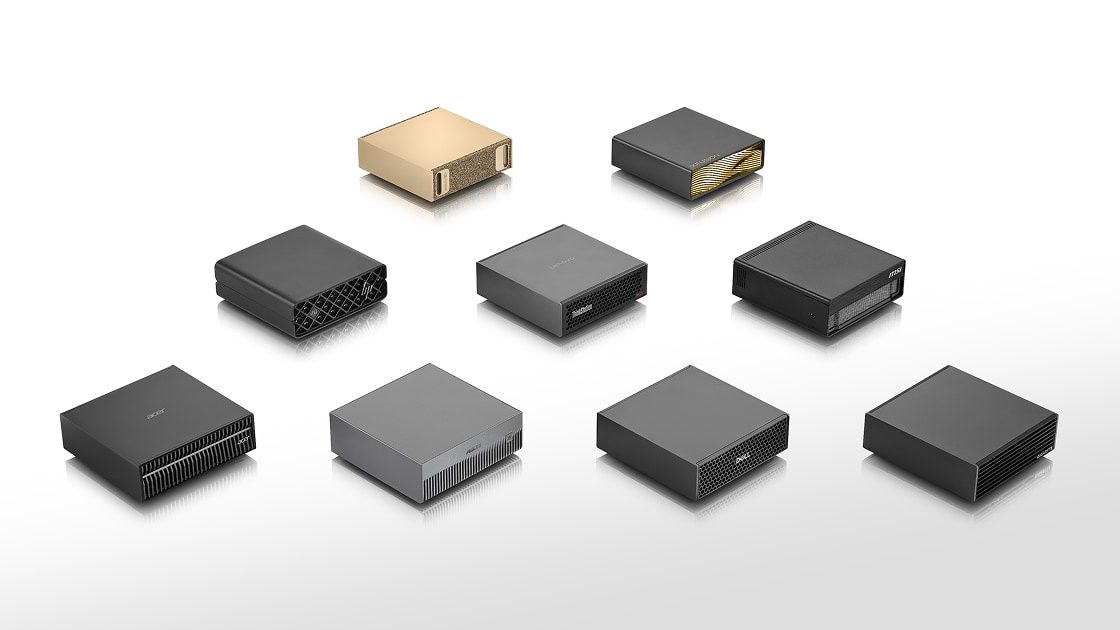
At the center of this retail controversy is the Nvidia DGX Spark, a class of specialized mini-PC designed specifically to bridge the gap between desktop convenience and datacenter-grade inference capabilities. Packing 128GB of high-speed memory and 4TB of high-throughput storage into a compact form factor, units like the DGX Spark offer the local unified memory bandwidth necessary to run parameter-heavy large language models locally. This architecture bypasses the latency, recurring subscription costs, and data privacy concerns associated with third-party cloud APIs, making it a holy grail for independent developers and boutique AI deployment firms.
Yet, this concentration of dense computing power on a single motherboard makes the hardware extraordinarily valuable—and intensely scrutinized. With units commanding prices well north of their $6,950 MSRP on secondary and inflated retail listings, a purchase of seven systems approaches a $70,000 capital expenditure. From an architectural perspective, these devices represent dual-use technology capable of autonomous execution, advanced code generation, and sophisticated local agentic workflows. As open-source AI tools increasingly intersect with cybersecurity and automated data processing, the proliferation of such dense localized compute nodes invokes severe regulatory sensitivities regarding unauthorized technology transfer and export compliance.
Empirical Specifications & Benchmark Matrix
| Specification Component | Nvidia DGX Spark (Target System) | Standard Enterprise Workstation Baseline | Consumer Gaming Rig (RTX 5090 Tier) |
|---|---|---|---|
| Primary Processor/GPU | Integrated Nvidia AI Architecture | Multi-GPU PCIe Configuration | Single Flagship Consumer GPU |
| System Memory (RAM) | 128GB High-Bandwidth Unified | 64GB - 128GB DDR5 | 32GB - 64GB DDR5 |
| Storage Subsystem | 4TB NVMe High-Throughput | 2TB NVMe PCIe 4.0 | 2TB NVMe PCIe 4.0 |
| Target Workload | Local LLM Inference & Training | Heavy Rendering / Mixed Workstation | High-Refresh Gaming & Light ML |
| Retail Regulatory Risk | Extreme (Export/Bulk Flagging) | Moderate to High | Low to Moderate |
Thermal, Efficiency & Real-World Ergonomics
Packing 128GB of high-speed unified memory alongside dense processing blocks into a mini-PC chassis presents formidable thermal and acoustic challenges. Unlike traditional server racks equipped with industrial cooling corridors, compact AI nodes like the DGX Spark must dissipate significant thermal energy within a footprint designed for desktop environments. Sustained local inference workloads push these systems to their thermal design power (TDP) limits, requiring sophisticated vapor chamber arrays and aggressive fan profiles to prevent thermal throttling during continuous multi-hour model training or batched inference passes.
Real-world ergonomics for localized compute clusters also extend far beyond raw cooling performance. Deploying multiple mini-PCs in a residential or small-office setting introduces acoustic fatigue due to high-RPM fan noise, as well as distinct electrical infrastructure demands—such as dedicated circuit loads and uninterruptible power supplies (UPS) to prevent data corruption during power fluctuations. When creators attempt to aggregate these devices to build miniature local clusters, they are effectively pushing consumer-grade retail channels to handle infrastructure-grade power densities, inadvertently tripping automated fraud detection algorithms that are entirely unequipped to distinguish between a legitimate AI developer and a grey-market exporter.
The Definitive Verdict
The intersection of high-end silicon, aggressive retail automation, and strict international trade compliance has created a turbulent purchasing landscape for hardware enthusiasts. While traditional e-commerce giants like Amazon retain the legal right to refuse service and terminate accounts under their broad terms of use, their lack of transparency regarding bulk AI hardware purchases alienates the very power users driving the edge-AI revolution. Brick-and-mortar alternatives like Micro Center—which enforce strict end-user declarations, photo ID verification, and no-export pledges—demonstrate that acquiring dense compute legally is becoming an increasingly bureaucratic endeavor.
For systems engineers, AI creators, and small businesses looking to scale their local infrastructure, the definitive recommendation is to diversify procurement strategies. Relying on standard consumer online marketplaces for bulk high-tier AI hardware carries an unacceptable risk of sudden account suspension and frozen capital. Instead, buyers should cultivate direct enterprise vendor relationships, leverage authorized B2B distributors, or utilize physical retail channels prepared to handle compliance paperwork transparently. Until major e-commerce platforms develop nuanced classification models for local AI hardware, building a self-hosted inference cluster will remain as much a logistical battle as a technical one.