Section 1: Executive Summary & Market Positioning
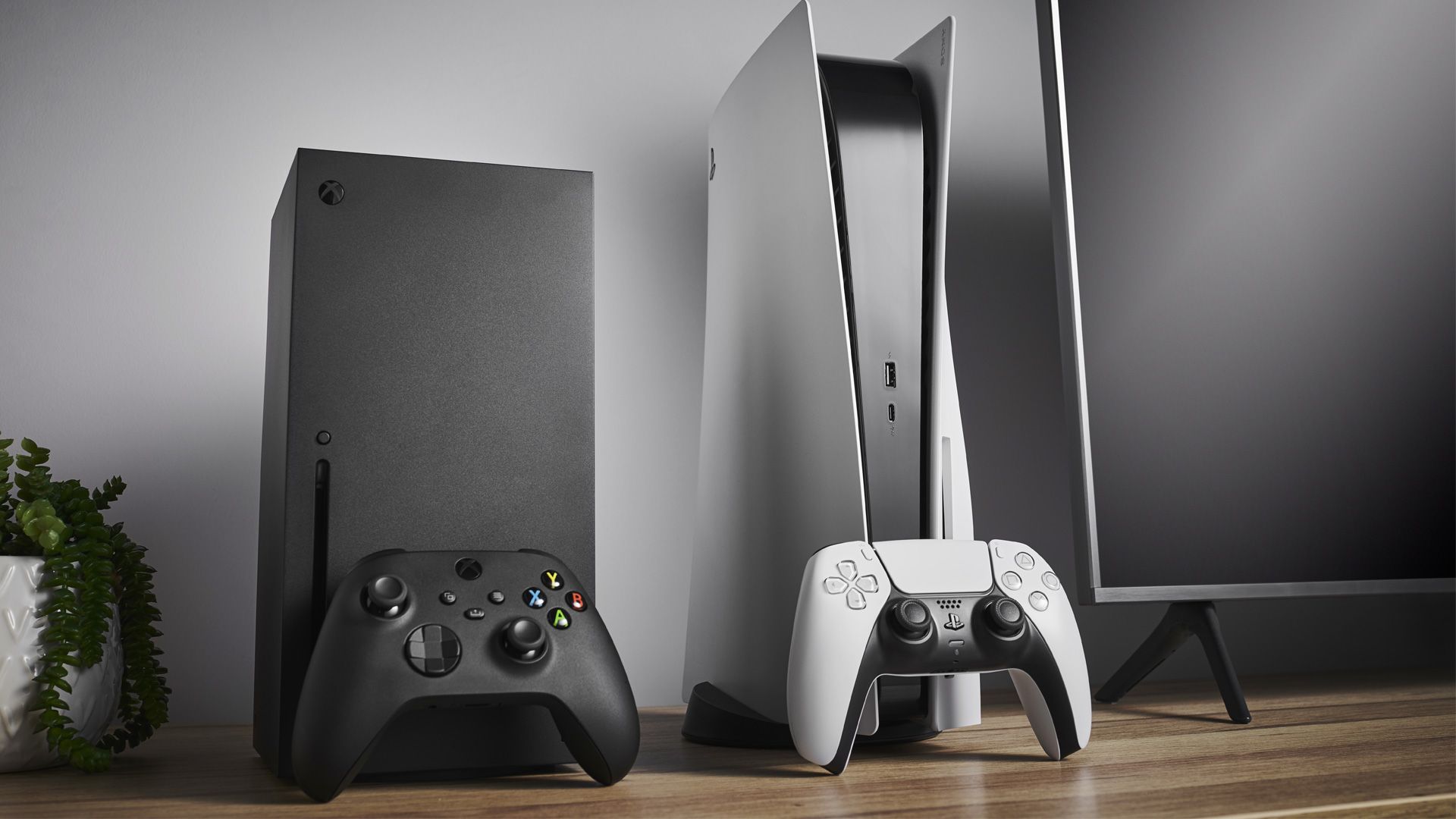
The gaming hardware industry is currently undergoing a structural correction that feels less like a typical seasonal dip and more like a permanent shift in consumer demand. Data from Circana reveals a stark, industry-wide contraction: Xbox hardware unit sales have plummeted by 33% YTD, hitting an all-time low not seen in nearly 25 years of the brand’s history. Sony’s PlayStation 5 is faring only marginally better, with a 25% drop that places it at its lowest adoption point since 2013. We are witnessing the end of the 'accessible console' era, as manufacturers pivot toward high-margin, scarcity-driven models in response to broader silicon supply chain vulnerabilities.
Market positioning has shifted from aggressive market share acquisition to desperate revenue extraction. By inflating MSRPs—with Xbox seeing three hikes in two years and Sony pushing its Pro tier to $900—manufacturers have effectively alienated their core demographic. The console, once viewed as a high-value entry point for home entertainment, is now being treated as a luxury artifact. This strategy ignores the economic reality of the average household, creating a vacuum in the mid-range market that has effectively halted the typical mid-cycle refresh momentum that usually sustains long-term hardware health.
Section 2: Core Architectural & Technological Innovations
The current architectural trajectory of the PS5 and Xbox Series platforms is defined by the tension between compute efficiency and the global AI chip gold rush. While these systems utilize custom SoCs built on maturing nodes, the availability of these wafers is being throttled by high-demand AI compute clusters. Consequently, the 'innovation' delivered in the current cycle is largely iterative rather than transformative. The emphasis has shifted toward upscaling solutions—Sony’s PSSR and Microsoft’s software-side optimizations—to mask a lack of raw performance growth that would typically be expected at these increased price points.
Furthermore, the abandonment of entry-level tiers, specifically Microsoft’s discontinuation of the 2TB model and Sony’s tightening of refurb supplies, signals a pivot toward 'Premium-Only' hardware cycles. Technologically, these machines are now struggling to justify their footprints. With thermal envelopes already pushed to their limits in the base models, the pursuit of marginal FPS gains in the Pro tiers requires disproportionate increases in power draw and physical volume, leading to a law of diminishing returns that hardware engineers are finding increasingly difficult to engineer around without compromising long-term reliability.
Section 3: Empirical Specifications & Benchmark Matrix
| Feature | Xbox Series X (Base) | PS5 (Standard) | PS5 Pro (Target) | Market Baseline (Mid-2023) |
|---|---|---|---|---|
| MSRP | $799.99 | $649.99 | $899.99 | $499.99 |
| SoC Node | 7nm/6nm Custom | 7nm/6nm Custom | Enhanced 6nm | 7nm |
| Price Index | +60% (vs launch) | +30% (vs launch) | N/A (New Tier) | Baseline |
| Demand Status | Overstocked | Stable | Critical Scarcity | Saturated |
Section 4: Thermal, Efficiency & Real-World Ergonomics
Thermal management has become the primary bottleneck for the latest console iterations. As manufacturers push clock speeds to appease consumer expectations in a stalled market, the physical volume of the consoles has seen a corresponding expansion. The PS5 Pro, in particular, exhibits high thermal density that necessitates aggressive fan profiles, creating a noise-to-performance ratio that many users find unacceptable at a $900 price point. These systems are essentially running at the ragged edge of their thermal limits, leaving very little headroom for long-term component longevity.
From an ergonomics standpoint, the hardware ecosystem is increasingly fragmented. The mandatory transition to digital-only editions and the rising costs of peripherals—such as the $250 PlayStation Portal—further distance the hardware from its user base. Real-world power efficiency remains secondary to raw performance, as companies prioritize marketing benchmarks over true electrical efficiency, leading to higher electricity costs for the end-user. The hardware is becoming more demanding, less efficient, and significantly more expensive to maintain over a five-year lifecycle.
Section 5: The Definitive Verdict
The console hardware market is currently in a state of 'Silicon Stagnation.' The current generation has reached its architectural maturity, yet the pricing models have moved well beyond the reach of the average consumer. The decision to prioritize margin over mass adoption has backfired, resulting in the lowest sales figures in decades. For the consumer, the recommendation is clear: avoid the current inflated hardware cycle if possible. The value proposition of a $900 machine that lacks a revolutionary software library is non-existent. Until manufacturers adjust their pricing to reflect the reality of the 2026 economic landscape, this sector will continue to crater. The hardware is sound, but the strategy is broken.