Executive Summary & Market Positioning
The security architecture of global defense supply chains relies heavily on strict compliance frameworks, robust digital infrastructure, and uncompromising end-to-end chain of custody protocols. Recent investigative disclosures surrounding a compromised Royal Australian Air Force logistics transit—wherein critical Lockheed Martin F-35 Lightning II structural assemblies were intercepted after transiting Hong Kong—underscore a profound operational vulnerability in allied military logistics. What initially appeared to be an inexplicable routing anomaly has now been traced to a classic cascading failure of enterprise IT interoperability and human error: a missed security alert regarding International Traffic in Arms Regulations (ITAR).
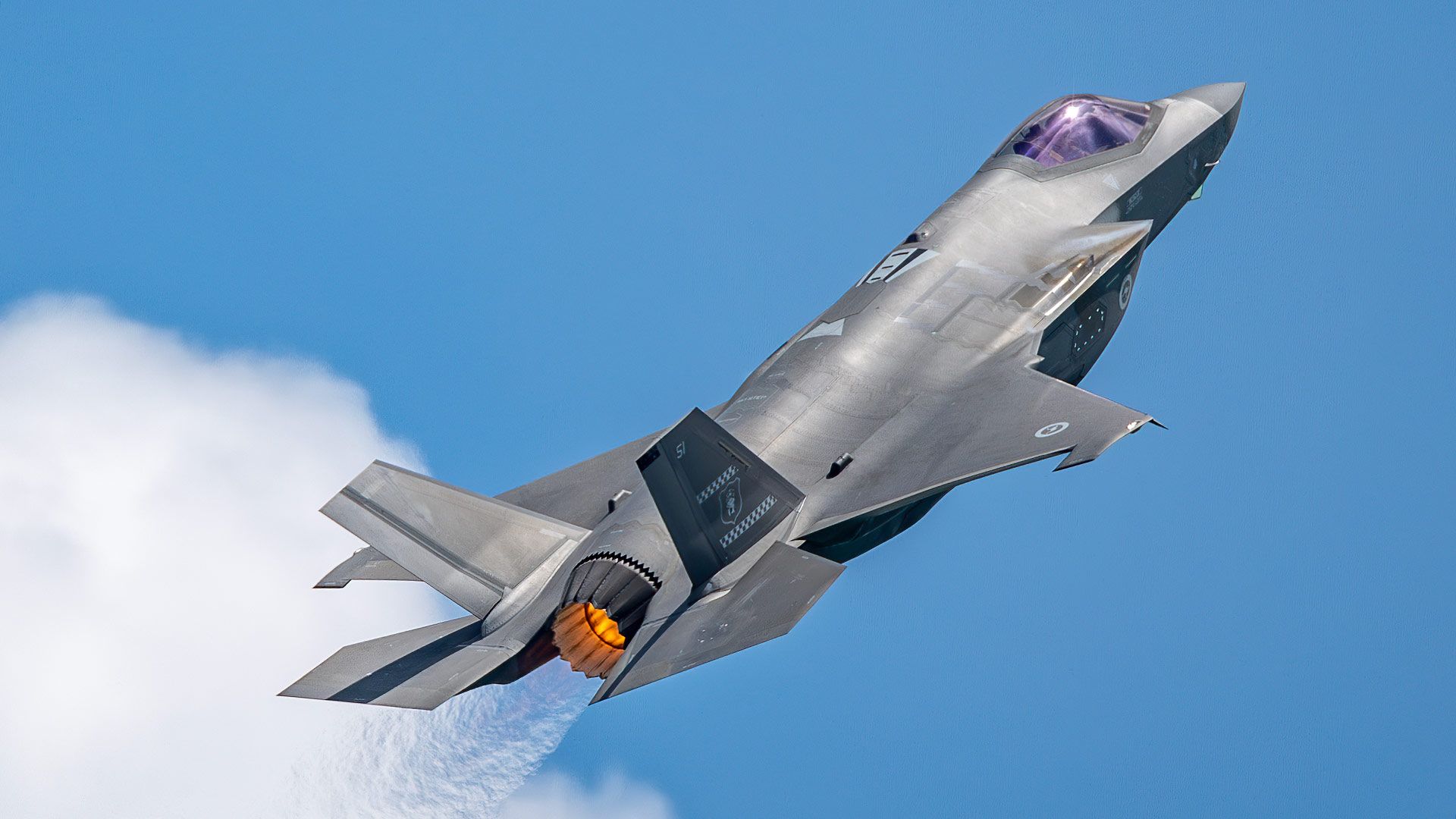
Within the broader context of defense hardware intelligence, this incident transcends a simple administrative oversight. The hardware components in question—specifically, a service-stressed cockpit canopy and a weapons-bay door—are not merely mechanical fasteners or standard-issue airframe structural panels. They represent the bleeding edge of radar-absorbent material (RAM) application and thermal-signature management. By routing these sensitive elements through a jurisdiction subject to adversarial intelligence collection, the logistics chain effectively bypassed multi-layered regulatory safeguards. This review analyzes the systemic software, hardware, and procedural bottlenecks that allowed a critical compliance failure to compromise premier aerospace intellectual property.
Core Architectural & Technological Innovations
The core strategic value of the intercepted F-35 hardware lies entirely in its material science and surface-treatment architecture rather than its underlying metal alloys. The F-35’s low observable (LO) profile is achieved through a proprietary matrix of composite sub-structures overlaid with advanced RAM formulations. These chemical compounds are engineered to attenuate high-frequency radar waves across X-band and Ku-band spectra, a capability that has taken decades of multi-billion-dollar R&D investments to mature.
Reverse-engineering such advanced coatings requires access to physical samples to perform molecular spectroscopy, energy-dispersive X-ray spectroscopy, and electron microscopy. By obtaining physical segments of the cockpit canopy and the weapons-bay door—zones subjected to extreme aerodynamic stress, thermal cycling, and radar-deflecting geometric tolerances—adversarial laboratories gain a direct path to analyzing the exact filler materials, binder matrices, and thickness gradients utilized. The failure to maintain an isolated ITAR-compliant digital workflow between freight forwarders like DSV and global parcel handlers like UPS directly exposed this critical chemical and structural IP to exploitation.
Empirical Specifications & Benchmark Matrix
| Parameter / Metric | Standard Defense Logistics Baseline | The Compromised Transit Event | Variance / Risk Impact |
|---|---|---|---|
| Routing Protocol | ITAR-compliant corridors (South Korea/Taiwan) | Hong Kong Special Administrative Region | Severe regulatory breach; high interception risk |
| Chain of Custody | End-to-end encrypted tracking & manual audit | Unlinked cross-enterprise IT systems | High vulnerability to missed notifications |
| Payload Classification | Restricted Military Technical Data / Hardware | Unserviceable F-35 Canopy & Weapons-Bay Door | Critical RAM and structural geometry exposure |
| Time-to-Destination | Optimized for maximum physical security | Optimized for velocity (speed-to-delivery bias) | Fatal operational security trade-off |
Thermal, Efficiency & Real-World Ergonomics
Logistical efficiency in military hardware deployment is traditionally measured by mean time to repair (MTTR) and the swift repositioning of out-of-service components for depot-level inspection. However, the pursuit of commercial shipping speed metrics directly undermined the physical security posture of this consignment. The root cause analysis highlights a systemic friction between disparate IT platforms: heavy freight specialist DSV transmitted critical ITAR warning metadata, but the message failed to propagate across legacy messaging systems utilized by the global parcel distribution agent at UPS.
Confronted with a delayed shipment timeline, the on-the-ground logistics operative prioritized operational velocity over regulatory constraints, routing the cargo through Hong Kong to shave hours off the transit window. This ergonomic bias toward speed over strict compliance highlights a dangerous misalignment in commercialized defense logistics. When commercial couriers handle sensitive sovereign military hardware without mandatory, hard-stop software interlocks, human cognitive fatigue and missed email notifications become single points of failure capable of compromising national security assets.
The Definitive Verdict
The interception of critical F-35 stealth components in Hong Kong serves as a sobering wakeup call for defense contractors, logistics providers, and military oversight bodies worldwide. The verdict is unequivocal: commercial logistics convenience must never supersede strict ITAR enforcement. Moving forward, the defense hardware sector must mandate unified, API-integrated cryptographic tracking frameworks that completely eliminate reliance on manual email notifications for restricted cargo. Until automated, immutable compliance gates are universally enforced across all tier-one and tier-two shipping partners, supply chain vulnerabilities will remain the weakest link in modern military technological dominance.