Executive Summary & Market Positioning
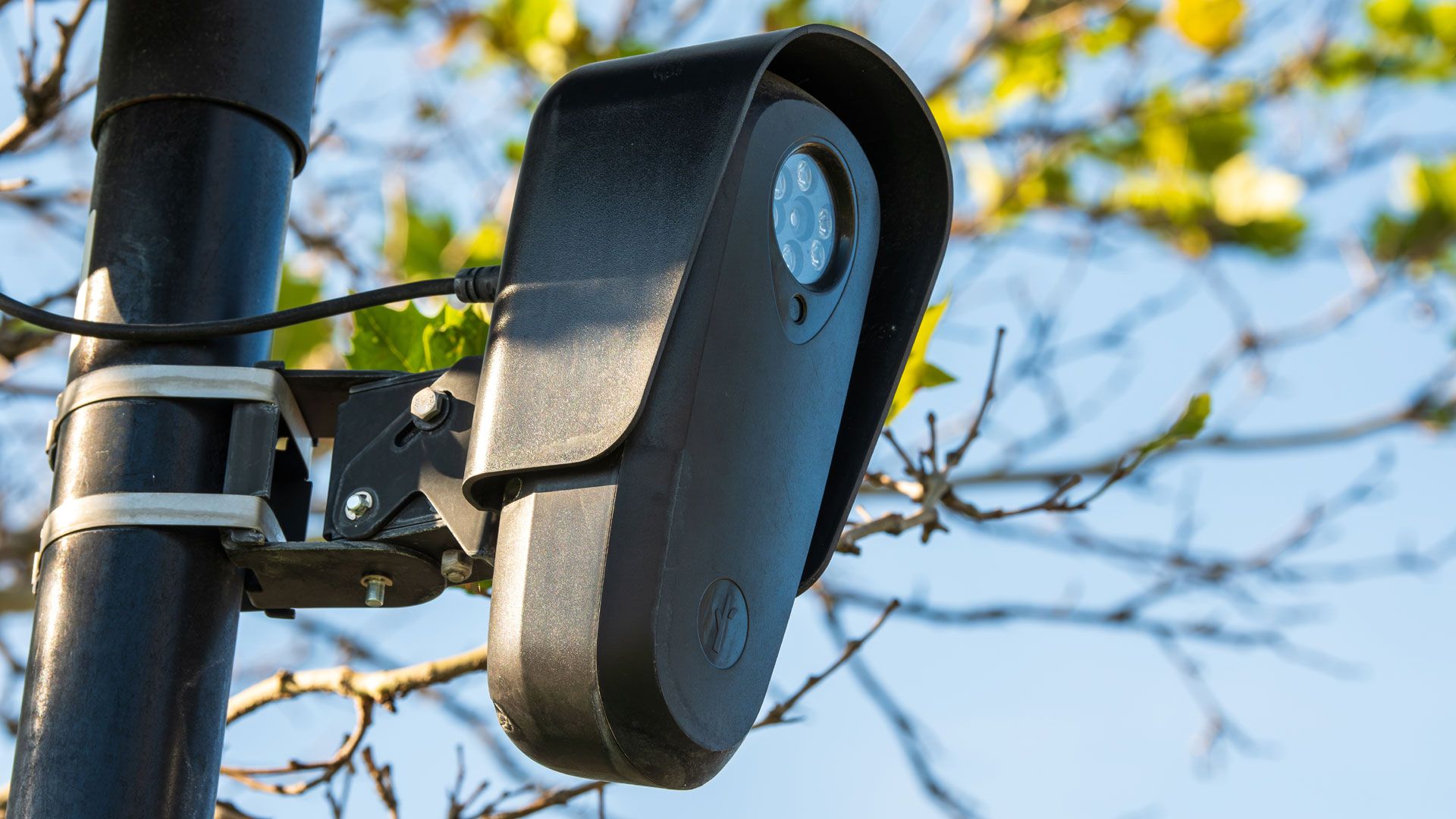
The landscape of urban surveillance has been irrevocably altered by the proliferation of Automatic License Plate Recognition (ALPR) networks, most notably the expansive infrastructure deployed by Flock Safety. With over 120,000 units across 49 states, these devices have moved from niche traffic enforcement tools to ubiquitous, centralized surveillance nodes. Canadian engineer Anthony Sistilli has effectively 'forked' this technology, deploying a DIY, open-source ALPR derivative designed specifically to track law enforcement vehicles. By reversing the lens of constant monitoring, Sistilli’s project forces a critical discourse on the asymmetry of surveillance: the discrepancy between the absolute transparency demanded of the public and the guarded privacy afforded to state actors.
From a market positioning standpoint, Sistilli’s project is not a commercial product but a 'proof of concept' that challenges the proprietary moats of mass surveillance companies. By utilizing consumer-grade hardware to replicate the high-fidelity tracking capabilities of government-contracted systems, he exposes the democratization of invasive tech. The project highlights the fragility of the privacy argument maintained by vendors like Flock, who claim that automated tracking is a net public good while struggling to secure their own hardware against physical extraction and unauthorized data exfiltration. Sistilli’s 'Flock-like' device serves as a hardware protest, benchmarking the effectiveness of decentralized intelligence against centralized bureaucratic monitoring.
Core Architectural & Technological Innovations
At the heart of the Sistilli build is an integration of high-resolution computer vision optics and localized edge-computing architectures. Unlike traditional surveillance systems that rely on proprietary back-end processing suites, this DIY build utilizes a streamlined pipeline for real-time Optical Character Recognition (OCR) and plate metadata extraction. By leveraging modern machine learning libraries, the hardware is capable of isolating alphanumeric strings from high-speed frame captures, mirroring the latency-sensitive detection speeds found in municipal-grade hardware. The decision to house these components in a compact, portable chassis allows for dynamic deployment, challenging the static nature of pole-mounted cameras.
Technologically, the build leans heavily into the decentralization of data processing. While commercial systems like Flock rely on persistent cloud connectivity for cross-referencing against national databases, this unit emphasizes local node efficiency. By minimizing the transmission of raw video feeds and focusing on metadata extraction (time, location, and plate identifier), the system effectively circumvents traditional latency hurdles and bandwidth requirements. This architecture effectively illustrates that the 'black box' status of commercial surveillance is largely a function of opaque business models rather than insurmountable technological limitations, proving that sophisticated tracking is now accessible to the individual practitioner.
Empirical Specifications & Benchmark Matrix
| Specification | Commercial ALPR (Flock) | Sistilli DIY Unit | Metric Significance |
|---|---|---|---|
| Resolution | 1080p - 4K | 1080p / High-FPS | Clarity at highway speeds |
| Edge Processing | Cloud-Centric | Local / Edge-First | Latency & Data Privacy |
| Connectivity | 4G/LTE / Private Cloud | Local Storage / WiFi | Dependence vs. Sovereignty |
| Targeting | Vehicle Mass-Scan | Targeted Law Enforcement | Specificity of Data Set |
| Security | Vulnerable to Key Extraction | Ephemeral/Local | Data Lifecycle Risk |
Thermal, Efficiency & Real-World Ergonomics
Operational durability remains the primary hurdle for this DIY apparatus. Municipal systems like the Flock suite are ruggedized for multi-year deployment in extreme environmental conditions, utilizing passive cooling sinks and IP-rated enclosures. Conversely, Sistilli’s iteration prioritizes functional portability over long-term environmental hardening. The thermal load generated by the real-time image processing pipeline requires robust heat management; without the heavy-duty shielding seen in professional units, the device faces limitations in continuous duty-cycle scenarios. Thermal throttling of the SoC (System on Chip) could potentially introduce frame drops, which would directly impact the accuracy of the OCR detection at high vehicle speeds.
In terms of ergonomics, the unit represents a triumph of 'functionality-as-protest.' The system is designed for mobility, allowing the user to reposition the sensor to monitor specific high-traffic lanes or enforcement zones. This physical agility contrasts sharply with the static, predictable nature of fixed urban cameras. However, the lack of secure, tamper-proof hardware means that the unit is prone to the same vulnerabilities discovered by security researchers in commercial units—namely, that physical access can result in total extraction of both the software logic and the collected data logs, raising significant questions about the long-term viability of the storage encryption protocols employed in such DIY rigs.
The Definitive Verdict
Anthony Sistilli’s DIY ALPR project is an essential, albeit contentious, hardware milestone. It functions less as a consumer product and more as an empirical audit of the current surveillance state. The project successfully highlights that the barrier to entry for invasive, pervasive monitoring has collapsed; any individual with moderate engineering proficiency can now replicate capabilities previously reserved for the state.
While we do not advocate for the mass deployment of such devices—due to the ethical complexities and the potential for abuse—the hardware provides an undeniable verdict on the current state of technology: when surveillance is made transparent, it becomes intolerable. As long as proprietary corporations and state actors continue to scale these networks without meaningful oversight, we should expect a corresponding rise in counter-surveillance hardware. Sistilli has proven that the 'Flock' is no longer a centralized entity, but a set of blueprints now available to the public. The recommendation for developers is to treat this build as a lesson in architectural necessity: if it can be built in a home lab, it should be regulated as public infrastructure.