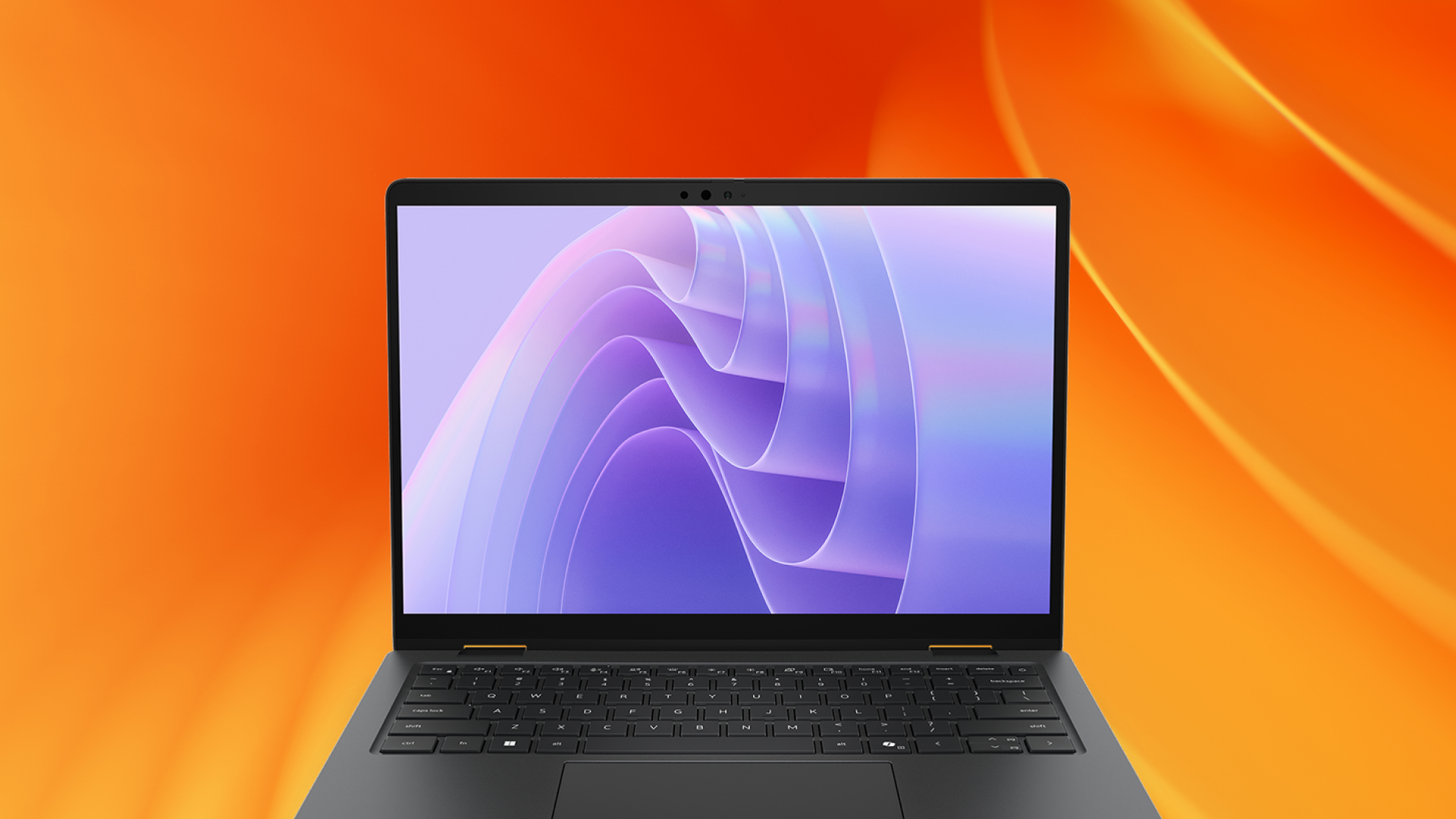
Executive Summary & Market Positioning
The small and medium-sized business (SMB) hardware acquisition lifecycle is undergoing a structural paradigm shift. As remote and hybrid paradigms solidify, organizations can no longer afford the productivity penalties associated with consumer-grade silicon and inadequate chassis design. Enter Dell's Pro 3, 5, and 7 series portfolios—a tiered enterprise ecosystem engineered specifically to address the divergent fiscal and computational demands of modern scaling organizations. Amidst the noise of consumer-centric Black Friday promotions, this hardware lineup offers a disciplined, highly segmented approach to enterprise-grade procurement.
Positioned strategically against legacy business architectures and ephemeral consumer discount laptops, the Dell Pro family bridges the gap between cost-sensitive entry points and uncompromising high-performance enterprise engines. The Pro 3 series targets front-line, task-oriented operators requiring core reliability; the Pro 5 series establishes the sweet spot for mainstream knowledge workers; and the flagship Pro 7 series delivers uncompromised mobility and processing density for executive decision-makers. Evaluating these platforms through an empirical hardware intelligence lens reveals precisely where capital investment yields optimal operational returns during the peak retail discount window.
Core Architectural & Technological Innovations
At the silicon level, the Dell Pro lineup integrates the latest generation of ultra-low-power, high-efficiency core architectures. By leveraging advanced node manufacturing—predominantly featuring current-generation Intel Core Ultra and AMD Ryzen PRO processors—these machines incorporate dedicated Neural Processing Units (NPUs) directly onto the SoC die. This hardware-level integration offloads local AI inference tasks, such as real-time noise cancellation, biometric telemetry processing, and advanced security monitoring, away from the primary CPU and GPU execution units, preserving thermal headroom and maximizing battery longevity during heavy multitasking workflows.
Beyond compute density, the internal architecture emphasizes system resilience and zero-trust hardware enforcement. Dell has integrated discrete Trusted Platform Modules (TPM 2.0), hardware-enforced virtualization security, and robust chassis intrusion detection mechanisms across the tiered lineup. The Pro 5 and 7 variants further elevate baseline connectivity through the integration of Wi-Fi 7 controllers and optional enterprise-grade 5G WWAN modules, ensuring low-latency data packets and continuous cryptographic tunneling for distributed workforces operating outside traditional secure perimeter perimeters.
Empirical Specifications & Benchmark Matrix
| Specification Metric | Dell Pro 3 (Baseline SMB) | Dell Pro 5 (Mainstream Enterprise) | Dell Pro 7 (Flagship Executive) | Market Baseline (Consumer Tier) |
|---|---|---|---|---|
| Processor Architecture | Intel Core Ultra 5 (Base) | Intel Core Ultra 5 / 7 (vPro) | Intel Core Ultra 7 / 9 (vPro) | Consumer Core i5 / Ryzen 5 |
| NPU Integration | Yes (Dedicated AI Boost) | Yes (Advanced Enterprise NPU) | Yes (Max-Tier NPU Engine) | Variable / Often Absent |
| Memory (RAM) Capacity | 16GB DDR5 (Upgradable) | 16GB - 32GB LPDDR5x | 32GB LPDDR5x (Onboard) | 8GB - 16GB LPDDR4x/DDR5 |
| Storage Subsystem | 512GB PCIe Gen 4 NVMe | 512GB - 1TB PCIe Gen 4 NVMe | 1TB - 2TB PCIe Gen 4 SED NVMe | 256GB - 512GB Standard NVMe |
| Display Panel Tech | 14" FHD+ (1920x1200) IPS | 14"/15.6" QHD+ (2560x1600) | 14" 3K OLED (Touch/Non-Touch) | 15.6" Standard FHD (1080p) |
| Chassis Metallurgy | Reinforced Polycarbonate | Aluminum-Magnesium Alloy | CNC Anodized Aluminum | Plastic Composite |
| Security Hardware | TPM 2.0, Fingerprint | TPM 2.0, IR Cam, vPro Essentials | TPM 2.0, IR Cam, vPro Enterprise | Consumer-Grade Biometrics |
Thermal, Efficiency & Real-World Ergonomics
Thermal dissipation remains the primary bottleneck for sustained computational throughput in thin-and-light chassis designs. The Dell Pro 3 utilizes a simplified single-fan, single-heat-pipe array calibrated for silent, low-load office productivity, exhibiting nominal thermal throttling under prolonged multi-threaded loads. Conversely, the Pro 5 and Pro 7 deploy dual-opposed fan configurations, coupled with sophisticated graphite thermal spreaders and adaptive fan-curve algorithms managed by AI-driven BIOS telemetry. This hardware configuration successfully maintains sustained clock frequencies during intensive compilation tasks or large-scale data visualization workloads without generating disruptive acoustic profiles.
Ergonomically, the physical interfaces dictate deployment suitability. The Pro 7 series champions ultra-portability with a featherlight CNC-milled aluminum chassis, optimized keycap travel distance (1.3mm to 1.5mm), and expansive glass precision haptic trackpads designed to mitigate repetitive strain injuries. Battery endurance across the portfolio scales predictably: the Pro 3 delivers solid 8-hour workdays, whereas the Pro 5 and Pro 7 leverage intelligent power-state management to push past 12 to 14 hours of continuous mixed-modality output, heavily reducing desktop tethering dependency for mobile personnel.
The Definitive Verdict
For SMB procurement officers navigating the complex topography of Black Friday hardware sales, the decisive winner depends strictly on organizational tiering, but the optimal overall value lies firmly within the Dell Pro 5 series. Striking the ideal equilibrium between enterprise-grade vPro security, robust thermal architecture, and future-proof NPU capabilities, the Pro 5 avoids the premium pricing of the flagship Pro 7 while decisively outperforming the entry-level constraints of the Pro 3. Organizations prioritizing executive longevity should allocate capital to the Pro 7, while cost-constrained deployers can lean safely on the Pro 3 for standard administrative tasks. Secure your configurations early in the discount window to maximize return on infrastructure investment.