Executive Summary & Market Positioning
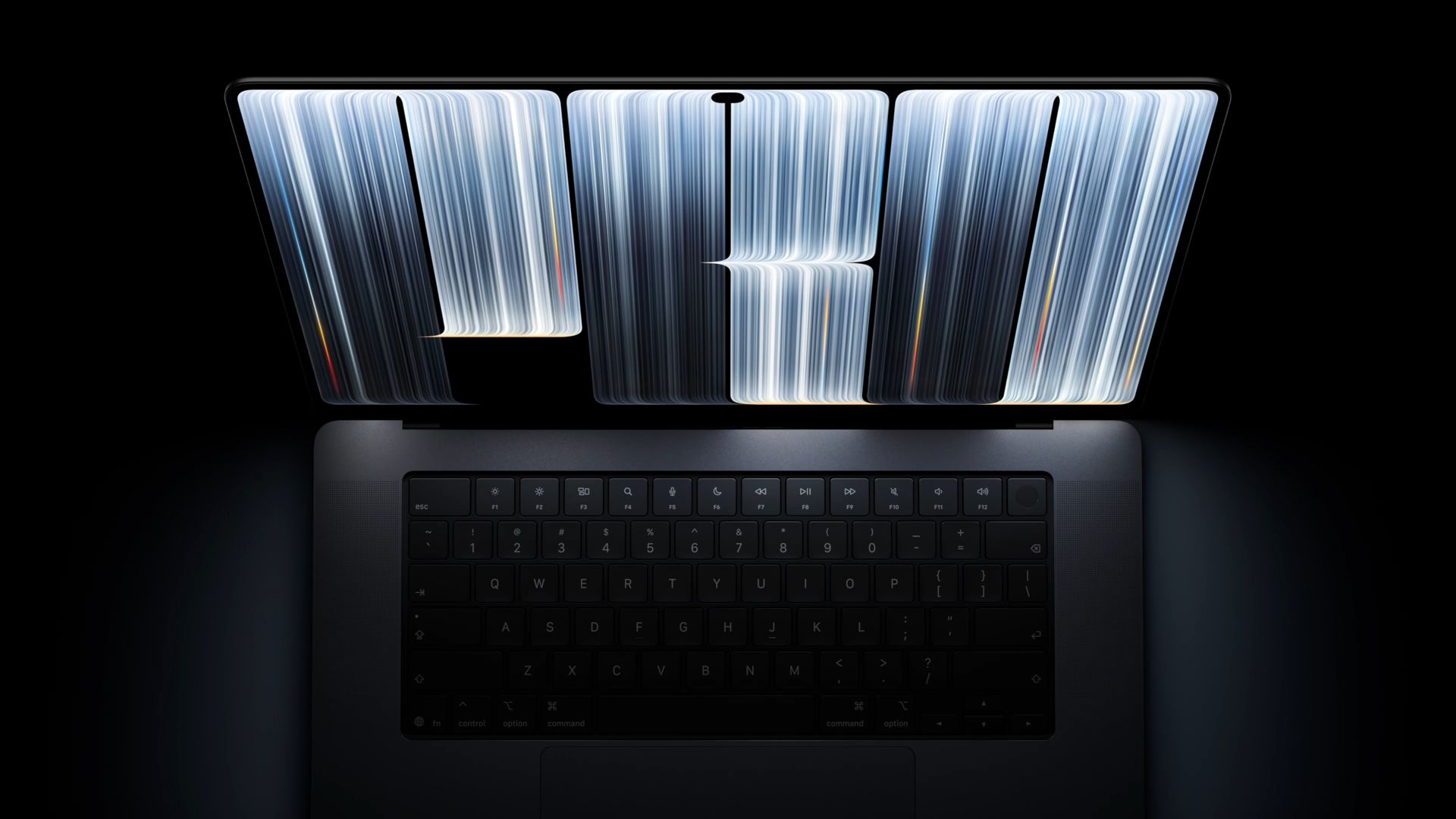
Apple has officially dismantled its long-standing corporate dogma, introducing the first-ever touchscreen MacBook Pro models powered by breathtaking PROLED XDR display technology. Departing radically from Steve Jobs’ famous 2010 proclamation that vertical desktop touchscreens are "ergonomically terrible," Cupertino’s latest hardware revision—overseen under the transition to CEO John Ternus—confronts the Windows OEM landscape head-on. By bridging the gap between tactile macOS input paradigms and traditional laptop workflows, Apple is signaling a profound pivot in its high-end prosumer and enterprise strategy.
Positioned at an uncompromising entry price point of $2,899 for the 14-inch variant and $3,399 for the 16-inch edition, these machines are explicitly targeted at bleeding-edge professionals, creative directors, and systems engineers who demand absolute peak performance. Pre-orders are live now, with global hardware deployments shipping on November 6. Beyond the touch interface, this launch represents the first substantial physical chassis redesign for the MacBook Pro lineage since the M1 architecture debuted in 2021, bringing back nostalgic hardware nods while packing immense architectural upgrades underneath.
Core Architectural & Technological Innovations
The marquee engineering feat of this release is the deployment of the custom PROLED XDR panel, operating at ProMotion refresh rates spanning an adaptive 10 Hz to 120 Hz. Apple claims a staggering 2,000 nits of peak brightness alongside a true infinite 10,000,000:1 contrast ratio, achieving organic light-emitting diode ink-blacks that dwarf legacy mini-LED matrices. To support interactive inputs without catastrophic screen wobble—historically the Achilles' heel of convertible laptops—Apple has heavily re-engineered the dual-action hinge assembly, providing formidable resistance to finger-tap torque.
Beneath the glass sits Apple’s formidable M5 Pro and M5 Max silicon architecture, scaling up to an astonishing 16TB of high-speed solid-state storage and 128GB of unified memory. Aesthetically and functionally, the traditional notch has been replaced by the dynamic iPhone-derived Dynamic Island for real-time telemetry and notifications. Furthermore, enterprise users will appreciate the return of the iconic, light-up Apple logo on the chassis exterior—absent since 2016—while third-party productivity and creative ecosystems like Adobe Lightroom, DaVinci Resolve, Blender, and Microsoft 365 feature native touch-input optimizations straight out of the box.
Empirical Specifications & Benchmark Matrix
| Hardware Parameter | 14-inch MacBook Pro (Base) | 16-inch MacBook Pro (Base) | Market Baseline / Predecessor |
|---|---|---|---|
| Starting Price | $2,899 | $3,399 | $1,999 (M3/M4 Baseline) |
| Display Architecture | PROLED XDR Touch | PROLED XDR Touch | Mini-LED Non-Touch |
| Peak Brightness | 2,000 Nits | 2,000 Nits | 1,600 Nits Peak HDR |
| Contrast Ratio | 10,000,000:1 | 10,000,000:1 | ~1,000,000:1 (Mini-LED) |
| Silicon Integration | M5 Pro / M5 Max | M5 Pro / M5 Max | M4 Pro / M4 Max |
| Max Memory / Storage | 128GB RAM / 16TB SSD | 128GB RAM / 16TB SSD | 64GB RAM / 8TB SSD |
| Chassis Weight | 3.0 lbs (~0.5 lbs lighter) | 4.0 lbs (~0.7 lbs lighter) | 3.4 lbs / 4.7 lbs |
Thermal, Efficiency & Real-World Ergonomics
Despite integrating complex capacitive touch layer digitizers and active OLED display stacks, Apple’s engineering division has successfully shaved down the physical dimensions of both chassis. The 16-inch iteration is nearly a millimeter thinner, while the 14-inch model sheds half a millimeter, dropping overall weight to 3.0 pounds and 4.0 pounds respectively. These volumetric reductions are directly attributable to the streamlined physical profile of the OLED display stack, which eliminates unnecessary diffusion layers required by traditional backlight architectures.
Thermal dissipation and acoustic performance remain world-class, paired with newly redesigned audio transducers that pump out 50% deeper bass alongside precision high-frequency tweeters. Apple has even introduced intelligent audio-tuning profiles configured specifically for closed-lid desktop docking scenarios. Coupled with the thermal efficiency of the M5 Pro and Max platforms, the machine maintains stable under-load clock speeds without fan hyper-activity, even when users heavily utilize multi-touch gestures directly on the display surface.
The Definitive Verdict
Apple’s transition into touchscreen laptops via the new OLED MacBook Pro series is a watershed moment for the personal computer industry. While the $2,899 entry barrier ensures these machines remain strictly within the financial domain of enterprise professionals and elite creators, the technological payload justifies the cost. The integration of zero-latency touch support, a brilliant 2,000-nit PROLED XDR panel, structural weight reductions, and massive memory ceilings make this the most consequential MacBook refresh of the decade. For uncompromising power users willing to pay the Apple tax, this hardware represents the undisputed pinnacle of modern laptop engineering.