Executive Summary & Market Positioning
Anthropic’s recent Form S-1 registration statement filed with the U.S. Securities and Exchange Commission marks a watershed moment not just for generative AI software, but for the underlying silicon and hardware infrastructure that powers it. Targeting an unprecedented $2 trillion valuation on the Nasdaq Global Select Market under the ticker 'ANT', the Claude maker has laid bare the staggering financial and physical realities of modern hyperscale artificial intelligence. With revenue surging to $16.3 billion in the first half of 2026—a monumental leap from approximately $1.2 billion in the same period last year—Anthropic is demonstrating hyper-growth that mirrors the most explosive hardware and software scale-ups in technology history. However, this blistering commercial trajectory is accompanied by a reported net loss of $80.7 billion, a figure that underscores the ferocious capital expenditure required to secure scarce processing nodes.
Beneath the staggering headline numbers lies a complex web of compute dependencies, capital allocation strategies, and risk factors that directly impact the semiconductor ecosystem. While accounting adjustments tied to complex financing instruments heavily inflate the net loss figure rather than representing direct cash burn, the firm's forward-looking commitments are genuinely colossal. Anthropic has outlined unprecedented infrastructure investments, including up to $120.5 billion in compute deals involving heavyweights like Nvidia and SpaceXAI, alongside another $114.5 billion commitment with Google stretching through 2033. As competitors like OpenAI navigate their own public market timelines and specialized hardware players like Cerebras test public waters with wafer-scale processors, Anthropic’s IPO serves as an empirical stress test for the entire artificial intelligence supply chain.
Core Architectural & Technological Innovations
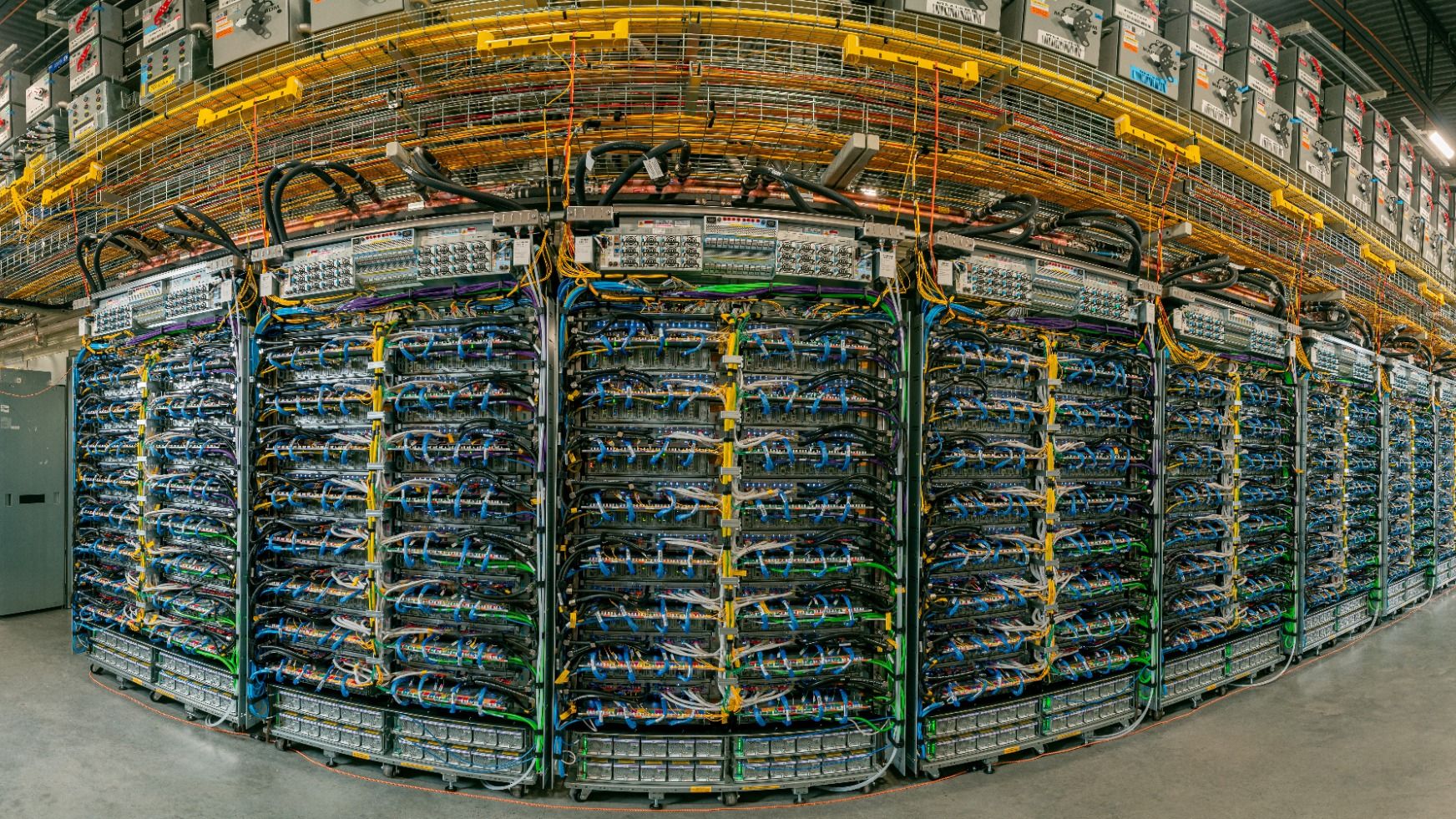
Scaling frontier AI architectures demands unprecedented hardware orchestration, pushing the boundaries of traditional data center design. Anthropic's transition from an experimental research lab to an enterprise-grade utility has required massive investments in heterogeneous compute environments. Rather than relying solely on traditional cloud instances, the company’s infrastructure strategy leverages hundreds of thousands of specialized accelerators, tying together ultra-dense GPU clusters with high-bandwidth, low-latency interconnects. The integration of unconventional compute sources—such as accessing SpaceX’s supercomputing capabilities powered by upwards of 220,000 Nvidia GPUs backed by 300 megawatts of power—illustrates the lengths to which AI labs must go to circumvent traditional power grid constraints and silicon shortages.
Simultaneously, the architectural efficiency of Anthropic’s models has begun to yield tangible financial dividends. According to disclosures highlighted by market analysts, the company's gross margins have climbed dramatically from sub-20% levels just a quarter prior to nearly 50%. This structural improvement in compute efficiency indicates that algorithmic optimizations, quantization techniques, and optimized tensor core utilization are finally beginning to offset the punishing cost of inference and training. Yet, this efficiency gain is perpetually challenged by the sheer scale of the models under development. As parameter counts expand and context windows widen, the silicon hardware architecture must continually evolve, favoring interconnect topologies that can handle massive parallel tensor sharding without introducing debilitating communication bottlenecks.
Empirical Specifications & Benchmark Matrix
| Metric / Parameter | Anthropic S-1 Disclosures | Baseline Market Standard (Hyperscale AI) | Empirical Implication |
|---|---|---|---|
| Target Valuation | ~$2 Trillion | $500B - $1.5T (Peers) | Sets a hyper-aggressive benchmark for AI infrastructure capitalization. |
| H1 2026 Revenue | $16.3 Billion | $2B - $10B | Demonstrates unprecedented monetization velocity for a frontier model provider. |
| Compute Commitments | ~$235 Billion (Cumulative) | Variable / Undisclosed | Reflects immense long-term reliance on Nvidia, Google, and alternative silicon. |
| Gross Margins | Approaching 50% | 30% - 40% | Significant hardware and inference optimization compared to prior quarters. |
| Reported Net Loss | $80.7 Billion (Adjusted) | Moderate to High Burn | Heavily skewed by financing instruments, yet highlights massive capital intensity. |
Thermal, Efficiency & Real-World Ergonomics
When scaling compute infrastructure into the multi-gigawatt tier, the conversation inevitably shifts from abstract software parameters to relentless thermodynamic realities. The sheer scale of Anthropic's hardware commitments—spanning hundreds of thousands of advanced Nvidia accelerators—translates directly into staggering thermal footprints and power densities that challenge traditional data center engineering. Deploying clusters of this magnitude requires advanced liquid cooling topologies, direct-to-chip cooling loops, and hyper-optimized power delivery networks to prevent thermal throttling and maintain peak silicon efficiency during months-long training runs. The utilization of non-traditional data center sites, including high-capacity orbital and aerospace-adjacent infrastructure partnerships, highlights the extreme measures required to source continuous megawatt-scale power.
Moreover, the operational ergonomics of running these massive neural networks dictate the company's long-term viability. As gross margins inch closer to the 50% threshold, the optimization of inference-stage hardware efficiency becomes just as critical as training throughput. Anthropic's S-1 disclosures explicitly warn that compute costs and the availability of advanced semiconductors represent existential operational variables. If energy costs spike, silicon supply chains face geopolitical bottlenecks, or the projected demand for generative AI fails to absorb the massive capital expenditure, these high-density thermal installations risk becoming severely depreciated assets. Consequently, the company's engineering focus remains tightly locked on maximizing FLOPs-per-watt ratios across its entire deployed fleet.
The Definitive Verdict
Anthropic’s S-1 filing is much more than a routine financial prospectus; it is a masterclass in the economic realities of the modern hardware-software co-design era. By transparently detailing its multi-billion-dollar infrastructure outlays, massive compute commitments with Nvidia, Google, and SpaceXAI, and a dramatic improvement in gross margins toward the 50% mark, Anthropic has provided the industry with an empirical blueprint of what it takes to sustain a frontier AI enterprise. While the headline $80.7 billion net loss and sobering warnings regarding existential safety risks and potential growth deceleration will give conservative investors pause, the underlying hardware momentum is undeniable. For hardware analysts and semiconductor stakeholders, Anthropic represents the ultimate stress-test for global compute capacity—a high-stakes enterprise that will either validate the multi-trillion-dollar AI thesis or redefine the limits of infrastructure-driven growth.