Executive Summary & Market Positioning
The relentless acceleration of enterprise artificial intelligence workloads has fundamentally transformed the semiconductor supply chain, shifting critical bottlenecks away from basic logic fabrication toward ultra-dense memory packaging. In this high-stakes environment, AMD CEO Lisa Su’s recent strategic visit to South Korea underscores a vital industry imperative: securing multi-year access to high-bandwidth memory (HBM). Barely seven months after establishing an exploratory memorandum of understanding (MOU) with Samsung, AMD is actively working to cement a broader, long-term operational framework. With global demand for training and inference clusters operating at unprecedented scales, planning three to five years ahead is no longer optional; it is an existential requirement for maintaining roadmap velocity against entrenched competitors.
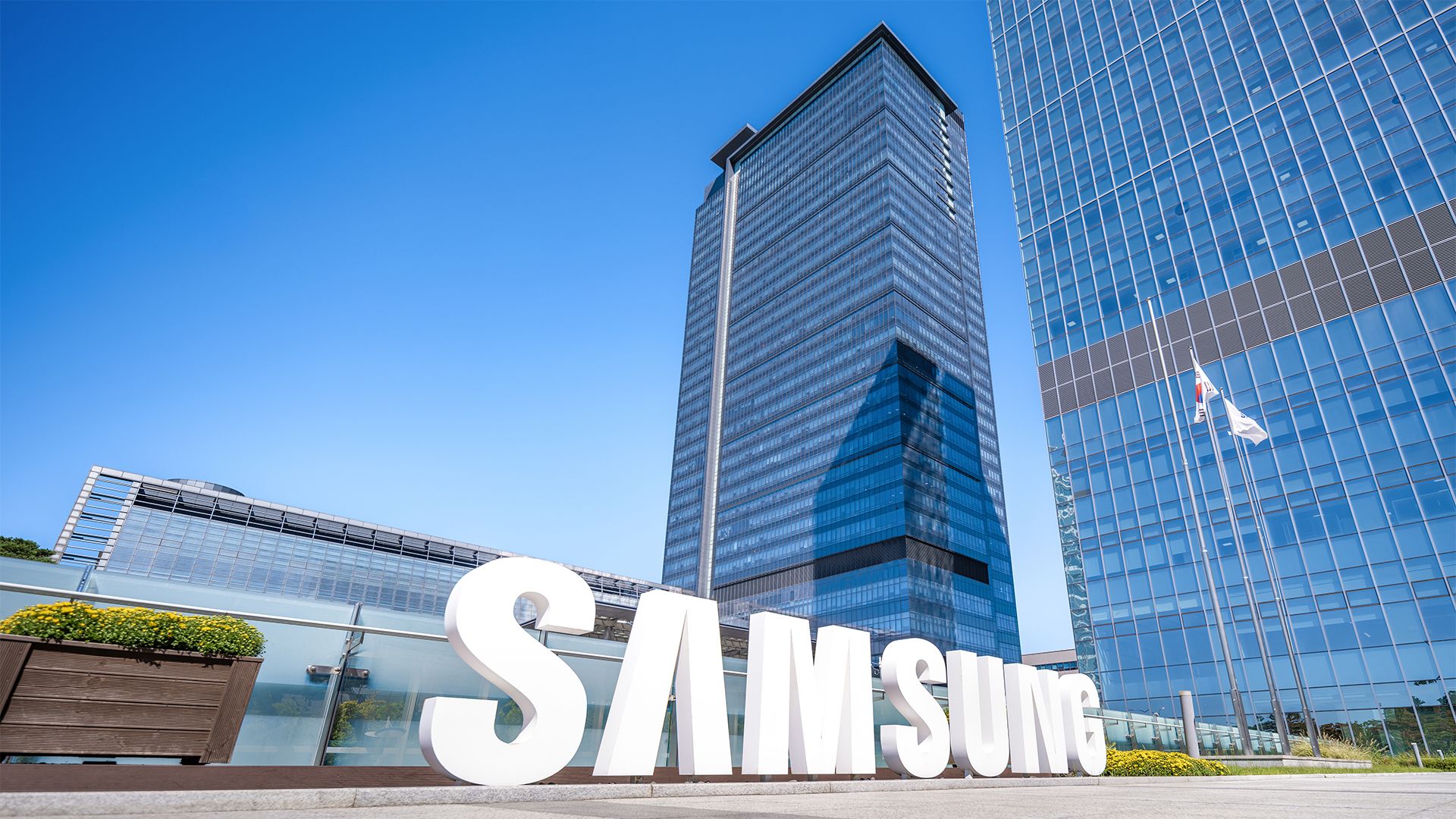
Simultaneously, this diplomatic and industrial push reveals a fascinating dynamic of mutual leverage. While AMD’s primary immediate objective is locking down guaranteed allocations of next-generation HBM4 and advanced data center DDR5—critical components for powering its latest Instinct AI accelerators—Samsung is pushing for a reciprocal arrangement. The South Korean manufacturing giant is aggressively seeking to convert this memory supply dominance into substantive foundry chip production orders. For AMD, navigating this overture requires a delicate calibration between satisfying voracious supply chain demands and mitigating the well-documented yield, performance, and schedule risks inherent in migrating high-complexity designs to an alternative manufacturing node.
Core Architectural & Technological Innovations
The cornerstone of this expanded alliance is the transition to HBM4, a generational leap in memory architecture designed to eliminate the bandwidth walls crippling legacy AI hardware. AMD’s newly deployed Instinct MI455 accelerators, paired with the rack-scale Helios AI systems, represent the vanguard of this shift, boasting an astonishing 432GB of HBM4 memory onboard. This massive local memory footprint allows hyperscalers and enterprise model trainers to load gargantuan large language models directly into high-speed memory pools, drastically reducing latency and inter-node communication overhead during distributed training phases.
Beyond raw capacity, the partnership framework emphasizes deep co-development in advanced packaging and system optimization. HBM4 introduces interface architectures that require ultra-precise physical layer co-design between the logic die and the memory stack. By aligning closely with memory powerhouses like Samsung and SK Hynix, AMD can co-optimize thermal profiles, signaling voltages, and physical stack heights. However, bridging this memory collaboration over to Samsung Foundry for core logic production introduces architectural hurdles. While AMD currently utilizes Samsung Foundry and UMC for select programmable logic devices, migrating massive, cutting-edge GPU or accelerator compute tiles involves validating entirely new physical design kits (PDKs) and managing complex multi-project wafer (MPW) tape-outs.
Empirical Specifications & Benchmark Matrix
| Feature / Metric | AMD Instinct MI455 (Helios System) | Market Baseline (Legacy HBM3e Accelerators) | Strategic Implication |
|---|---|---|---|
| Memory Standard | HBM4 | HBM3e | Doubled bus widths and enhanced per-pin signaling rates. |
| Onboard Memory Capacity | 432GB | 192GB - 288GB | Enables massive model parameter residency without off-chip paging. |
| Primary Supply Partners | Samsung, SK hynix | Mixed primary allocation | Diversifies geopolitical and operational manufacturing risks. |
| Foundry Roadmap Status | Evaluative / Mixed Nodes | Predominantly TSMC Advanced Nodes | Balances supply security against potential yield and ramp variances. |
| Planning Horizon | 3 to 5 Years Strategic Window | 12 to 18 Months Spot Procurement | Insulates enterprise infrastructure against periodic cyclical crunches. |
Thermal, Efficiency & Real-World Ergonomics
Packing 432GB of HBM4 alongside massive compute complexes into a rack-scale system like Helios introduces severe thermal management challenges. As stack heights increase and power densities escalate within enterprise server racks, localized thermal dissipation becomes the primary governor of sustained compute performance. The co-packaging optimizations negotiated between AMD and Samsung are specifically engineered to address these micro-thermal bottlenecks, utilizing advanced thermal interface materials and refined substrate designs to maintain optimal junction temperatures under blistering continuous workloads.
From an operational efficiency perspective, the ability to rely on a diversified, robust memory supply chain directly impacts the total cost of ownership (TCO) for data center operators. Unpredictable component allocations often lead to deployment halts, inflated procurement costs, and inefficient rack provisioning. By locking down a multi-year collaborative framework with South Korean memory titans, AMD aims to stabilize hardware deployment cadences. However, any future decision to transition primary compute manufacturing to Samsung Foundry must carefully weigh thermal and power efficiency metrics against the gold standard set by existing foundry partners to ensure real-world parity.
The Definitive Verdict
AMD’s proactive diplomatic and commercial outreach to Samsung highlights a masterclass in modern hardware supply chain orchestration. By leveraging its strong position in high-performance AI accelerators, AMD is successfully securing the critical HBM4 allocations necessary to fuel the rollout of its Instinct MI455 and Helios systems. Whether this memory-centric relationship successfully blossoms into a broader foundry production partnership remains the ultimate wildcard. While Samsung's desire for foundry volume gives them strategic leverage, AMD's conservative risk posture—mindful of potential yield dips and schedule delays—suggests that logic production migration will proceed with extreme caution. Ultimately, this partnership is a calculated triumph for AMD's near-term scaling goals, cementing its supply resilience while keeping future manufacturing options flexibly open.