Executive Summary & Market Positioning
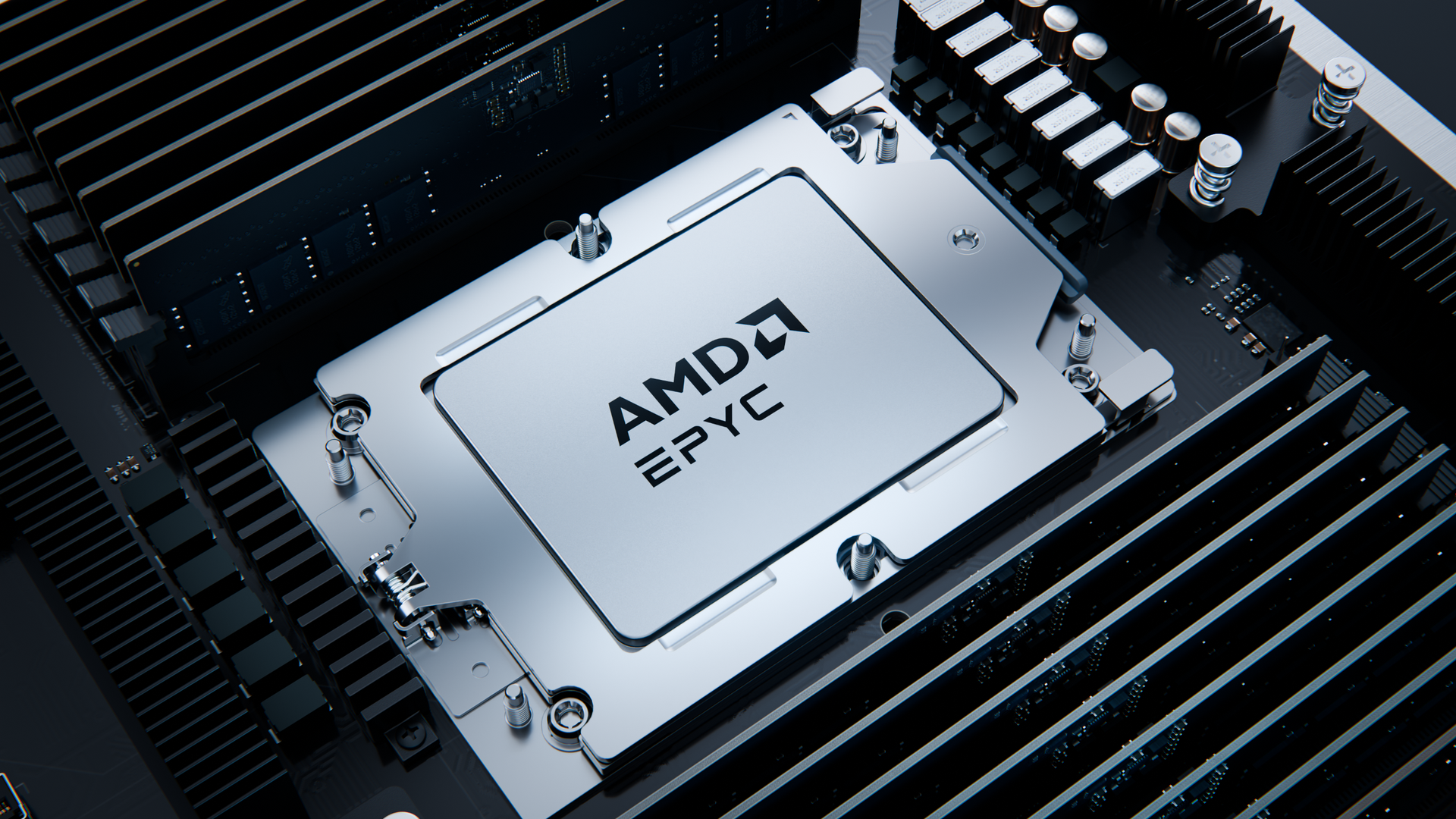
AMD is preparing a fundamental shift in its data center strategy with the introduction of the 'Verano' EPYC 9006-series processors. Moving away from the 'one-socket-fits-all' philosophy that characterized the EPYC Rome through Turin eras, the Verano platform introduces the dedicated SB1 socket. This move signals that AMD is finally treating AI-specific host processing as a tier-one discipline, distinct from the general-purpose compute requirements of the 'Venice' (Zen 6) lineup. By decoupling Verano from the massive SP7 and SP8 sockets used by high-core-count general-purpose EPYCs, AMD is signaling a pivot toward tighter system integration.
Market positioning for Verano is clearly aimed at the 'Grace' tier of hardware—systems where the CPU’s primary job is not to compute, but to orchestrate, move, and manage data for high-performance AI accelerators. By adopting the SB1 socket, AMD is likely looking to emulate the vertical integration seen in Nvidia’s GH200/GB200 platforms. Instead of chasing maximum core counts, Verano focuses on architectural balance, specifically catering to IO-heavy workloads where memory bandwidth and latency are far more critical than raw integer throughput.
Core Architectural & Technological Innovations
At the heart of the Verano architecture is a specialized focus on memory subsystem agility. The shift to a 24-channel LPDDR5X interface utilizing replaceable SOCAMM2 modules is a significant departure from standard DDR5 DIMM topologies. This configuration provides the extreme memory bandwidth required to feed hungry AI accelerators, effectively removing the CPU as a bottleneck in the massive data pipelines required for training and large-scale inference. With up to 72 Zen 6 cores, Verano prioritizes clock speed (up to 5 GHz) to handle the sequential tasks of orchestration, while keeping core counts lower than the 256-core Venice monsters to optimize power density for localized thermal envelopes.
The SB1 socket is the linchpin of this innovation. By narrowing the physical constraints of the socket compared to SP7/SP8, AMD can presumably simplify motherboard signal integrity requirements and reduce the complexity of the PCB layout. This architectural narrowing suggests that AMD is moving toward a 'platform-as-a-product' strategy, where the CPU, memory, and accelerator interconnect are qualified as a single, immutable unit. It is an acknowledgment that the general-purpose EPYC ecosystem, while highly flexible, is not the most efficient way to scale AI infrastructure.
Empirical Specifications & Benchmark Matrix
| Specification | EPYC 'Verano' (SB1) | EPYC 'Venice' (SP7/SP8) | Market Baseline (Gen 6) |
|---|---|---|---|
| Socket | SB1 | SP7 / SP8 | Varies |
| Max Cores | 72 | Up to 256 | ~128-256 |
| Memory | 24-ch LPDDR5X (SOCAMM2) | 12-ch DDR5 | 8-12 ch DDR5 |
| Primary Goal | AI Orchestration | General Compute | General Compute |
| Freq Boost | Up to 5.0 GHz | Varies | 3.5 - 4.5 GHz |
Thermal, Efficiency & Real-World Ergonomics
Thermal management for Verano appears to be a study in high-density cooling. Preliminary listings from Dynatron for the SB1-4U-Active cooler highlight the power density challenges of this platform. Despite having a lower core count than the flagship Venice chips, the use of a vapor-chamber-based, active 4U cooling solution suggests that the Verano die, coupled with its massive 24-channel memory controller, will generate significant thermal flux. This is not a chip designed for passive, low-airflow environments; it is a specialized engine meant for the high-power, high-velocity cooling environments of modern AI server racks.
From an ergonomics and maintenance perspective, the use of replaceable SOCAMM2 modules is a welcome departure from soldered-down DRAM. While the Verano platform intends to function as a rigid, qualified system, the ability to service memory without replacing the motherboard or the CPU is a vital concession to data center longevity. However, engineers should expect higher barrier-to-entry regarding system qualification. Because the SB1 socket and thermal solution are so tightly coupled, the 'Verano' ecosystem will likely preclude the mixing and matching of third-party cooling solutions typically seen in more open-ended server environments.
The Definitive Verdict
AMD's Verano/SB1 initiative is the inevitable maturation of a company that has conquered the general-purpose CPU market and is now successfully turning its attention to the specialized AI theater. By creating a dedicated, socket-restricted platform, AMD is sacrificing total flexibility for the sake of extreme performance density. For hyperscalers and AI infrastructure providers, this is a winning strategy. While the specialized nature of the SB1 socket may frustrate boutique system integrators, it is the correct engineering decision for a landscape that increasingly values orchestration efficiency over raw, general-purpose core volume. Verano isn't just another EPYC; it is a tactical weapon for the AI era.