Executive Overview & Market Positioning
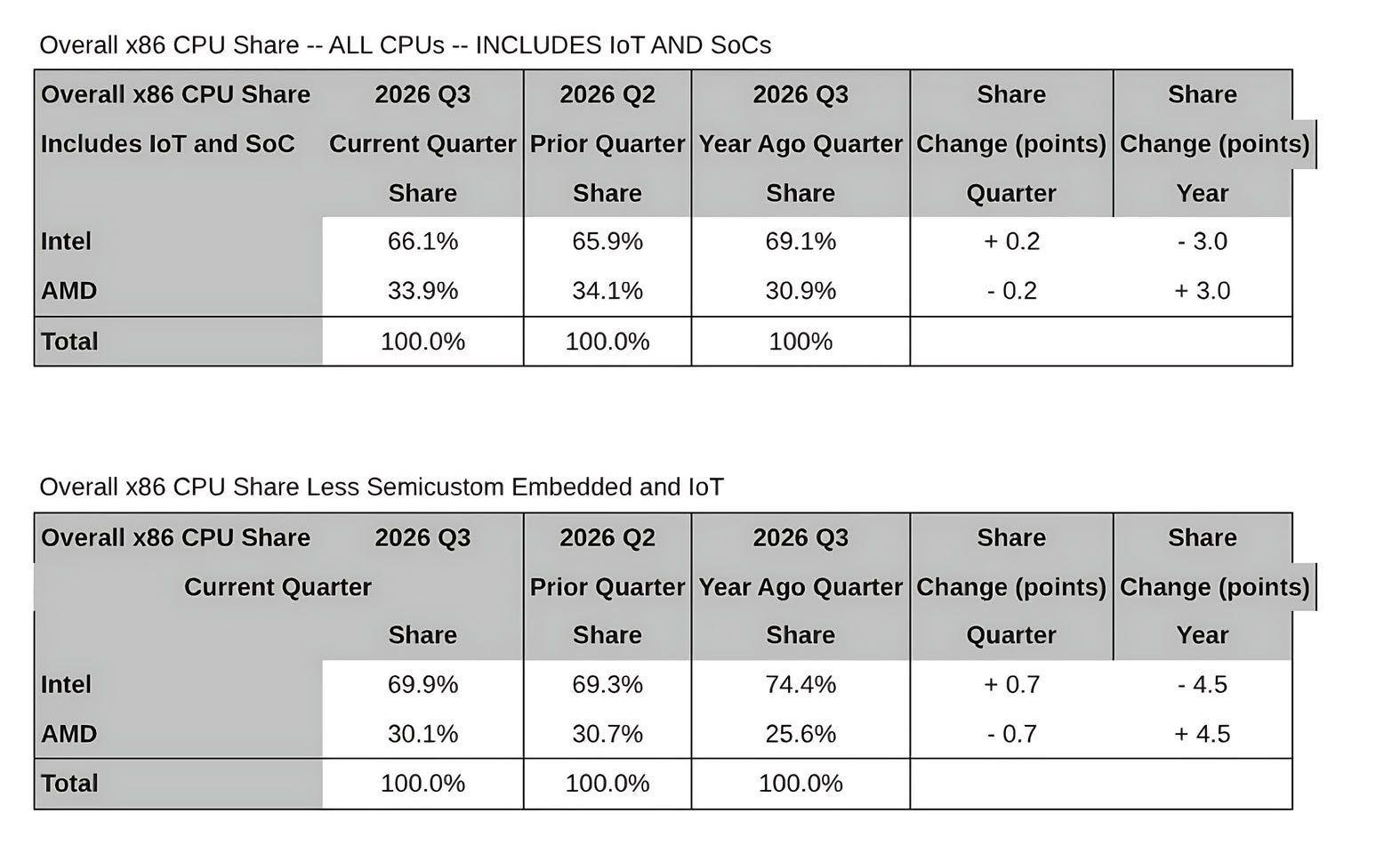
Recent telemetry from Mercury Research covering Q3 2026 indicates a notable market share correction within the x86 desktop segment. AMD experienced a sharp contraction, dropping five percentage points from a Q2 2026 peak of 34.9% down to 29.9% in desktop CPU shipments. This reduction marks AMD's lowest desktop footprint since early 2025 levels (approx. 28%) and sits below the 33.6% baseline recorded in the corresponding period of the previous year. Conversely, Intel leveraged the structural shift to expand its footprint back to 70.1%.
Industry analysts and empirical trackers attribute this unexpected turnaround primarily to strategic wafer allocation rather than a sudden architectural deficit. CEO Lisa Su’s recent characterization of AMD as a "data center first" enterprise highlights a deliberate corporate pivot. With high-margin enterprise AI accelerators and server-class silicon absorbing available TSMC advanced-node capacity, consumer gaming and desktop segments faced supply bottlenecks. Meanwhile, softer mobile (laptop) demand allowed Intel to redirect mature fabrication lines toward fulfilling seasonal Q3 desktop demand surges that AMD was structurally unable to match.
Empirical Benchmark Matrix
To contextualize the hardware landscape driving these shipment figures, we evaluate the baseline specifications and logistical positioning of prevailing desktop client silicon versus the structural headwinds faced by each vendor in the third quarter of 2026.
| Architectural Metric / Vector | AMD Client Ecosystem (Q3 2026) | Intel Client Ecosystem (Q3 2026) |
|---|---|---|
| Primary Fabrication Node | TSMC Advanced Nodes (Shared w/ AI) | Internal/External Foundry (Shifted from Mobile) |
| Desktop Shipment Share | 29.9% (Down 5.0% QoQ) | 70.1% (Up 5.0% QoQ) |
| Strategic Priority | Data Center & AI Accelerators | Client Desktop & Seasonal Volume |
| Supply Chain Dynamics | Constrained by Gaming GPU/CPU Demands | Relieved by Softer Laptop Utilization |
Thermal, Efficiency & Definitive Verdict
From a thermal and architectural standpoint, the Q3 2026 shift underscores the delicate equilibrium of modern semiconductor supply chains. Intel’s temporary recovery in desktop metrics is less an indicator of sweeping microarchitectural dominance and more a reflection of elastic manufacturing capacity. By utilizing freed-up fab allocation intended initially for mobile chips, Intel successfully captured the seasonal desktop uptick. AMD’s intentional sacrifice of consumer volume for high-yield, high-margin data center products is a calculated trade-off. While metrics show a temporary retreat to 29.9% desktop share, OPA Specs concludes that this contraction is a byproduct of deliberate top-line revenue prioritization rather than a permanent loss of consumer platform mindshare.