Shattering the Megahertz Myth: A 25-Year Retrospective on AMD's Athlon XP and the Performance Rating Era
Executive Summary & Market Positioning
A quarter century ago, the desktop computing landscape was gripped by a fundamental philosophical divide over how microprocessors should be measured, marketed, and valued. At the heart of this war was a deeply entrenched industry paradigm: the "Megahertz Myth." For years, semiconductor marketing had drilled a singular metric into the minds of consumers and OEMs alike—higher clock speed unequivocally equated to superior computing power. By the turn of the millennium, Intel’s formidable Pentium 4 processor family, built upon the deep-pipelined Netburst microarchitecture, was scaling raw frequency heights with aggressive abandon. Meanwhile, Advanced Micro Devices found itself caught in a severe marketing asymmetry. Its latest silicon could trade blows with or decisively outperform Intel's flagship offerings in real-world applications and demanding games, yet it did so at significantly lower raw gigahertz frequencies.
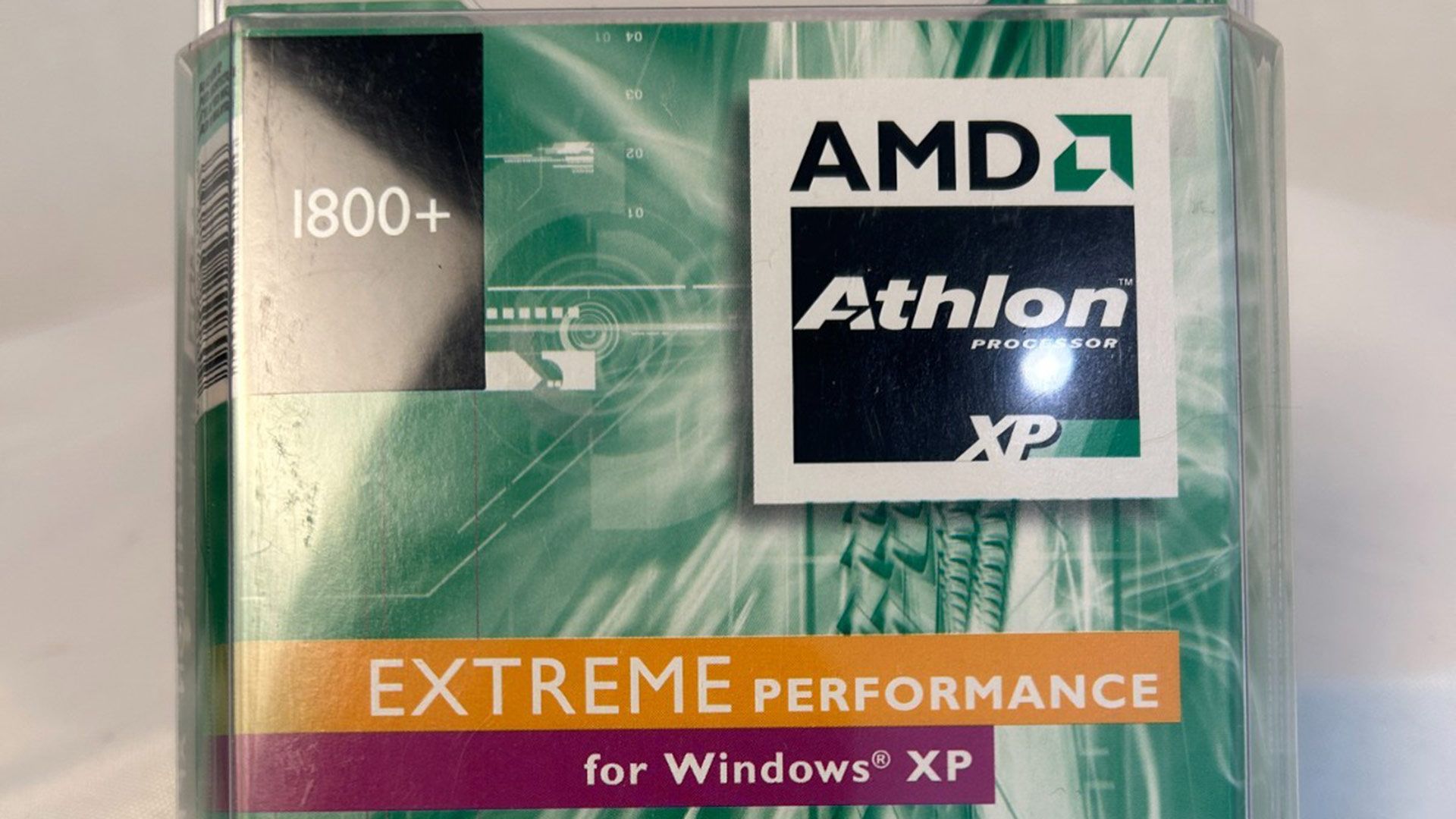
To bridge this perception gap and neutralize Intel’s psychological dominance, AMD executed a bold strategic pivot on this day 25 years ago with the launch of the AMD Athlon XP processor family. Powered by the refined "Palomino" core, these processors discarded literal clock frequency from their primary branding. Instead, AMD introduced the Performance Rating (PR) system, assigning model numbers like the Athlon XP 1800+ to signify competitive equivalence against hypothetical or actual Intel benchmarks. Backed by the rallying cry that "Performance matters more than MHz," AMD forced the industry to look past raw clock speed and evaluate processors based on holistic architectural efficiency and tangible application throughput.
Core Architectural & Technological Innovations
Underneath the controversial PR nomenclature lay a masterclass in architectural engineering. The Palomino core succeeded the original Thunderbird Athlon by introducing critical microarchitectural enhancements that drastically improved Instructions Per Cycle (IPC). Foremost among these advancements was full native support for Intel's SSE (Streaming SIMD Extensions) instruction set. While earlier Athlon generations relied on AMD's proprietary 3DNow! technology, the integration of SSE ensured broad software compatibility and accelerated floating-point intensive tasks, such as digital content creation, 3D rendering, and geometric calculations in modern video games.
Furthermore, Palomino brought crucial platform-level innovations to the table. AMD incorporated hardware thermal diode support, enabling real-time on-die temperature monitoring to mitigate the risk of catastrophic thermal runaway—a notoriously persistent hazard during the fragile exposed-die era of Socket A processors. Power management was also notably improved through the inclusion of PowerNow! technologies adapted for desktop environments and optimized internal logic routing. Despite operating at a physical clock frequency that lagged behind Intel's top-tier silicon by hundreds of megahertz, these deeply integrated microarchitectural refinements allowed the Palomino pipeline to extract vastly more work out of every single clock cycle.
Empirical Specifications & Benchmark Matrix
Independent empirical testing from the era validated AMD's audacious naming strategy. Below is a comparative technical specification and benchmark matrix illustrating how the Athlon XP stack positioned itself against the market baseline set by Intel's Pentium 4.
| Processor Model | Architecture | Core Clock | L2 Cache | Front Side Bus (FSB) | PR Equivalent | Key Benchmark Advantage |
|---|---|---|---|---|---|---|
| Intel Pentium 4 2.0 GHz | Netburst (Willamette) | 2000 MHz | 256 KB | 400 MHz QDR | N/A (Baseline) | Extreme raw integer frequency scaling |
| AMD Athlon XP 1800+ | Palomino | 1533 MHz | 256 KB | 266 MHz DDR | 1800+ | Dominant in office productivity, gaming, and FPU tasks |
| Intel Pentium 4 1.5 GHz | Netburst (Willamette) | 1500 MHz | 256 KB | 400 MHz QDR | N/A (Budget) | High theoretical bandwidth, lower real-world IPC |
| AMD Athlon XP 1600+ | Palomino | 1400 MHz | 256 KB | 266 MHz DDR | 1600+ | Outstanding price-to-performance ratio in Windows environments |
As documented in historical lab analyses, the Athlon XP 1533 MHz operating frequency routinely outpaced a 2.0 GHz Pentium 4 across a broad suite of productivity applications and gaming benchmarks, validating the empirical integrity behind the PR designation.
Thermal, Efficiency & Real-World Ergonomics
While the performance metrics were undeniably impressive, the real-world ergonomics of the Socket A platform presented unique challenges for systems builders and enthusiasts. The Palomino core, despite its architectural efficiency, still suffered from relatively high power dissipation densities due to its 180nm manufacturing process. Because the die size was substantial and exposed directly to ambient air, mounting massive copper heatsinks required immense mechanical pressure, turning heatsink installation into a notoriously nerve-wracking exercise.
Nevertheless, the thermal management paradigm shifted positively with Palomino. The inclusion of the internal thermal diode meant motherboards could finally read core temperatures directly rather than relying on inaccurate socket-mounted thermistors. This significantly reduced the incidence of localized hotspots and burned silicon. In day-to-day operation, systems powered by the Athlon XP felt notably snappier in multitasking scenarios compared to contemporary Willamette-core Pentium 4 chips, proving that superior architectural design and efficient cache utilization easily trumped raw, brute-force frequency scaling.
The Definitive Verdict
Looking back across a quarter-century of microarchitecture evolution, AMD’s introduction of the Performance Rating system with the Athlon XP family stands as a watershed moment in semiconductor marketing and engineering history. While purists initially scoffed at the abstracted naming convention, the strategy was an absolute necessity to combat the entrenched dogma of the Megahertz Myth. By shifting the industry's focus toward holistic IPC, real-world application throughput, and genuine user experience rather than arbitrary frequency figures, AMD laid the intellectual groundwork for modern multi-core and architectural efficiency metrics. The Athlon XP remains an undisputed historical icon—a silicon underdog that proved conclusively that performance is defined by what a processor accomplishes, not just how fast it ticks.