Executive Overview & Market Positioning
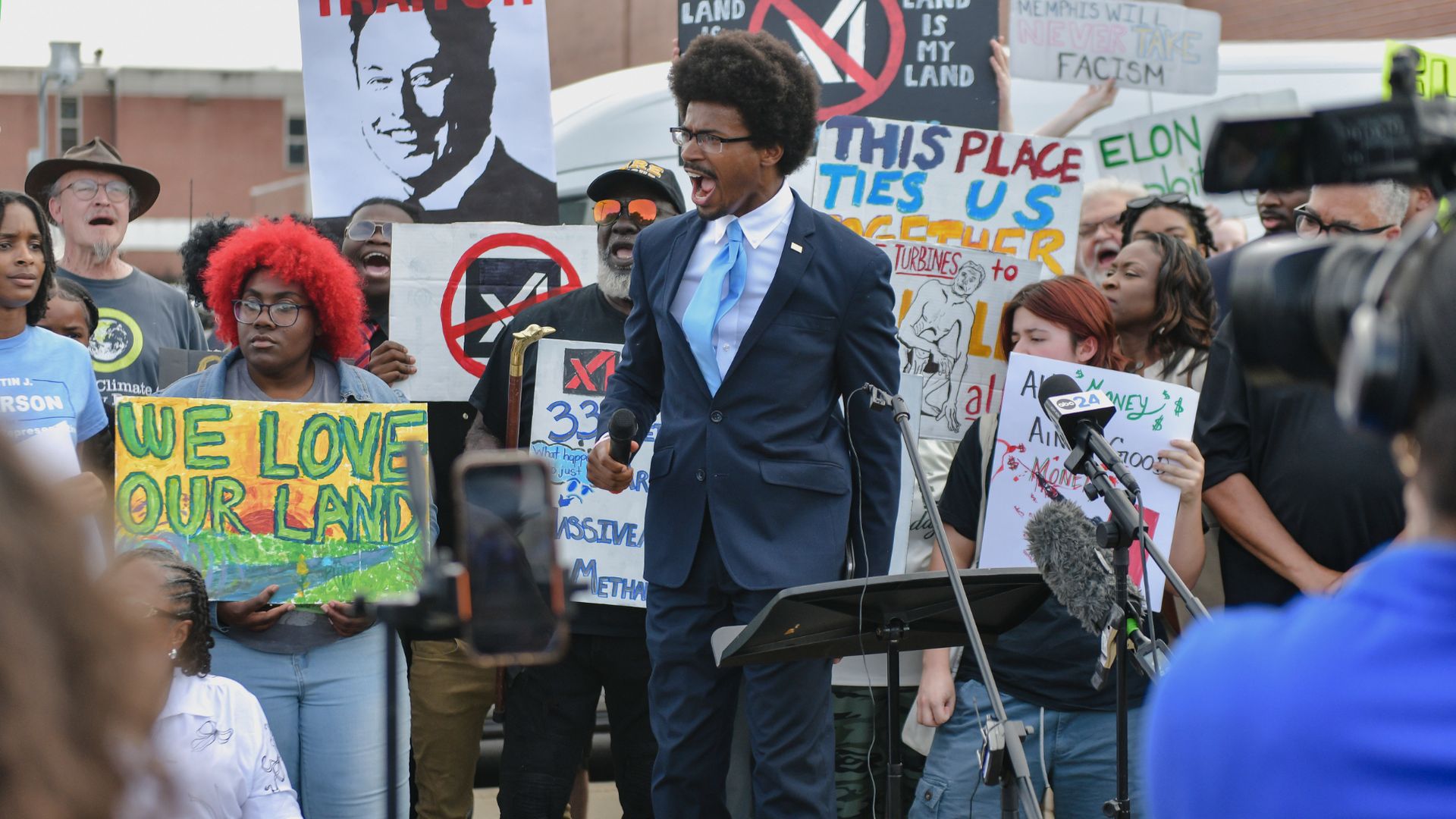
The intersection of hyperscale AI infrastructure and municipal taxation models has entered a new phase of empirical observation, highlighted by the City of Memphis directing $3.26 million in data center revenue back into South Memphis neighborhoods. Derived from the operational footprint of SpaceX AI's Colossus 1 facility, these community benefit funds demonstrate the direct financial feedback loops generated by hyper-dense GPU deployments. While municipal investments target local housing, structural repairs, and blight remediation via the Memphis HOPE Initiative, the underlying compute facility represents a monumental shift in enterprise hardware allocation.
Originally launched as a massive 220,000 GPU cluster consuming 300 megawatts of power, Colossus 1 initially faced architectural hurdles due to mixed-hardware designs that limited frontier training efficiencies. By May 2026, operational control transitioned via a lease agreement to Anthropic for high-throughput inference processing, freeing up ecosystem bottlenecks for Claude models. Meanwhile, xAI continues its aggressive hardware expansion, targeting a staggering 10-gigawatt footprint by late 2027 to support its next-generation Blackwell-only architectures, signaling rapid iteration cycles across modern AI data center design.
Empirical Benchmark Matrix
To contextualize the scale of municipal impact against underlying hardware capacity, we evaluate the deployment parameters of Colossus 1 relative to standard enterprise AI clusters and projected 2027 targets. The metrics below outline the massive divergence in power density, compute volume, and associated municipal capitalization vectors.
| Specification Metric | Baseline Enterprise Cluster | SpaceX AI Colossus 1 (2025) | Projected xAI Target (2027) |
|---|---|---|---|
| Power Capacity | 10 MW – 50 MW | 300 MW | 10,000 MW (10 GW) |
| Active GPU Count | 5,000 – 20,000 units | 220,000 mixed units | Scaled Blackwell-only |
| Primary Workload | Mixed Training/Inference | Anthropic Inference Focus | Frontier Model Training |
| Municipal Return | Variable local tax | $3.26M initial direct fund | Scaled community revenue |
Thermal, Efficiency & Definitive Verdict
The architectural evolution from Colossus 1's mixed-hardware topology to unified Blackwell-only clusters underscores the relentless pursuit of electrical and thermal efficiency in modern AI infrastructure. Operating at a 300-megawatt baseline requires sophisticated liquid-cooling solutions and robust power delivery networks, challenges that will multiply exponentially as xAI scales toward its 10-gigawatt target by 2027. While critics monitor corporate market capitalization fluctuations, the engineering reality remains clear: the sheer thermal and compute density of modern AI data centers demands innovative power topologies. Ultimately, the successful redirection of Colossus 1's tax revenue into South Memphis proves that hyperscale compute yields tangible economic impacts far beyond the server rack, establishing a blueprint for future infrastructure deployments.